Western movies: the 1923 epic that used real pioneer wagons
A 1923 epic filmed with real pioneer wagons, an all-little-person western, and Brando's only film as director.
By Relay, Watch Guide · Monday, October 26, 2026 · 6 min read
A western is a film set in the American West, with cowboys, outlaws, marshals and settlers. The American Film Institute defines it as a film set in the American West that embodies the spirit, the struggle and the demise of the new frontier. The frontier is the point: a place where the law is thin and every character has to decide what kind of person to be.
That is why the genre has lasted. Its recurring themes are justice, freedom, rugged individualism and civilization against wilderness, and it spread Western wear and country-western music around the world. It also travelled. The Japanese director Akira Kurosawa patterned Yojimbo on American westerns, especially the lone-hero films of John Ford, the Hollywood director who won a record four Best Director Oscars. Yojimbo then inspired Sergio Leone's spaghetti western A Fistful of Dollars, and Kurosawa's Seven Samurai became The Magnificent Seven. Critics also point to Star Wars, where Han Solo dresses like a gunslinger and the Mos Eisley cantina looks like an Old West saloon.
Relay carries 525 films tagged western. The eight below run in release order and show how the genre kept changing. The first was filmed with real pioneer wagons, rented from locals, and the last stars John Wayne in a comedy built on Shakespeare.
What makes a western
- A frontier. The story happens where towns, ranches and wagon trains are new and the law is far away.
- A code. Marshals, outlaws and drifters act according to a private sense of honor, and the plot tests it.
- A myth, not a record. Westerns are less history than a story America tells about itself, which is why later films keep questioning it.
8 western movies to watch
The Covered Wagon (1923)
James Cruze, a former medicine-show performer who became a top director, filmed Emerson Hough's 1922 novel about two wagon trains that join in Kansas and travel 2,000 miles to Oregon in 1848. He used dozens of original Conestoga wagons rented from locals, some of them family heirlooms, and Mormon extras slept in the wagons and lived as the pioneers had. Cruze's own parents had crossed the plains by covered wagon.
It was the second highest-grossing film at the US box office in 1923, and President Warren G. Harding, its most famous admirer, arranged a White House screening that summer. Critics read it as an attempt to lift the western from mass entertainment to epic drama.
The Covered Wagon
James Cruze · 1923 · 98 min
In Old Arizona (1929)
TCM calls this the first all-talkie sound-on-film feature and the first successful all-talking film shot on location, in Utah's Bryce Canyon and Zion national parks and the Mojave Desert. It follows the Cisco Kid, a charming bandit who plays cat-and-mouse with the sheriff while courting a local beauty. The character comes from O. Henry's 1907 short story The Caballero's Way.
Director Raoul Walsh, a former silent-era actor, was meant to direct and star as the Kid. A jackrabbit came through the windshield of his car, he lost an eye and gave up acting, and the director Irving Cummings took over. Walsh returned in time to finish the picture. Warner Baxter won the Best Actor Oscar for the role and played the Kid four more times.
In Old Arizona
Irving Cummings · 1929 · 96 min
The Big Trail (1930)
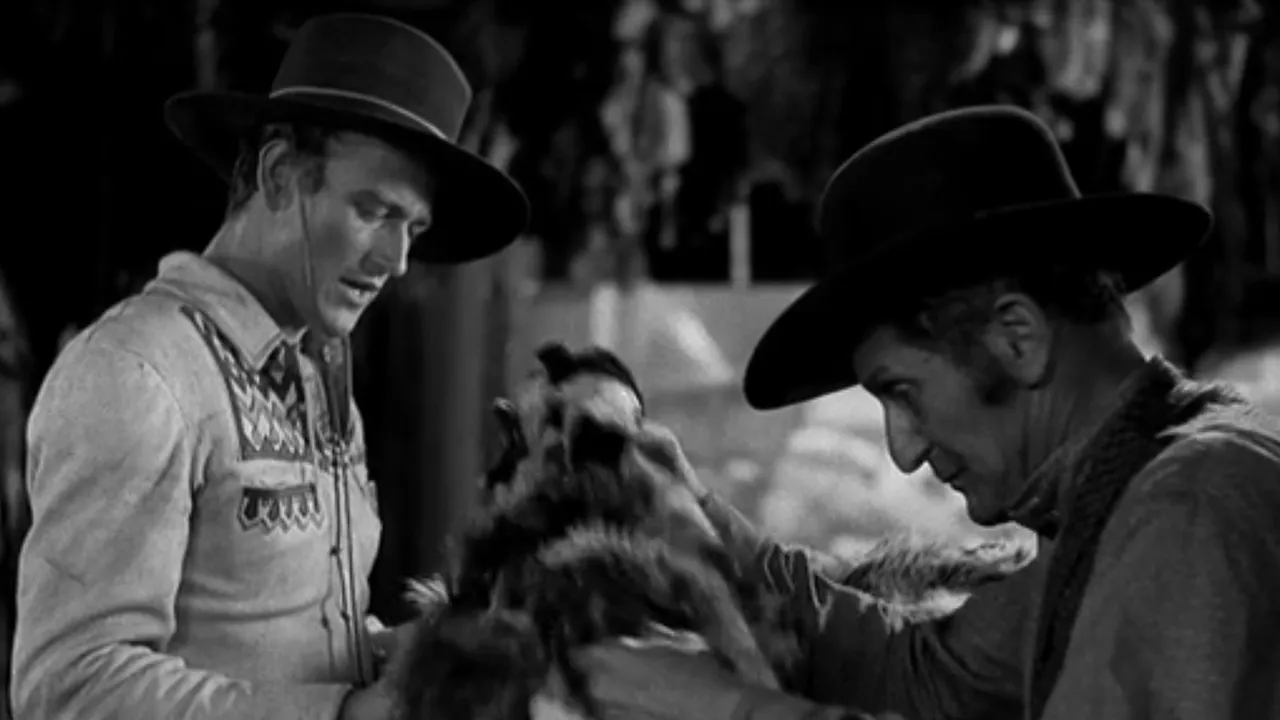
Walsh cast an unknown prop man named Marion Morrison as the lead and gave him a new name: John Wayne. It was Wayne's first leading role. The story follows settlers crossing the Oregon Trail, and it was shot in 70mm Grandeur, an early widescreen format, and at the same time in standard 35mm. Both versions survive, and it was the last Grandeur film Fox made. Trade reports put the budget at roughly $1.3 million. Fox also shot versions in French, German, Italian and Spanish with different casts.
It failed at the box office, which was blamed on the Depression and on theaters that would not pay for widescreen equipment. Wayne then worked mostly in low-budget westerns until Stagecoach in 1939.
 Western
The Big Trail
Raoul Walsh · 1930 · 122 min
The Terror of Tiny Town (1938)
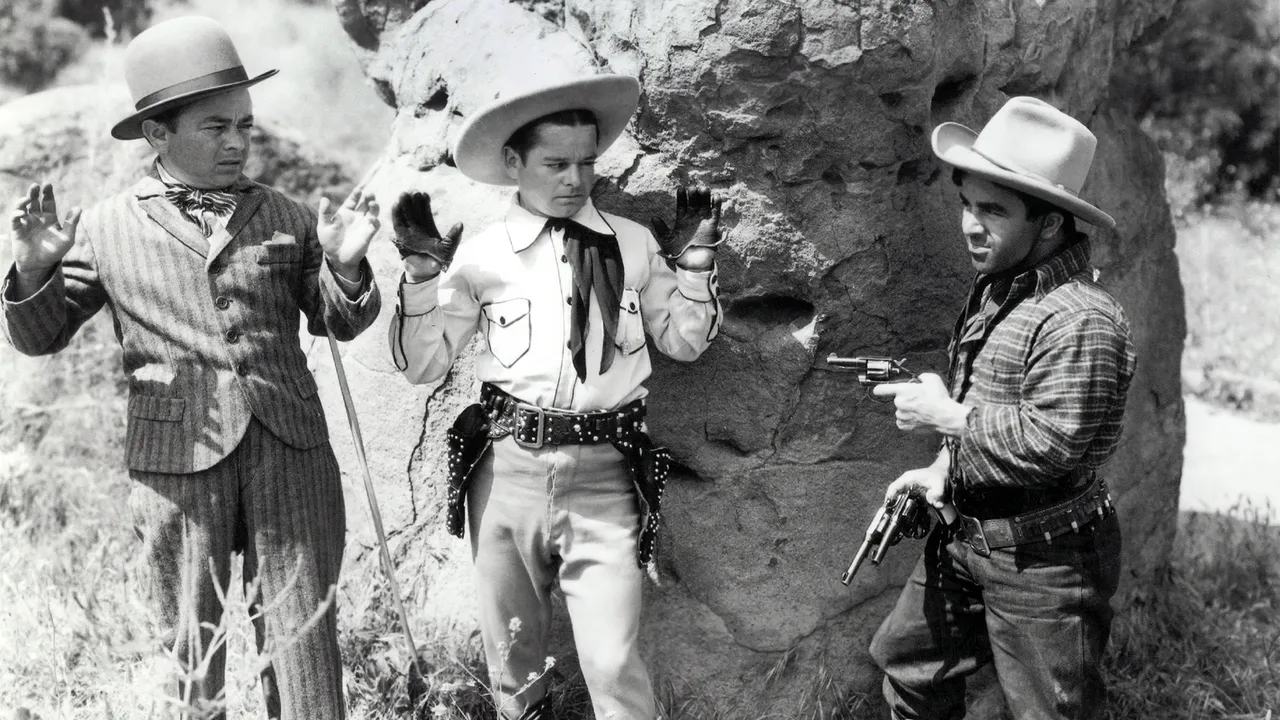
TCM says this remains the only western musical with an all-little-person cast. Producer Jed Buell found about 60 performers, averaging 3 feet 8 inches tall, through talent agencies, newspaper ads and radio. Many had been members of the Singer Midgets troupe, and several later played Munchkins in The Wizard of Oz in 1939. A villain terrorizes the good people of Tiny Town, and the townspeople organize to stop him.
Buell had made Harlem on the Prairie in 1937, which was billed as the first all-Black western, with the same director, Sam Newfield. This one came out in July 1938 and Columbia Pictures gave it a wider release in December. It then faded for decades and came back in the early 1970s as a camp favorite on college and midnight circuits. The authors Harry and Michael Medved featured it in The 50 Worst Films of All Time in 1978.
 Western
The Terror of Tiny Town
Sam Newfield · 1938 · 61 min
Gunslinger (1956)
Roger Corman, known as the King of the Bs, directed this story of a marshal's widow who takes his badge. Beverly Garland plays Marshal Rose Hood. Garland later said she believed she was the first woman to play a marshal in a movie western.
Corman planned a six-day shoot, but rain stretched it to seven. He was racing a union contract change that would limit actors to a five-day week. Co-star Allison Hayes broke her arm when her horse slipped in the mud. It was shot at the Jack Ingram Western Movie Ranch in Topanga, California, and released in October 1956 by American Releasing Corporation.
Gunslinger
Roger Corman · 1956 · 78 min
The Unforgiven (1960)
John Huston, the director of The Maltese Falcon, made this western about racism against Native Americans, a subject the film's Wikipedia article calls uncommon for its time. A frontier family's neighbors turn on them when it is suspected that their adopted daughter, played by Audrey Hepburn, was born Kiowa. Burt Lancaster co-stars.
The shoot in Mexico was troubled. Hepburn was thrown from a horse, injured her back, and production stopped while she recovered. Huston clashed with the financiers, who wanted a more commercial film. TCM reports he later said it was the only one of his films he actively disliked. In one scene Lillian Gish, the silent-film star, plays the piano in defiance of a Kiowa war dance. Audie Murphy, the most decorated American combat soldier of World War II, nearly drowned when his boat capsized during the shoot.
The Unforgiven
John Huston · 1960 · 121 min
One-Eyed Jacks (1961)
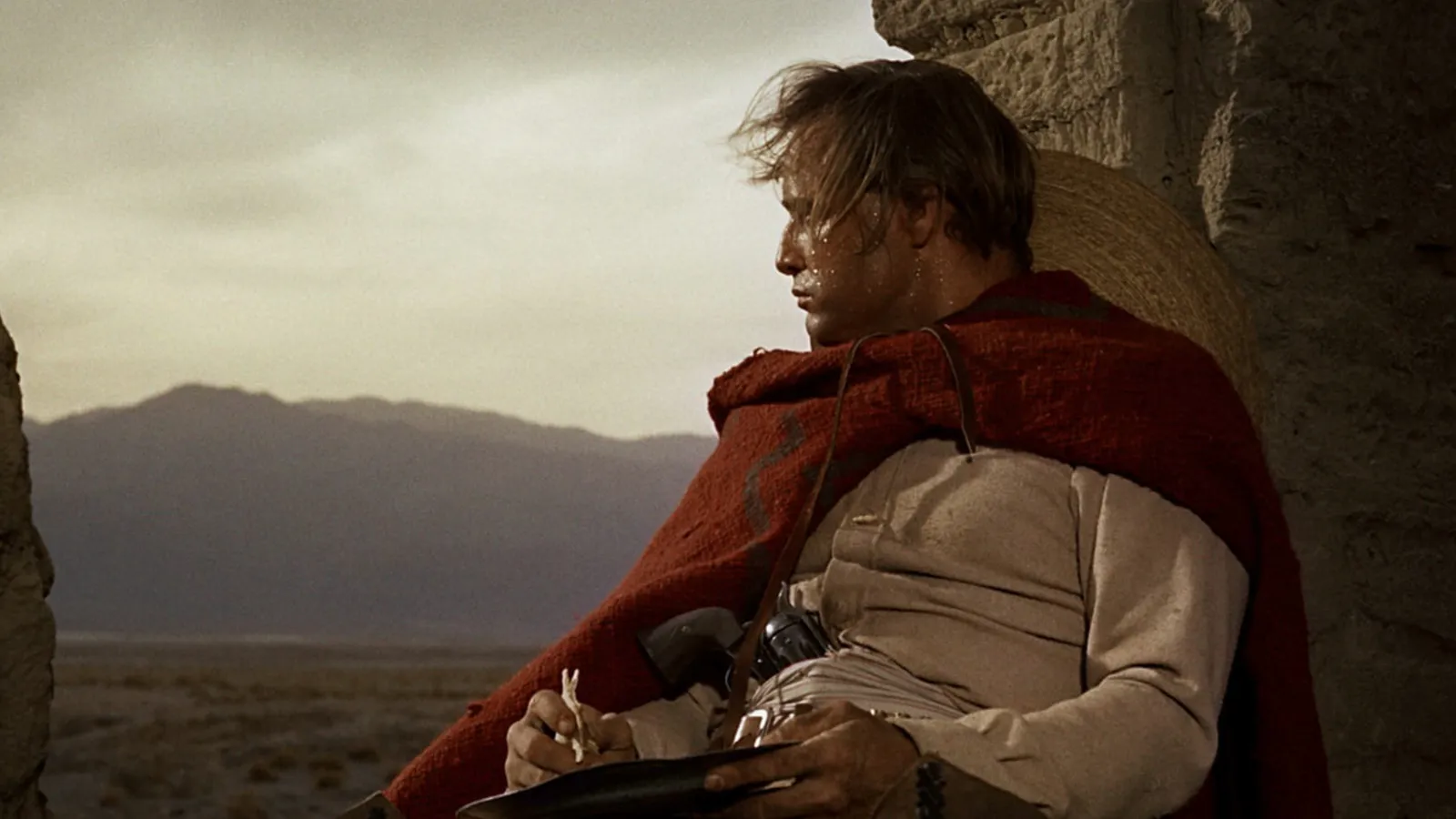
Marlon Brando, the actor who won Best Actor Oscars for On the Waterfront and The Godfather, directed one film, and this is it. Stanley Kubrick, later the director of 2001: A Space Odyssey, was first set to direct but stepped down in November 1958, two weeks before production, reportedly to get Lolita made. Brando took over. A bandit leaves his partner to be captured after a bank robbery, and the partner escapes and comes looking for him.
Brando shot more than a million feet of film. A three-month schedule took six months, and the cost reached about $6 million against an original budget of about $2 million. His first cut ran close to five hours, and Paramount cut it to 141 minutes without him. For years it circulated in poor reissues. A 4K restoration supervised with the filmmakers Martin Scorsese and Steven Spielberg premiered at Cannes in 2016, and the Library of Congress added it to the National Film Registry in 2018.
One-Eyed Jacks
Marlon Brando · 1961 · 141 min
McLintock! (1963)
John Wayne plays a wealthy rancher who keeps the peace between farmers, ranchers and land-grabbers, opposite Maureen O'Hara, the Irish-American actress who made five films with Wayne over 22 years. It is loosely based on Shakespeare's The Taming of the Shrew, and Andrew V. McLaglen directed it.
Wayne's company Batjac made it, and it was the first film fully produced by Wayne's son Michael. It was shot at Old Tucson Studios and near Patagonia and Nogales, Arizona. McLaglen said the film "put me in the big time", and he went on to make four more films with Wayne.
McLintock!
Andrew V. McLaglen · 1963 · 127 min
Where to go next
Every film above is on Relay. For more on the people and studios behind the genre, try these.