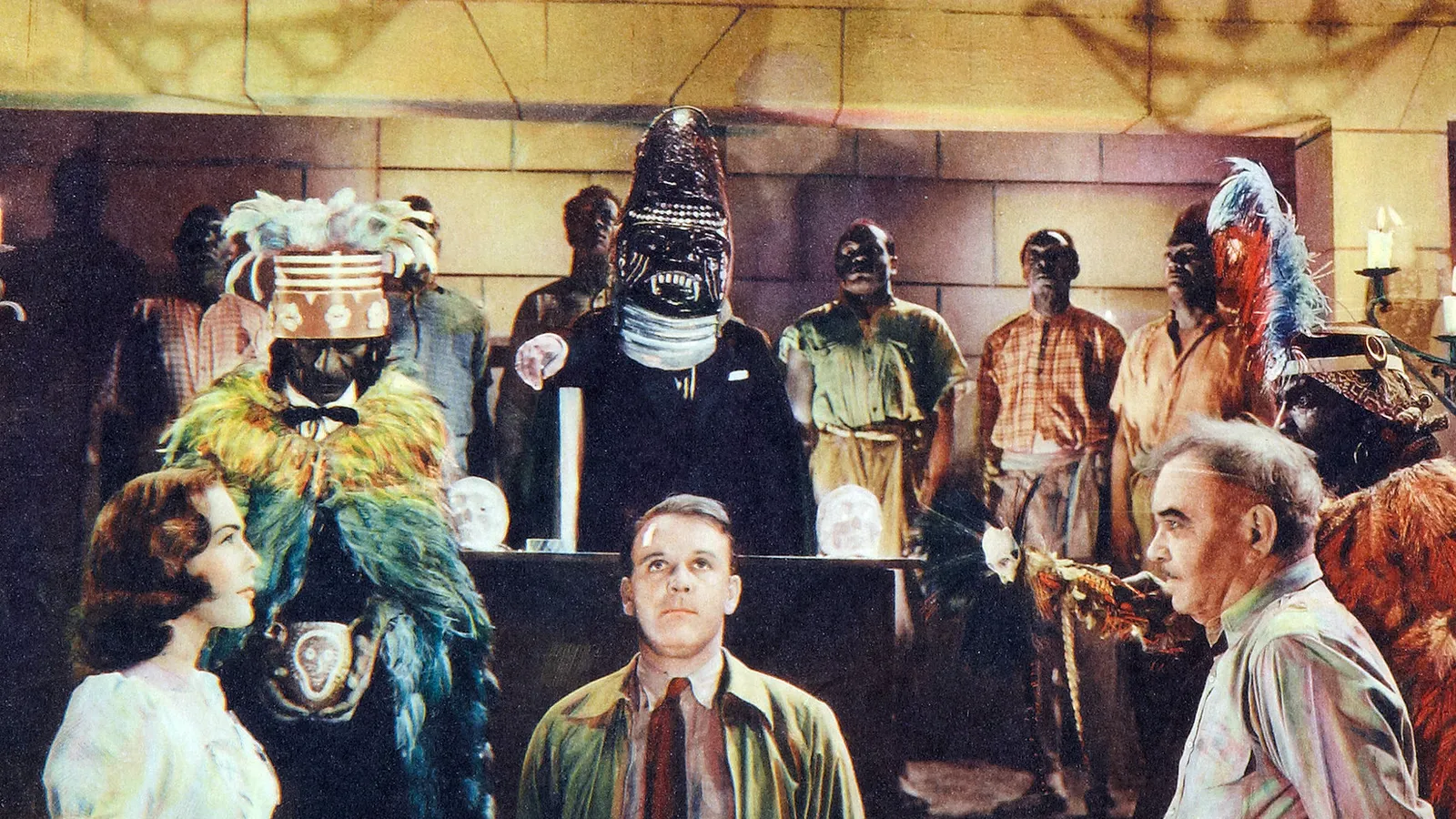
Zombie movies: from voodoo slaves to a £45 camcorder film
A zombie film made for a reported £45, a voodoo sequel that lost a lawsuit, and Boris Karloff's last roles.
By Relay, Watch Guide · Thursday, October 15, 2026 · 6 min read
A zombie film is a horror film about the dead walking among the living. The cause changes from film to film: a sorcerer, a mad scientist, a virus. What stays the same is that the zombie has lost its will, and the people who are left have to deal with it.
The idea started in Haitian folklore, where a zombie is a dead person raised by a bokor, a voodoo sorcerer. The folklore is tied to enslaved Africans brought to Haiti under French rule. The travel writer William Seabrook popularised the word for many readers in his 1929 book The Magic Island, and film scholars believe it inspired White Zombie, which came out in 1932 and is usually described as the first feature-length zombie film.
The films below follow what happened next. Small studios kept making voodoo zombies, mad scientists and island plots followed, and by 2009 a man with a camcorder could make a zombie film that distributors fought over.
What makes a zombie film
- A will taken away. The early zombie is a servant under a sorcerer's control. The later one is simply hungry or sick. Either way, someone else, or something else, is steering.
- A cause. Voodoo, a hypnotist, an experiment, a disease. The cause tells you which decade the film belongs to.
- Survivors. The living are trapped in a house, on an island or in a city, and the drama is how they treat each other.
10 zombie movies to watch
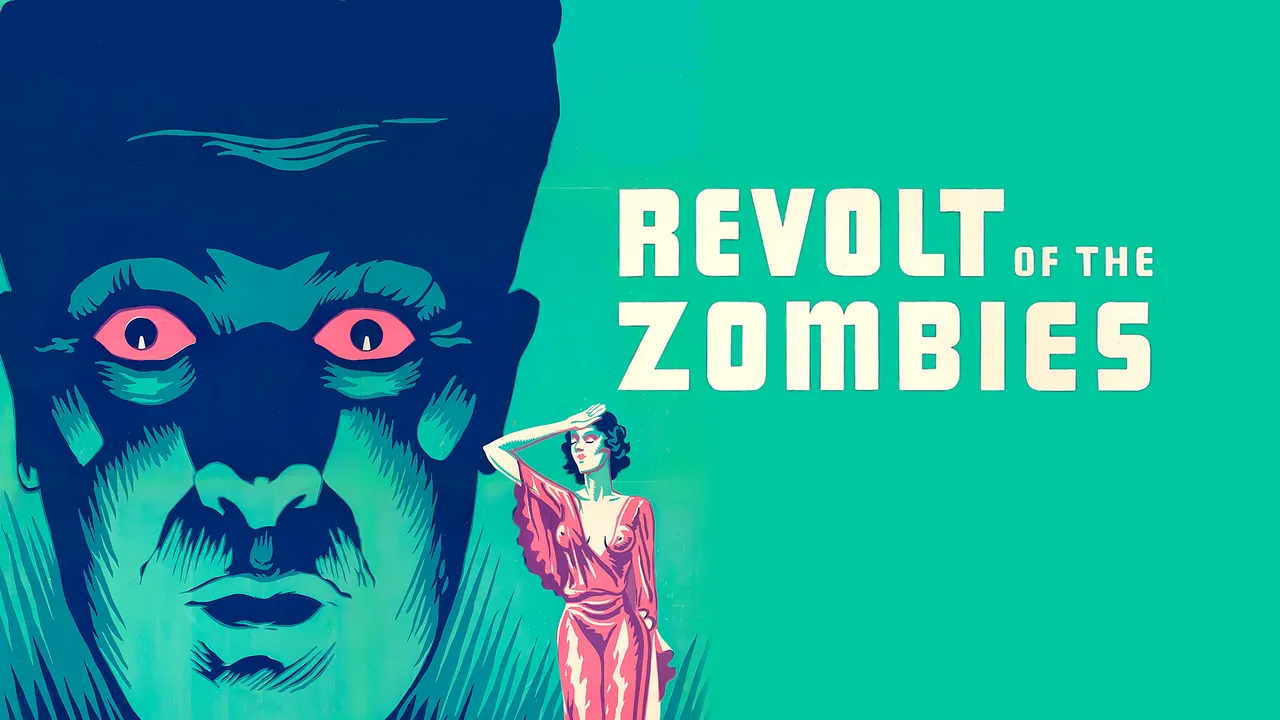
Revolt of the Zombies (1936)
Director Victor Halperin made White Zombie in 1932. This was his follow-up, and a rival company sued over the title, arguing that it infringed on White Zombie. Bela Lugosi, the horror star who led the earlier film, was reported as the star in 1935, but he is not credited.
An expedition goes to Cambodia, where a hidden formula turns men into soldiers. Trade reports said a crew sailed for Angkor in 1936 to shoot there, yet critics have noted that much of the setting looks like enlarged photographs.
 Action/Adventure
Revolt of the Zombies
Victor Halperin · 1936 · 62 min
King of the Zombies (1941)
Monogram, a Poverty Row studio, first considered Bela Lugosi, the horror star, for the villain, then hoped to get the actor Peter Lorre. Henry Victor played the part. It was shot from late March into early April 1941, about a week, and the film still earned an Academy Award nomination for its score.
Three men crash-land on a Caribbean island and find a spy using voodoo to raise the dead. Trade reports said the producer meant it as a satire of the typical zombie picture. Critics most often praise Mantan Moreland, who plays the valet.
King of the Zombies
Jean Yarbrough · 1941 · 67 min
Voodoo Man (1944)
Monogram shot it in October 1943 and released it in February 1944. The horror actors Bela Lugosi, John Carradine and George Zucco are all in it, and one reviewer believes no other film has all three together. Modern sources say Carradine considered it his worst film.
Zucco runs a gas station that sends women drivers to the mansion of Lugosi's Dr. Marlowe, who uses voodoo to try to move a kidnapped woman's life into the body of his dead wife. Harrison's Reports, a trade paper, said intelligent audiences would find it more amusing than horrifying.
Voodoo Man
William Beaudine · 1944 · 62 min
Teenage Zombies (1959)
Jerry Warren produced, directed and edited it, and wrote the script under the pen name Jacques Lecoutier. He reportedly wrote it in less than a week during his honeymoon. The credits carry a 1957 copyright notice, but the film was never registered, so it entered the public domain.
Teenagers land on an island where a scientist is testing a gas that turns people into zombie-like slaves. Chuck Niles, later a Los Angeles jazz radio host, played a zombie and recalled that his only direction was to walk like Frankenstein and make gurgling noises.
Teenage Zombies
Jerry Warren · 1959 · 70 min
Monstrosity (1963)
Joseph V. Mascelli was a cinematographer who wrote The Five C's of Cinematography, a textbook. This is the only feature he directed. Producer Jack Pollexfen told the film historian Tom Weaver that it was shot around 1958, years before its release, and that it was the worst picture he was involved with and the only one of his that never turned a profit.
A wealthy old woman funds a doctor's atomic-powered brain transplant experiments so she can move her brain into a young woman's body. The actor Bradford Dillman narrated without credit, as a favor to his brother, who produced and co-wrote it. It later aired on Mystery Science Theater 3000 as The Atomic Brain.
Monstrosity
Joseph V. Mascelli · 1963 · 65 min
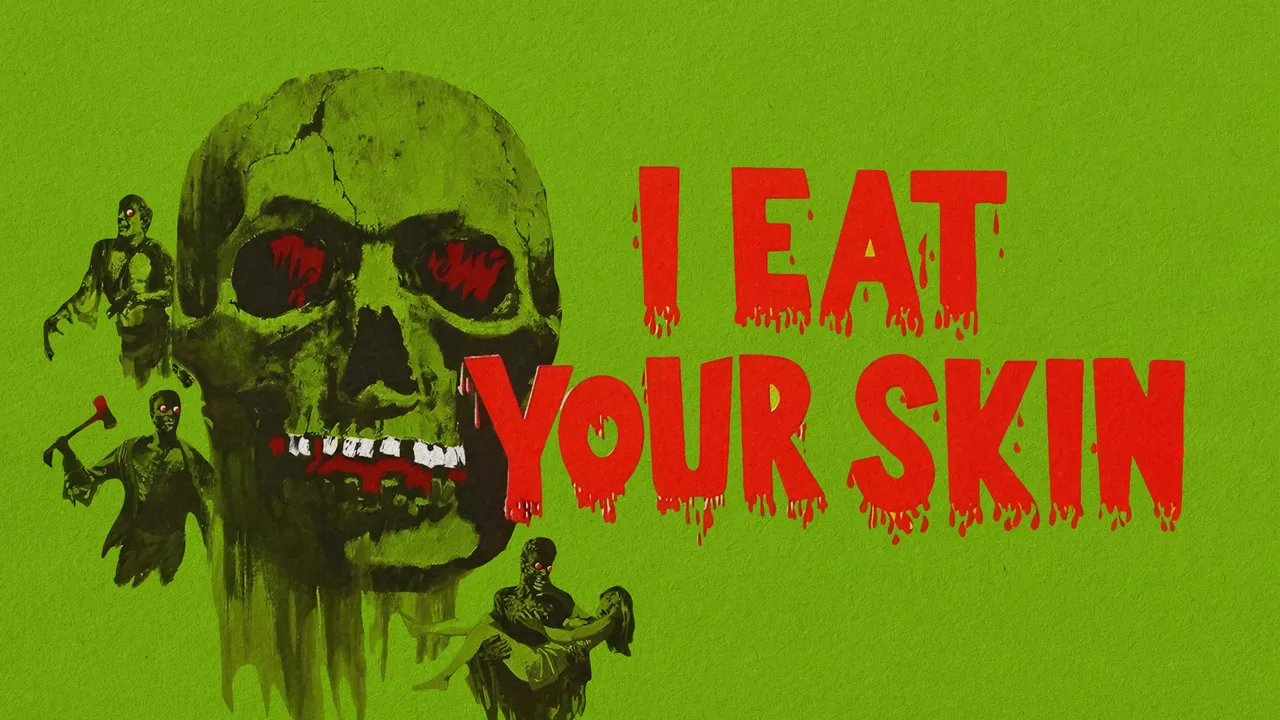
I Eat Your Skin (1971)
Del Tenney shot it in 1964 in Miami Beach, Florida, which stood in for a Caribbean island. It was made as Zombies, planned as a double bill with Frankenstein Meets the Space Monster. It did not reach theaters until 1971.
Cinemation Industries released it that year, double-billed with I Drink Your Blood. Reviewers have pointed out that no skin is eaten in the film. An adventure novelist gets tangled in a plot to turn islanders into zombies.
 Horror
I Eat Your Skin
Del Tenney · 1971 · 82 min
Snake People (1971)
It is one of four low-budget Mexican horror films the horror star Boris Karloff made in a package deal with the Mexican producer Luis Enrique Vergara. Filming was planned for Mexico, but Karloff's emphysema kept him from working at Mexico City's altitude, so Jack Hill directed his scenes in Los Angeles in spring 1968. Juan Ibáñez finished the films in Mexico.
The result reached theaters in March 1971, after Karloff's death in 1969. He plays a plantation owner on an island with a voodoo cult, largely from bed. Yolanda Montes, billed as Tongolele, plays the snake-dancing cult figure Kalea.
Snake People
Jack Hill · 1971 · 91 min
Colin (2009)
Marc Price shot it on a 10-year-old Panasonic camcorder and edited it on a home PC. Its reported cost was £45, and Price said most of it went on very cheap tea and biscuits. The blood was golden syrup, red food colouring and coffee, and the street gunfire on the soundtrack was recordings of Bonfire Night fireworks.
Price told the story from the zombie's point of view, with little or no dialogue, which also meant he did not have to record sound on busy London streets. It was first shown at Abertoir, a Welsh horror festival, in 2008, and distributors including Pathé competed for it.
Colin
Marc Price · 2009 · 97 min
Harold's Going Stiff (2012)
Keith Wright's film treats zombification as a wasting disease. Harold Gimble, a lonely pensioner, is the first patient, and doctors think his unusually long survival could point to a cure. Wright said "Most zombie films are about the battle" and that he wanted to tell the story from "a more humanistic point of view."
Harold and his care worker end up on the run from violent vigilantes. Wright shot it hand-held on a Canon 7D, which the producers billed as a first for a UK film. Time Out gave it 3 out of 5 stars.
Harold's Going Stiff
Keith Wright · 2012 · 76 min
Antisocial (2013)
It had its world premiere at the 2013 Fantasia Film Festival in Montreal and is the feature directing debut of Cody Calahan. The idea came from a dinner where Calahan's father called his son's smartphone use a "disease," and the writers decided to treat social media as something dark and destructive.
In the film a social network called the Social Redroom spreads an infection while five university friends ring in the New Year at a house party. The filmmakers cite Evil Dead, directed by Sam Raimi, as a major influence and say they prefer practical effects. Screen Daily said it belies its modest budget.
Antisocial
Cody Calahan · 2013 · 89 min
Where to go next
- For more horror made fast and cheap, see Horror Movies of the Eighties.
- For another horror genre built on a group of people trapped together, see Slasher Movies.