Movie Spotlight: After the End
Andrew Finnigan’s After the End is a quiet character study set in the aftermath of an unnamed global collapse. A former finance professional, stripped of every certainty he built his life around, wanders toward something he cannot name.
By Relay · Monday, July 6, 2026 · 3 min read
The world ended. He survived. That turns out to be the harder part.
Andrew Finnigan’s After the End begins with a man counting days, walking through a landscape that has stopped asking questions. No name. No destination at first. Just the daily accounting of a former finance professional who, as Finnigan puts it, spent his life trusting “evidence, data, and predictability because those things make the world feel safe.” The apocalypse didn’t kill him. It just removed every system he’d built his identity on. What the film actually asks is: what’s left when the spreadsheet runs out?
A question before an image
The film didn’t start with a visual for Finnigan. It started with a question: What would happen to someone whose entire identity was built around certainty if certainty itself disappeared? The post-apocalyptic backdrop was the laboratory. “I was interested in stripping away everything we use to define ourselves,” he says, “careers, routines, relationships, distractions, until someone is left with nothing but themselves and their deepest beliefs.” The man counting days wasn’t really tracking time. He was trying to prove that life could still be organized. That the collapse hadn’t taken that too.
Most films set after civilization ends are still secretly about the catastrophe. The spectacle. Finnigan was interested in the morning after the spectacle. “The apocalypse wasn’t actually the story,” he says. “It was just the backdrop. The real story is what survives after everything else doesn’t.”
The people he lost
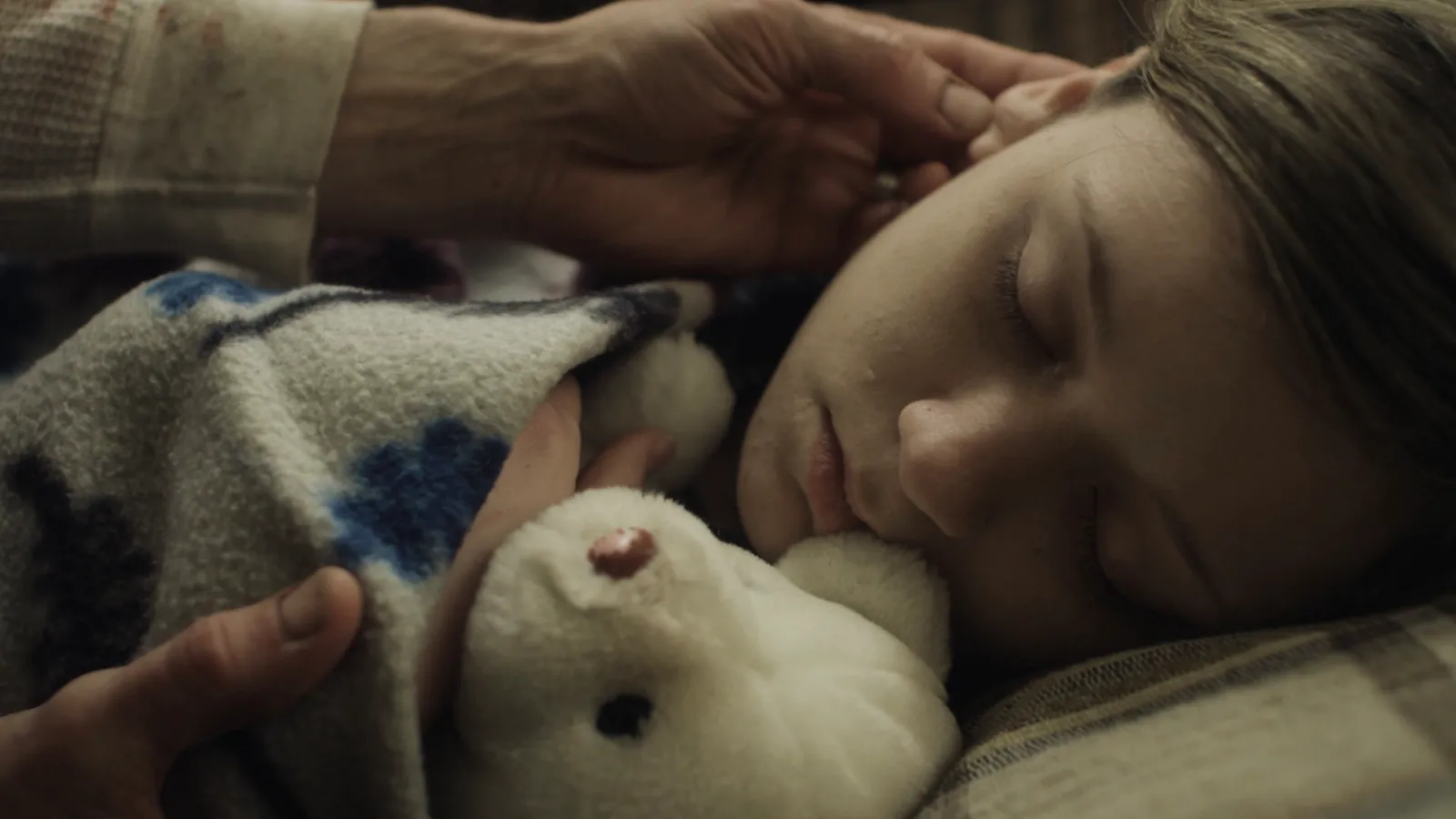
The protagonist has no name for most of the film. The people he’s grieving do. Sarah, his wife. Mobby, his daughter, the nickname born because she couldn’t pronounce her L’s as a kid. They’re gone, and they’re everywhere. “Names create identity,” Finnigan explains. “By refusing to name him at the onset, I wanted him to become a little more universal.” Ironically, the dead feel more present than the living man. “Sarah and Mobby have names because love gives them permanence. They’re the anchors of his memory, while he’s slowly losing his own sense of self.”
He does say a name eventually. John. Whether that’s real or a deflection is one of several things the film leaves open.
Tony Doupe and the weight of silence
Tony Doupe carries nearly the whole film. When a performance can’t lean on dialogue, there’s nowhere to hide. Finnigan and Doupe spent long stretches talking about who this man was before everything collapsed: what kind of husband, what kind of father, how grief changes someone’s posture and pace and even the way they breathe. “Tony understood that silence isn’t empty,” Finnigan says. “It’s full of thought.”
There’s a chess scene midfilm, John playing against an older man. It’s one of the few moments where you glimpse the person he used to be placed alongside who he’s become. Finnigan calls those scenes “emotional landmarks in a journey that’s otherwise incredibly lonely.”
Faraday and the destination that’s never the point
Much of the film’s second act is structured around a rumored community near the Canadian border called Faraday, where people supposedly “changed themselves.” John pursues it with the energy of someone who still believes the problem is external, that the right destination will fix things. “As long as he believes there’s another destination, another answer, another community with a solution, he doesn’t have to confront what he’s actually running from,” Finnigan says. The chase for Faraday isn’t really about Faraday. It’s about what happens when a man who lives by achievement runs out of achievements to chase.
Hearing the loneliness
The film is quiet. More precisely, it’s densely, carefully quiet. The soundscape was designed from the ground up, with full attention to foley and mix. Finnigan wanted the environment to function as a character. “I’ve always believed audiences hear emotion before they consciously understand it,” he says. Before a single word is spoken, there’s a low rumbling, a somber piano line, a creek, mud underfoot. “We wanted viewers to feel the loneliness instead of being told they should.” His advice: wear headphones.
What to know before you press play
In Finnigan’s own words: “Don’t expect a traditional post-apocalyptic movie. This isn’t really about zombies or survival or action. It’s a quiet character study about grief, hope, and what remains when everything else has been stripped away. If you’re willing to slow down and let the story breathe, I think you’ll find it’s ultimately less about the end of the world than it is about what gives life meaning in the first place.”
After the End
Andrew Finnigan · 2026 · 85 min
Streaming now on Relay.