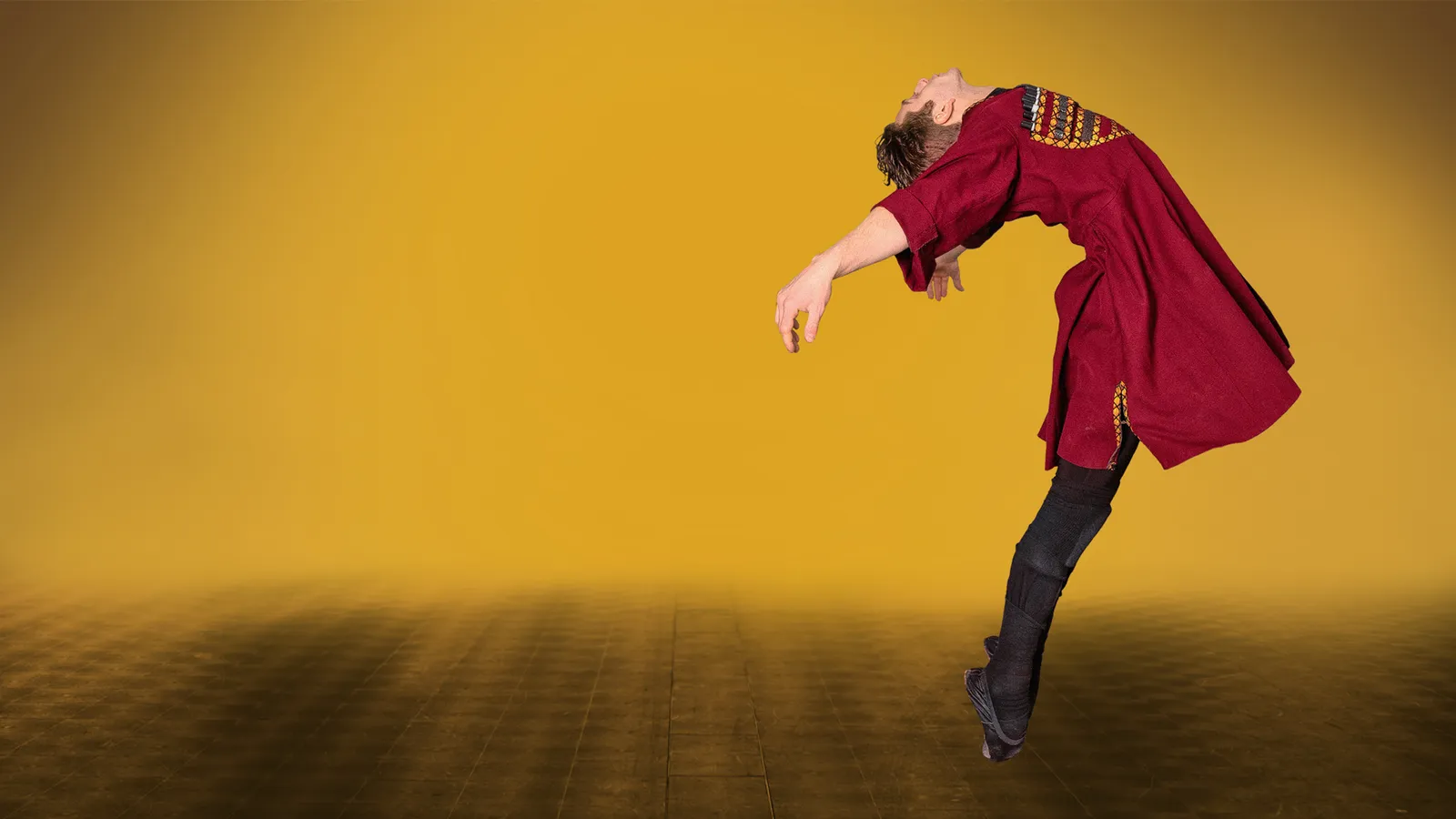
Police guarded the Georgian premiere of this 2019 dance film
And Then We Danced (2019) is a Georgian dance romance made with bodyguards on set and riot police at its premiere.
By Relay, Movie Spotlight · Tuesday, November 3, 2026 · 3 min read
And Then We Danced was made by Levan Akin, a Swedish-born director with Georgian roots, and it is a film about a gay dancer in Georgia that needed bodyguards to be shot and riot police to be shown. Georgia is a country in the Caucasus where traditional dance is a point of national pride, and the film places a love story inside that tradition. It premiered at Cannes in 2019, and Sweden chose it as its official entry for the 92nd Academy Awards, in the best international feature category.
The story follows Merab, a young dancer in a gender-conservative Georgian dance ensemble. A newcomer named Irakli joins, and what begins as a rivalry turns into romantic longing. Merab is played by Levan Gelbakhiani, a contemporary dancer who had never acted before, and Irakli by Bachi Valishvili, a trained theatre actor.
Why did the film need bodyguards?
Akin has said he was partly inspired by the 2013 Pride march in Tbilisi, the Georgian capital, when thousands of counter-demonstrators broke through police barricades and attacked activists. He did not want to make a film in which its gay lead is beaten or victimised. He told the BFI's Sight and Sound magazine he wanted "a warm embrace rather than a punch in the stomach."
The production still met resistance. Akin told Screen Daily that the production received death threats and needed bodyguards, and that a key location was sometimes lost with a day's notice. He told the BFI that a national dance ensemble he approached early on warned others not to work with the production. He also told Screen Daily the shoot lasted 25 days on a shoestring budget, with a small crew working from two buses.
Akin has said he found his lead on Instagram. Gelbakhiani, a contemporary dancer, had no acting experience.
What happened at the Georgian premiere?
The film opened in Georgia on Friday 8 November 2019, at six cinemas in Tbilisi and Batumi. Tickets for the weekend sold out quickly, according to the news site commonSpace. Georgia's Orthodox Church condemned the film, and Georgian March, a far-right group, led the effort to disrupt the screenings.
Outside the Amirani cinema in Tbilisi, protesters threw firecrackers and smoke bombs at the entrance and burned a rainbow flag, while police in riot gear held back hundreds of far-right men, according to Euronews and the BFI. Arrest figures differ by source: Euronews counted 28 detained across Tbilisi and Batumi, while NBC News reported 11 arrests for "delinquencies." No cinema cancelled, and all six screenings went ahead.
Why does the film matter beyond the headlines?
Akin describes the film as a love letter to Georgian culture. He names dance as one of five central forms of it, alongside polyphonic singing, the church, wine and food, and says many Georgian children learn it after school. He also calls it Georgia's first teen movie in the style of the 1980s.
In his account, the film has become something of a symbol. Its music has been played at demonstrations, and young people in Georgia and elsewhere in Eastern Europe write to him daily. Outside Georgia, critics and juries took it seriously as a film. It shared the Grand Prix with the Ukrainian film Homeward at the 2019 Odesa International Film Festival, and won Best Film and Best Actor there, and four Guldbagge Awards, Sweden's national film prizes. Those covered Best Film, Best Screenplay for Akin, Best Actor for Gelbakhiani and Best Cinematography, and tied it with Aniara for the most wins that year.
The film suits viewers who want a coming-of-age love story with real choreography in it, anyone curious how cinema looks from a country the mainstream rarely films, and people who like to know what a film cost to make before they watch it. It runs 113 minutes and streams on Relay.
And Then We Danced
Levan Akin · 2020 · 113 min