Movie Spotlight: Barbie Boomer
Marc Joly-Corcoran waited years to make a documentary about his great-cousin until a Quebec museum offered to acquire her oldest Barbie dolls, giving him the story about grief, identity, and what we refuse to let go.
By Relay · Wednesday, June 17, 2026 · 3 min read
The call from the museum wasn’t the subject. It was the key.
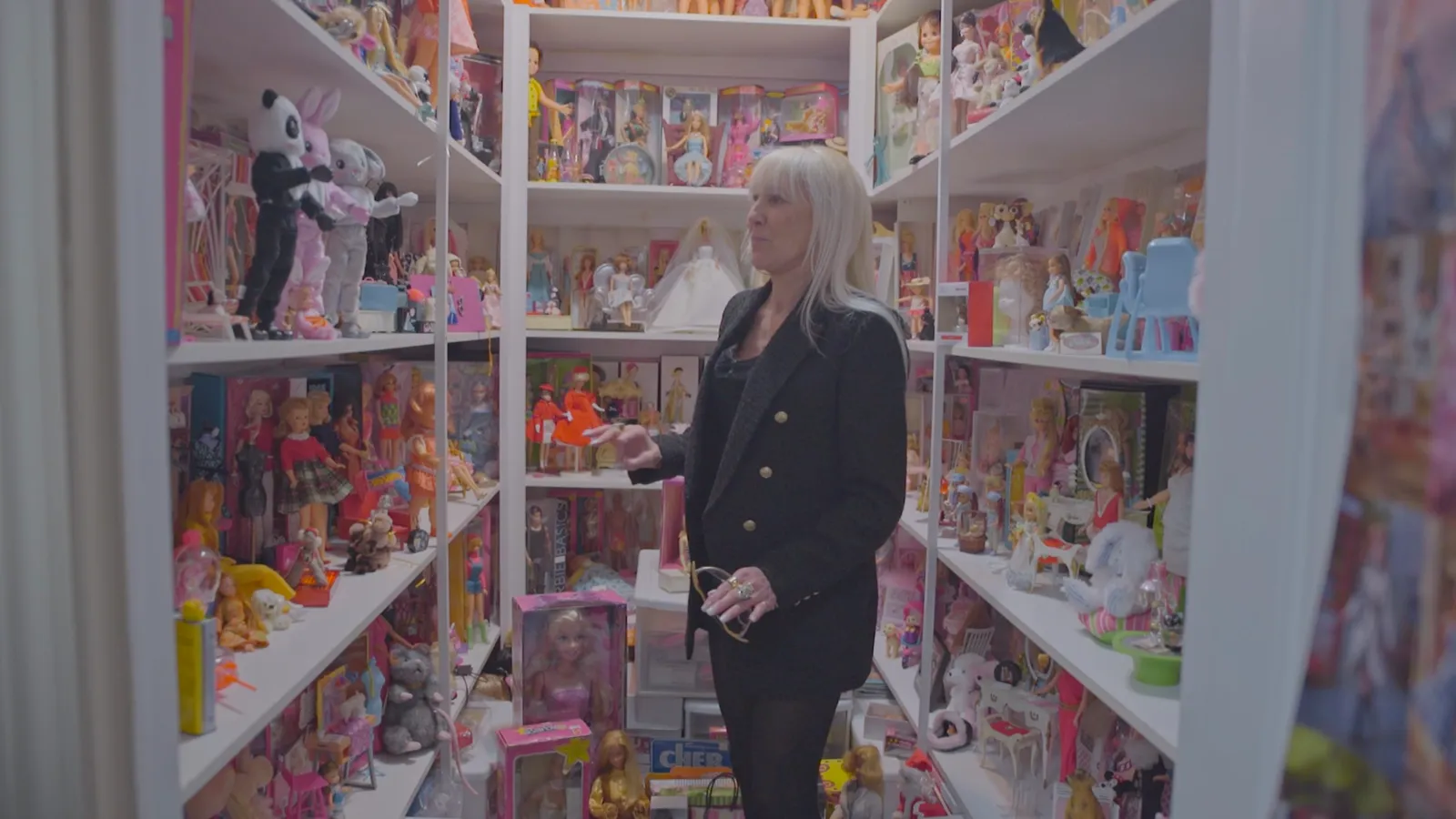
Marc Joly-Corcoran had been watching his great-cousin Sylvie Lonpré for years, waiting for the right moment to make a documentary about her. He had already made one about fan culture, May the Fan Be with You, a film about the Star Wars fandom. He understood obsession. But Sylvie needed a story, not just a subject. When a Quebec museum expressed interest in acquiring some of her oldest Barbie dolls, the ones she played with as a child, he recognized what he had been waiting for. He had the narrative: grief, and the idea of letting go.
Quebec’s Barbie
Sylvie Longpré has been known in Quebec as “Quebec’s Barbie” for more than twenty years. Between 1995 and 2000 she appeared on talk shows dressed as a Barbie, with her trademark platinum blond hair. That surface is real. But Joly-Corcoran knew there was more beneath it. “She is very grounded,” he says. “She likes being in the woods, to take care of her dogs. People might think she is unapproachable, but it is far from it.”
The pun that arrived naturally
Joly-Corcoran’s previous film centered on Gen X. Barbie Boomer moved to the generation before. “One of the themes of Barbie Boomer tackles with grief and legacy,” he says. “What happens to all the objects that we accumulate during our life.” Sylvie is literally from the baby boomer generation. The title arrived without effort.
Objects as time stamps
The documentary isn’t a film about Barbie, Joly-Corcoran insists. It’s an excuse to talk about memory. “The objects we surround ourselves with are like time stamps, sort of,” he says. “For some people getting rid of them means getting rid of parts of ourselves.” Sylvie had a happy, protected childhood. As an adult, when stress arrives, she turns to her dolls. They help her get through it. The collection isn’t nostalgia. It’s a coping strategy built over a lifetime.
The German critic in the room
Joly-Corcoran dislikes talking heads. He prefers cinéma-vérité. But the film needed a critical voice to balance the affectionate portrait of Sylvie. His solution was to write and stage a fictional interview with a scholar, played by an actress, performed entirely in German. “She is very critic of Barbie,” he says. The severity of the staged interview balances what might otherwise be an uncomplicated portrait. Why German? Joly-Corcoran leaves that for you to discover.
Barbie and the Quiet Revolution
Barbie arrived in Quebec at the start of the 1960s, the same years as the Révolution Tranquille, when the provincial government separated from the Catholic Church and women began to emancipate themselves from that structure. “In that context,” Joly-Corcoran says, “we can easily understand why every mother bought a Barbie to their daughters in Quebec.” The cultural timing wasn’t coincidence. It shapes what the doll means in this specific place and in this specific film.
What to know before you press play
“I wanted to make it fun and educational without weighing down the story,” Joly-Corcoran says. Sylvie is a charismatic protagonist who drives the film forward, and the journey to donate part of her collection to the museum becomes genuinely moving. “Sylvie is very outgoing but also very stubborn, and the way she handles other people’s judgments -- by staying true to herself without compromise -- might make some people jealous.”
Barbie Boomer
Marc Joly-Corcoran · 2025 · 78 min
Streaming now on Relay.