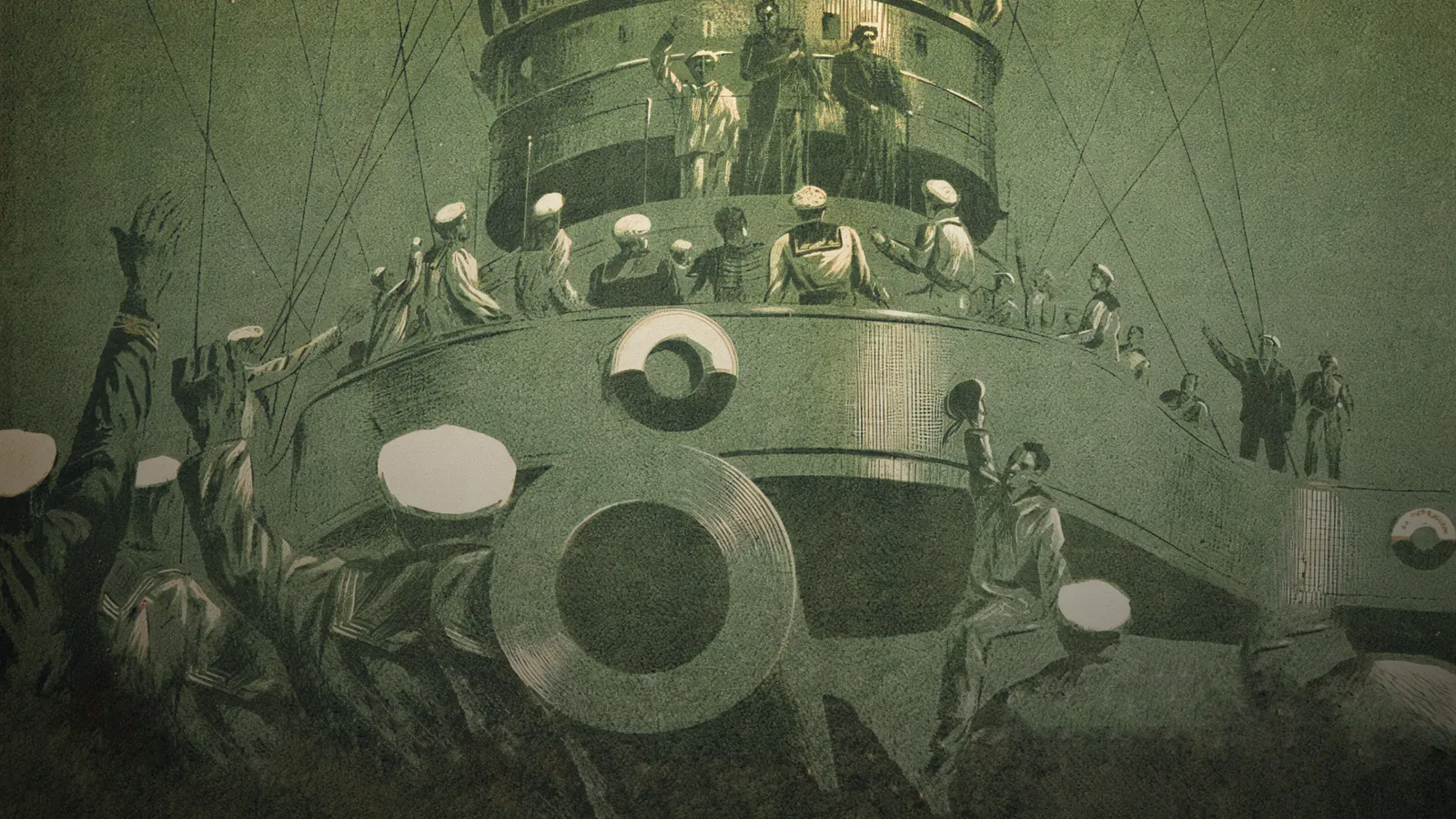
The famous massacre in this 1925 film was invented
Battleship Potemkin (1925): its Odessa Steps massacre did not happen as shown, yet it became one of the most copied scenes in film.
By Relay, Movie Spotlight · Tuesday, October 27, 2026 · 3 min read
Battleship Potemkin was made in 1925 by Sergei Eisenstein, a 27-year-old Soviet director, and its most famous scene, a massacre on a stairway in Odessa, did not happen as the film shows it. Eisenstein took real unrest and suppression in the city and condensed it into one dramatised incident. The sequence has been much copied since: Senses of Cinema, the film journal, lists the directors Woody Allen and Brian De Palma among those who have, and says the film "wrote the grammar of cinema".
The story is a real one at its core. In June 1905 the sailors of the Russian battleship Potemkin mutinied against their officers, and the film follows the revolt and the city's reaction to it. Relay streams more than 390 silent films, and this is the one that shows what an editor can do to an audience.
Why was a film about a mutiny made in 1925?
The Soviet authorities commissioned Eisenstein to direct a series of films marking the 20th anniversary of the 1905 revolution. The Potemkin mutiny was meant to be a prologue to the first episode. Then bad weather and logistics pushed the crew to Odessa, and the prologue grew into the whole film.
Shooting began on 31 March 1925 in Leningrad, and the film had to be finished by the end of the year. It was Eisenstein's second feature, after Strike.
What is real and what is not?
The mutiny is real, and so are several of the images that stay with viewers. The maggot-infested borscht and the scene of mourners viewing the body of the sailor Vakulenchuk were drawn from the actual 1905 mutiny, according to TCM, the classic film channel.
The steps are different. The massacre was not in daylight and did not unfold as portrayed. Roger Ebert, the film critic, noted that the scene's power is scarcely diminished by the lack of a tsarist massacre there.
Why did editing make it famous?
The film is a prime example of Soviet montage. Montage is a style of editing that builds meaning by cutting shots against each other instead of letting one scene simply follow another. It still matters because Senses of Cinema notes that advertising now uses these techniques more than cinema does.
On the steps, Eisenstein cuts a trampled child and a mother's appeal against soldiers shown as graphic patterns. He also cuts shots from below, where the citizens panic, against shots from above, where the soldiers hold control. Senses of Cinema describes this as the principle of conflict in montage.
Why was it banned?
In Britain the film was banned by the BBFC, the national film censor, and by local authorities, officially for its violence. The BFI, the British national film body, says it is widely assumed the real motive was political, in the era of the 1926 General Strike, when Bolshevism was seen as a serious threat. Workers' organisations and Ivor Montagu's Film Society screened it privately from 1929. The BBFC formally approved it in 1954.
The film has lasted regardless. It appears on every Sight & Sound critics' poll from 1952 to 2022, one of very few films to do so, and the BFI says it was declared the greatest film of all time at the 1958 Brussels World's Fair.
It has also kept finding new audiences. In 2004 a score by the Pet Shop Boys, the British pop duo, premiered in Trafalgar Square in London before an estimated 25,000 people, and a restoration with that score returned to cinemas for the film's centenary in 2025.
It suits anyone curious where the rhythm of modern film cutting began, and anyone who has seen the steps scene quoted and never the film around it. It is also a useful starting point among the silent films on Relay, since it is a story of a mutiny, a crowd and a staircase told in images.
 Drama
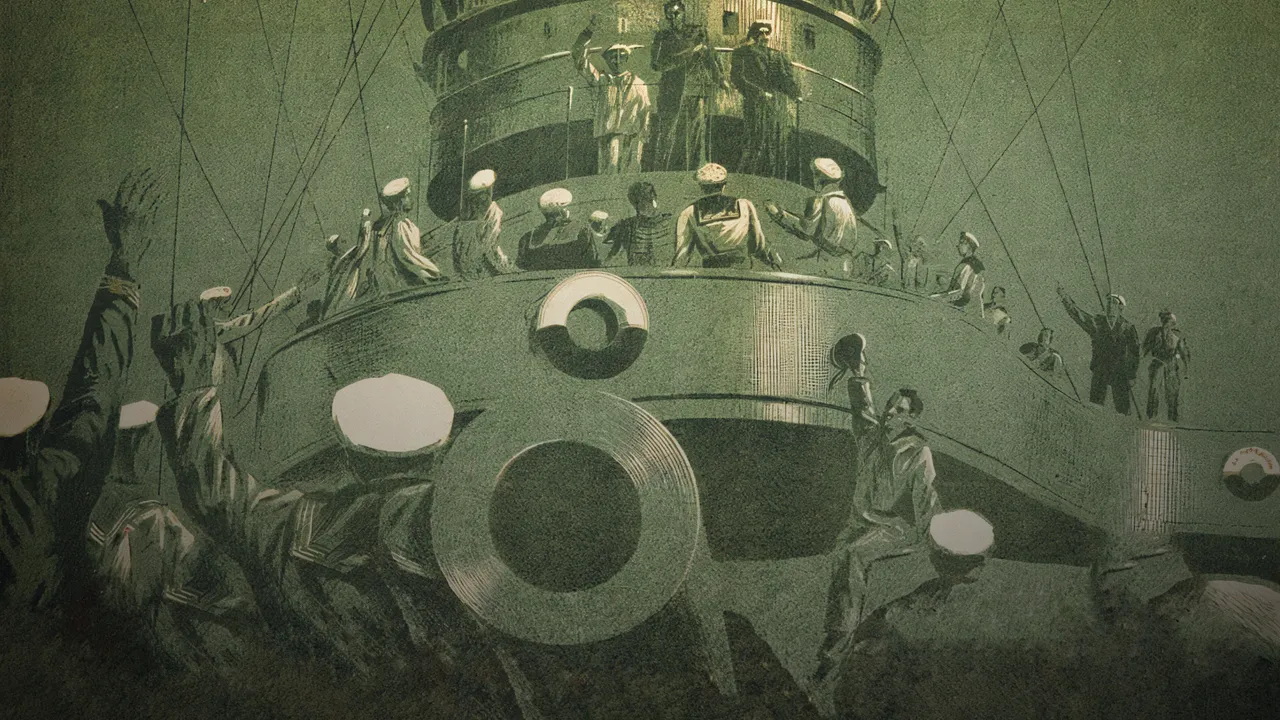
Battleship Potemkin
Sergei Eisenstein · 1925 · 68 min