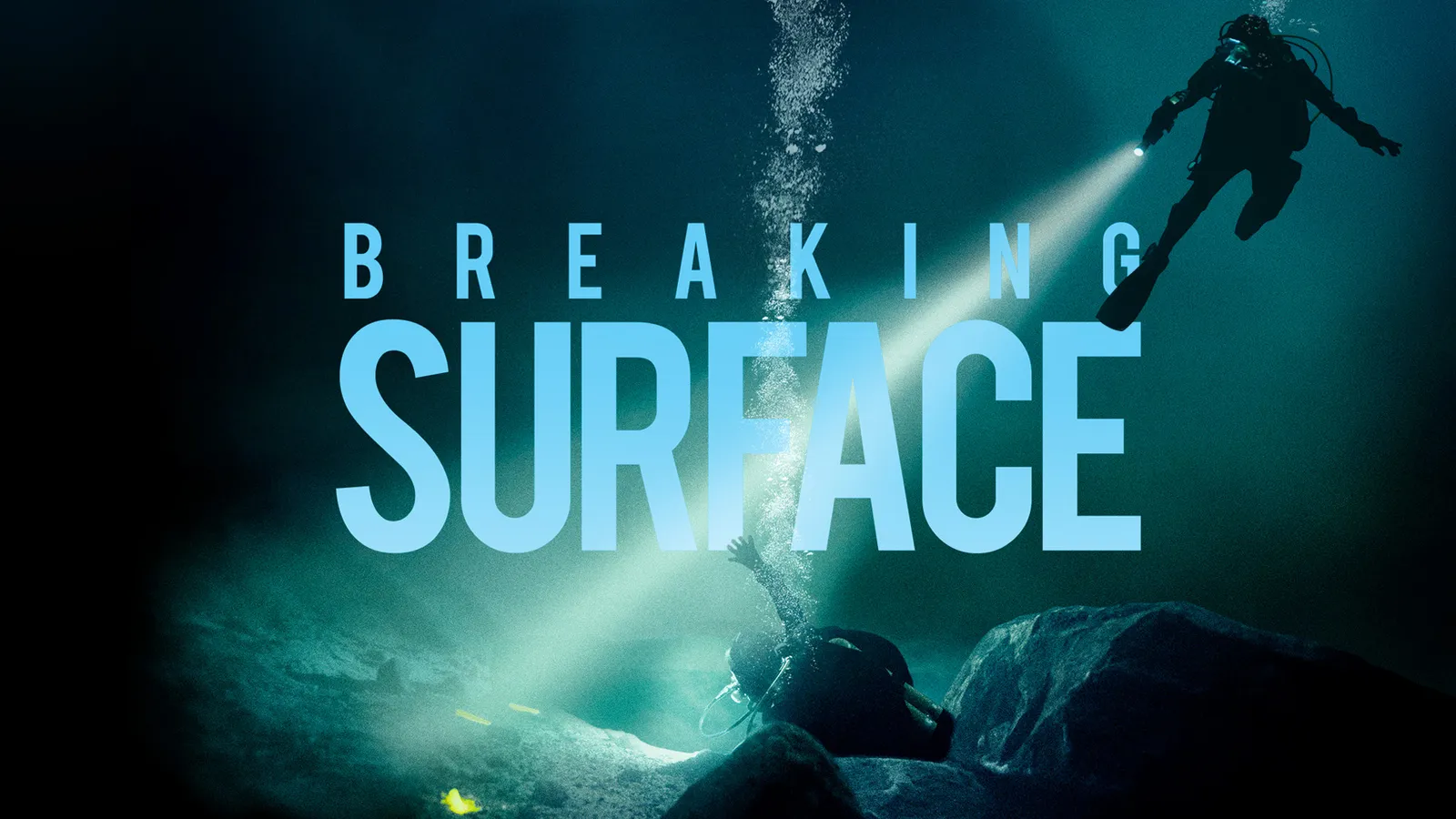
This diving thriller was the first film in a new underwater studio
Breaking Surface (2020) is set in a winter sea off Norway and was the first film shot in a new underwater studio in Belgium.
By Relay, Movie Spotlight · Friday, November 20, 2026 · 3 min read
Breaking Surface is a 2020 survival thriller by Joachim Hedén, a Swedish writer and director, set in the winter sea off a remote stretch of the Norwegian coast, and its underwater scenes were filmed in a pool outside Brussels. It was the first film shot at LITES, a new underwater studio in Vilvoorde, Belgium. That studio exists so films can stage water scenes that would be too dangerous in the real sea, and Breaking Surface was the first to test it.
The story is simple and tight. A few days after Christmas, the Swedish and Norwegian half-sisters Ida and Tuva, played by Moa Gammel and Madeleine Martin, set out on a winter dive along a remote stretch of the Norwegian coast. A rockslide pins Tuva to the seabed. Ida swims up for help and finds the slide has hit the shore too, burying their equipment, their phones and their car keys.
Why was it not filmed in the real sea?
Hedén did go north. He filmed scenes in a blizzard in the Arctic, and the crew also shot in Lofoten, a chain of islands off northern Norway, and in Strömstad and Gothenburg in Sweden. What he could not do, according to a Reuters report from the set, was put actors and crew into frozen water for the underwater scenes.
So the sea came to Belgium. The underwater scenes were shot at LITES in a 9-metre (30-foot) deep pool built as a movie lot, with camera operators in full scuba gear descending to film them. Shooting there was underway in January 2019, before the studio had made anything else. "It's quite fun to be the first production to shoot here," Hedén told Reuters. He said he expected the studio to become an important set for many other films, and that he hoped it would still be there in 100 years.
What made the studio new?
The pool was built for exactly this kind of film. It has a moveable floor, so a set can be built on dry land and then lowered into the water, and it has wave and wind machines to create a storm on cue. Karen Jensen, one of the studio's co-founders, said it lets filmmakers shoot ideas they once thought too dangerous: "here, it's possible to actually shoot it, in a safe way."
For Breaking Surface, that meant actors who could work underwater with camera operators in scuba gear around them, in water nobody had to brave in a Norwegian winter. Hedén has said he never really thought of it as a diving film, made about divers or for divers. The diving is the setting. The story is a rescue against the clock, and a fractured relationship between half-sisters that the crisis exposes.
How was it received?
The film reached North American viewers through Nightstream, an online horror and genre festival, in October 2020. Bloody Disgusting called it an unrelenting, intense aquatic survival thriller. Film Threat summed it up as 127 Hours meets 47 Meters Down, pairing it with films about people trapped by nature, and called it a lean, mean little tension machine. Screen Anarchy wrote that it consistently surprises as it develops into a gripping story of survival.
The story travelled. In 2023 it was remade in English as The Dive, directed by Maximilian Erlenwein and co-written with Hedén, with Louisa Krause and Sophie Lowe as the sisters. The remake swapped the snowy Norwegian winter for sunny, warmer water and made the trapped sister the older one. Hedén stayed underwater for his next film, The Last Breath (2024), a shark thriller about divers trapped in a Second World War wreck, which was the last film made by the actor Julian Sands.
Who is it for?
It suits viewers who like survival stories that stay in one place, where every minute of air matters. It runs 82 minutes, the dialogue is in Swedish and Norwegian, and the original is the version that kept the cold.
Breaking Surface
Joachim Heden · 2020 · 82 min