Movie Spotlight: Flicker
Writer-director Charles Perez talks about the institute that renamed his heroine, the alley scene that grounds the film, and why the closing song exists to remind you what it cost.
By Relay · Tuesday, July 7, 2026 · 4 min read
A girl runs through empty parking lots and unlit alleys with a power that goes unstable whenever she loses her center, chased by people who don’t call her by her name anymore, only a letter. That’s the setup behind Flicker, and for a film built around teleporting kids and a shadowy institute, it spends most of its runtime looking less like a chase movie and more like a city at night that hasn’t decided yet whether it’s going to help her.
Writer-director Charles Perez built the whole thing around one question: what do you owe the people who were turned into weapons alongside you, once you’re the one who gets out? Ava escaped an institute called Blackwell that took her name and handed her a letter instead. Bo, who came up through the same program, is still inside it. By the time the two of them are facing each other again, the film has stopped being about powers and started being about debt.
What Blackwell actually takes
Bo, Zero, Lana. The letters replace the names, and Perez says that swap is the whole point. “Taking names away is a way of making people easier to file, easier to move, easier to erase,” he said. “A name carries history. A letter carries function.” But Blackwell isn’t just running a machine. She knows how to work people, too, doling out real names or small pieces of identity to whoever needs to feel chosen. “If they feel chosen, they are easier to control,” Perez said. That’s why it registers when Zero pushes back against her. “Blackwell hears that as weakness,” he said. “The audience hears it as identity fighting its way back.”
Steady is not the same as calm
Ava says it plainly partway through: “I’m not calm. I’m steady. I’m just trying to find peace in a loud world.” Perez didn’t want her to be at peace, exactly. He wanted her upright. “Steady means you are afraid and still moving,” he said. “It means your hands might shake, your world might be falling apart, but you are still choosing who you are going to be in that moment.” Ava has spent her life being trained, watched, and tested, so nobody handed her calm. “She has to fight for it,” he said. When she calls herself steady, he added, she’s really saying, “I am still here. I am still moving.”
A flicker that doesn’t go out
The film wasn’t always called this. “At first, Flicker was just the name of the script when I started handing it out,” Perez said. The word stuck because it kept describing everything else in the story, Ava’s powers, her sense of peace, even the streetlights that give the title its opening image. “A flicker is unstable, but it is not gone,” he said. He’s firm that the title isn’t about fragility. “To me, Flicker is not about weakness. It is about survival. It is about a small light that should have gone out, but didn’t.”
Real alleys, not a soundstage
The film was shot in Visalia, California, and the city does more work in it than a backdrop usually does. Parking lots, streetlights, an alley where Ava has to explain teleportation to a skeptical Maya, none of it looks like a futuristic city built for a sci-fi movie. “Ava is not running through a giant futuristic city,” Perez said. “She is running through places that feel real. Places people recognize.” Some of that came from necessity rather than design. “We had to use the streets. We had to use what we had,” he said, “but that became part of the identity of the film.” The rule he kept coming back to on set: if a scene isn’t emotionally true without the sci-fi, the sci-fi doesn’t matter.
The gun that isn’t really about the gun
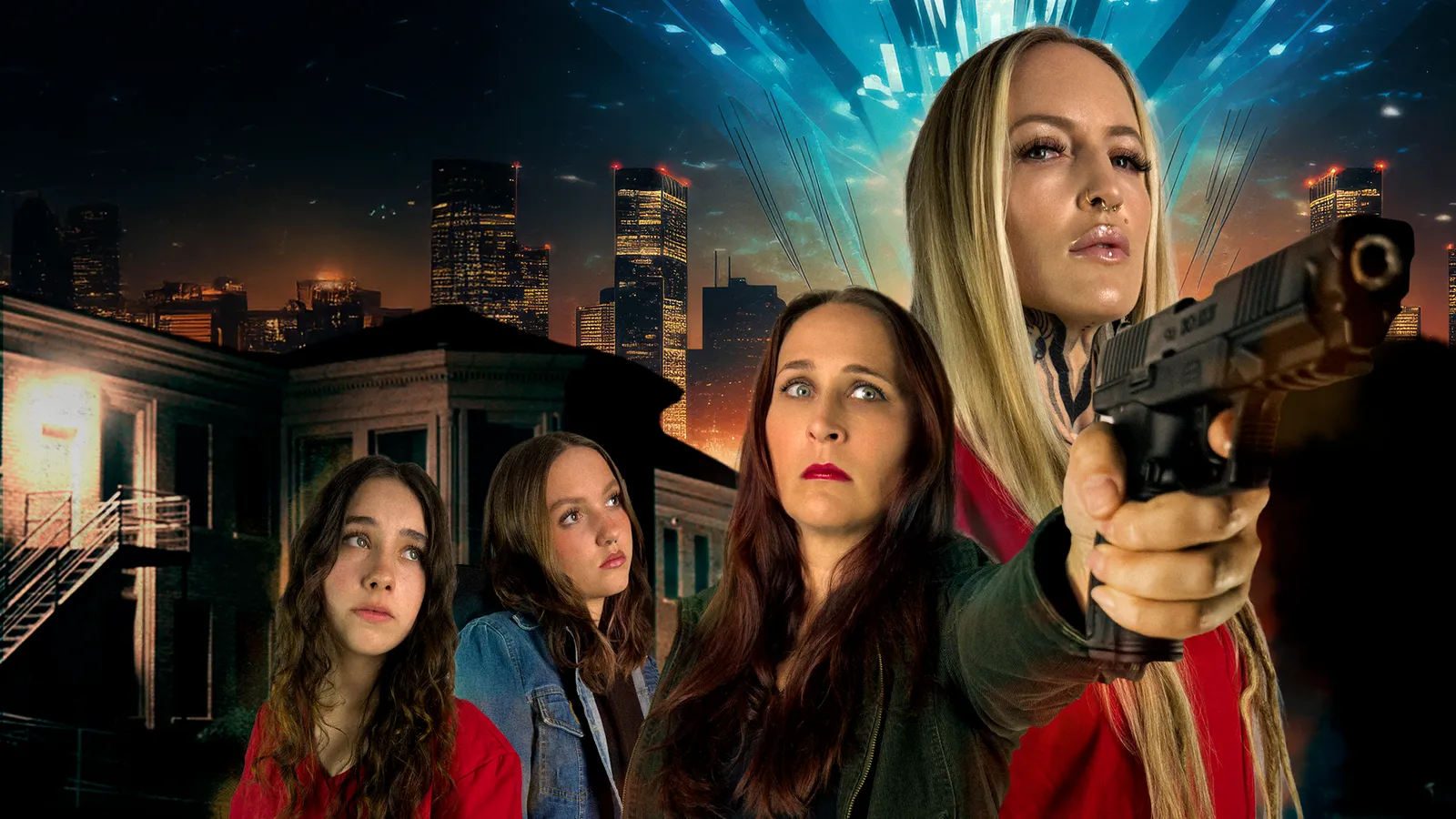
Near the end, Bo and Ava face off, and only Bo is holding a weapon. Perez says the scene was never really about that. “That confrontation is not really about the gun,” he said. “It is about history. It is about two people who know each other too well and still cannot fully reach each other.” Darcy Fanundes, as Ava, had to carry anger, fear, and hope at once. Rachel Cribbs, as Bo, had to carry loyalty, guilt, and a complicated love for someone she’d been ordered to bring in. “There is something toxic there too,” Perez said, “in the way trauma can make people confuse protection, control, love, and loyalty.” He says the scene only works because both characters believe they’re right, and both are hurting.
A song built for the ache
Philippe Gerber’s score carries most of the film’s tension, the sense that Blackwell is always one step behind Ava. But Perez also wanted the closing song to carry something of its own. “It had to let the audience feel the ache underneath everything,” he said. The lyric, “she sat down like she knew my name, like she carried around the very same pain,” lands because nearly everyone in the film is looking for someone who understands what was done to them. Macie Silveira, who plays Nia, sings it over the credits. “She really nailed the singing,” Perez said. “It gave the ending this raw, emotional release that felt right for the world of Flicker.”
What to know before you press play
Perez put it simply: “Flicker is a sci-fi thriller, but it is really about identity, freedom, survival, and women fighting for happiness in a world that keeps trying to define them.” It’s about kids who were never allowed to be kids, and what happens when they start asking who they are without the system that named them. His advice going in: “Watch it for the powers, the chase, and the mystery. But stay for Ava.”
Flicker
Charles Perez · 2026 · 67 min
Streaming now on Relay.