How a Paris transport strike became a French thriller
Full Time (2021) turns a hotel maid's commute through a Paris transport strike into a thriller. It won two prizes at Venice.
By Relay, Movie Spotlight · Wednesday, November 11, 2026 · 3 min read
Full Time was made in 2021 by Éric Gravel, a director from Québec who has lived in France for about 20 years, and it is a thriller with no killer and no crime. Its heroine is a woman trying to get to work through a Paris transport strike. At the Venice Film Festival that year it won two prizes in Orizzonti, the festival's competition for new directions in cinema: Best Director for Gravel and Best Actress for its star, Laure Calamy.
Gravel said the starting point was his wish to portray the people of the suburbs who rise early, drop their children at daycare and commute into Paris. Here, one of them gets a thriller of her own. Its French title, À plein temps, means "full time".
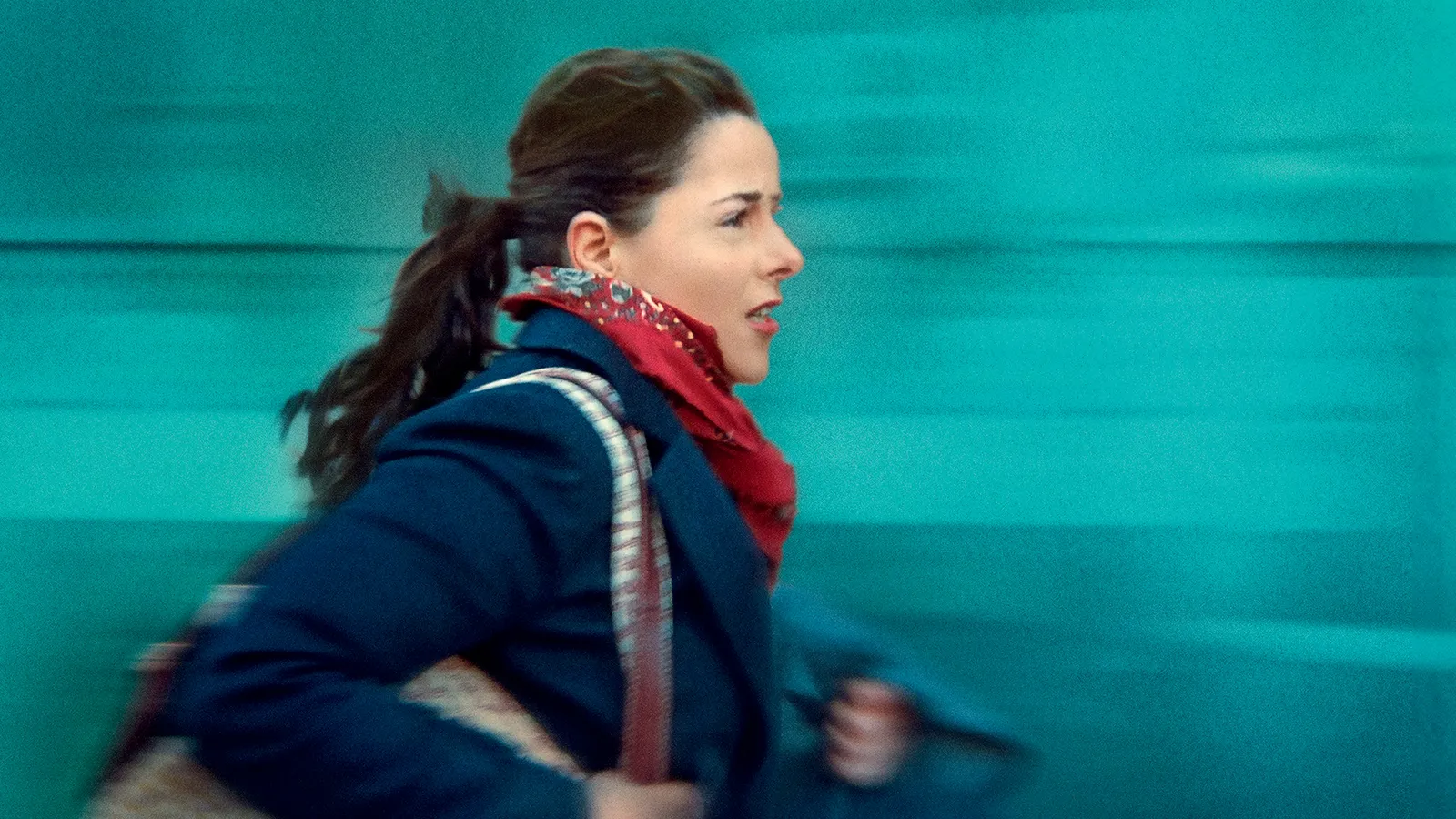
Julie is a single mother of two who lives in a village outside Paris and works as head chambermaid at a luxury hotel in the city. She has a university degree and is chasing a job that fits it. Then a transport strike stops the trains, and each day becomes a race: to the hotel, to a job interview, and home again to her children.
Where did the idea come from?
Gravel had left the city for the countryside of the Yonne, the region around the town of Sens, to renovate an old house. He began writing the story before his first feature, Crash Test Aglaé, came out in 2017.
The 2019 pension reform strike confirmed the idea. Gravel read a Facebook post by a commuter describing an exhausting day, and he recognised Julie in it. He also drew on the 1995 Paris strikes, for the solidarity he saw then, and on the yellow vest protests, when people began occupying roundabouts near his home. Among them he saw many single mothers whom no union or trade body represents.
Gravel said he knew he was playing with fire, and that he likes grey areas. As a cleaner, Julie has little power to strike herself, and she needs others to carry her demands. The film leaves her caught between the two.
Why is it filmed like a thriller?
Gravel said he chose the form of a thriller to avoid the naturalism common in social films, because he wanted to project the viewer into Julie's anxieties. He and the cinematographer Victor Seguin drew on 1970s American cinema, and he built some shots so the camera had to fight to catch her. The handheld camera moves at her speed.
Calamy carries it. She won the César, France's national film prize, for Best Actress in 2021 for My Donkey, My Lover & I, and is known for playing Noémie in the series Call My Agent!. Gravel wrote the script with no actress in mind, and said he chose her for her extremely wide range, because Julie is always performing for the people around her.
Why does the music matter?
The pulse under the film comes from Irène Drésel, an electronic musician, and it was her first film score. At the César awards in 2023 it won Best Original Music, and Drésel became the first woman to win that prize since the awards began in 1976. The film's editor, Mathilde Van de Moortel, won Best Editing the same night.
In France the film sold more than 200,000 cinema tickets. It reached American cinemas in 2023 through Music Box Films, which is why some listings date it to that year.
Who is it for?
It suits anyone who likes tension without violence, and anyone who has stood on a platform watching the departure board go blank. It is in French and runs 88 minutes.
Full Time
Éric Gravel · 2023 · 88 min