A cancelled rat monster film became Japan's flying turtle monster
Gammera the Invincible (1966) is the US cut of a Japanese film built from the sets and resources of a cancelled rat monster picture.
By Relay, Movie Spotlight · Friday, October 23, 2026 · 3 min read
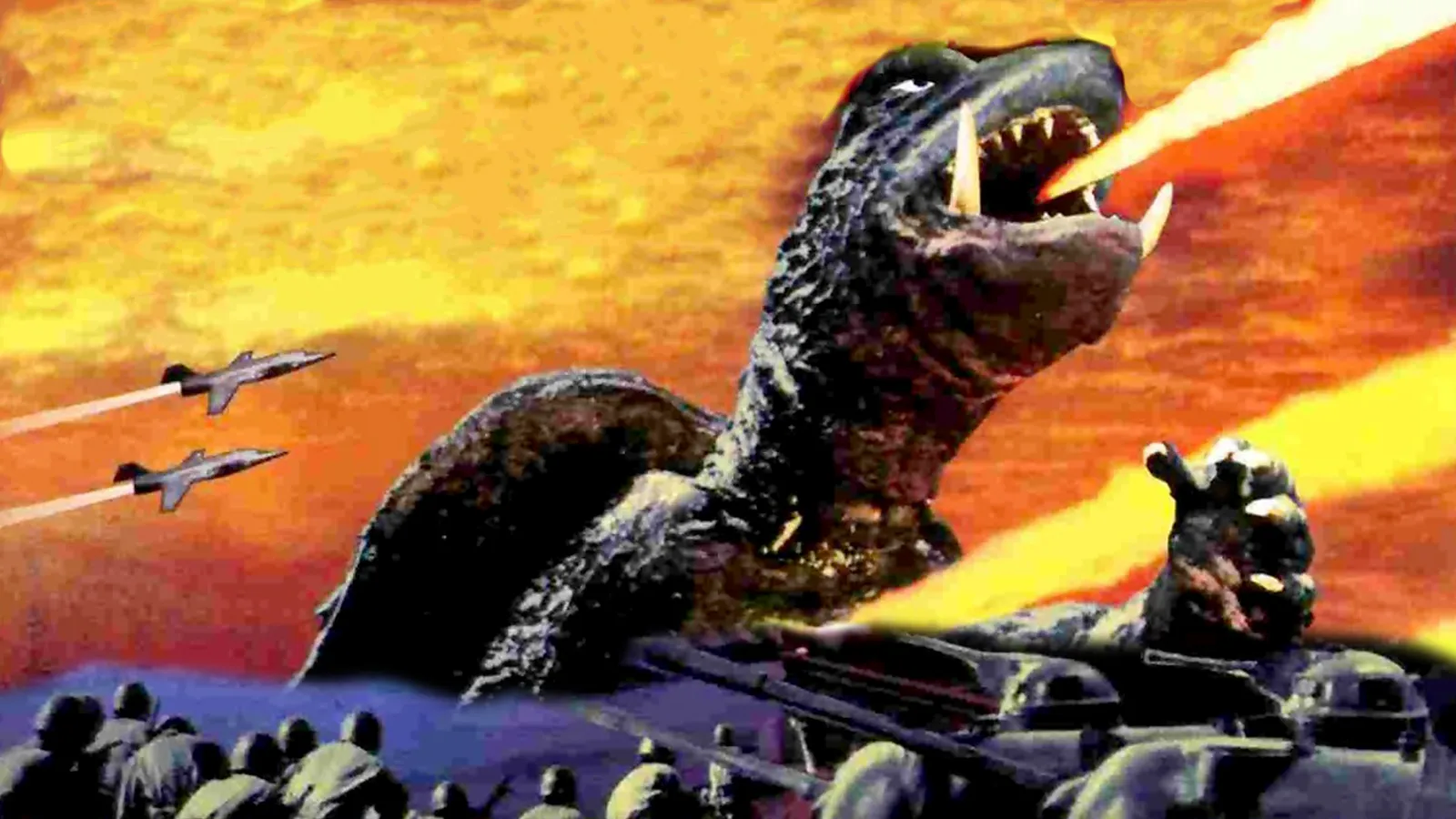
Gammera the Invincible reached American theaters in 1966 as the re-edited version of a Japanese film made in 1965 by the studio Daiei, and it exists because an earlier Daiei monster film was shut down. That film, about giant rats, was cancelled after its live rats caused health problems, and the studio built a giant turtle from what was left. The turtle, Gamera, went on to star in a dozen films.
The film belongs to the kaiju genre, a Japanese word meaning "strange beast" and used for giant-monster films like the Godzilla series. The setup here: a fighter plane crashes in the Arctic, the atomic blast frees a giant turtle, and it flies to Japan and destroys Tokyo. The military then learns the monster is vulnerable to cold and looks for a way to use that.
What happened to the rat film?
Daiei's earlier project, Giant Horde Beast Nezura, was a 1964 film about giant rats. Filming used live rats, and Japan's health authorities recommended ending the production after the rats caused health problems. Accounts differ on who gave the final order: some credit a letter from a health bureau, while the British Film Institute, the UK's national film archive, says Daiei's president, Masaichi Nagata, cancelled it.
Nagata did not give up on monsters. He wanted a rival to the films of Toho, the studio behind Godzilla, which had held a monopoly on giant monsters until 1965. The BFI says Gamera was made as a cautious B-picture, a low-budget second feature, using the modest budget and limited resources left over from Nezura.
The turtle idea has a legend attached. Nagata reportedly thought of it on a flight home from the United States.
Why did it matter?
Gamera was a hit that far exceeded the studio's expectations, and it led to a bigger budget for the sequel, Gamera vs. Barugon. The BFI argues that its success showed Japanese giant monsters could succeed outside Toho's stable, and it helped start the kaiju boom of the mid to late 1960s.
Nagata is credited with setting the series on a path toward children, making Gamera a hero for young viewers. The series then carried the studio: Daiei went bankrupt in December 1971, about four months after Gamera vs. Zigra was released. Gamera outlasted the company: the character returned in later eras, and Japan now marks Gamera Day on 27 November.
What did America change?
The version on Relay is the 1966 American edit, which opened on 15 December 1966. Sandy Howard directed new scenes shot in New York with American actors, among them Brian Donlevy as General Terry Arnold and Albert Dekker as the Secretary of Defense. The new footage has the US military coordinating the response, which makes the threat look international.
The monster's name changed too. In Japan the name had begun as "Kamera" and was altered because it sounded like the Japanese word for camera. For the US release an extra "m" was added so audiences would not say "camera", and the film became Gammera. Every later film spelled it Gamera.
The critic Richard Scheib gave the film two and a half stars, called it a clear imitation of Godzilla and found the added American scenes slow and stiff. He praised the destruction scenes in Tokyo. That is one critic's judgment.
Where it sits on Relay
Relay lists 122 creature features and kaiju films, and this is one of the early Japanese entries, a film whose behind-the-scenes story is as strange as its monster.
The film suits viewers who like 1960s monster movies, anyone curious how the kaiju boom grew beyond one studio, and people who want to see what a Hollywood re-edit did to a Japanese original.
Gammera the Invincible
Sandy Howard · 1966 · 85 min