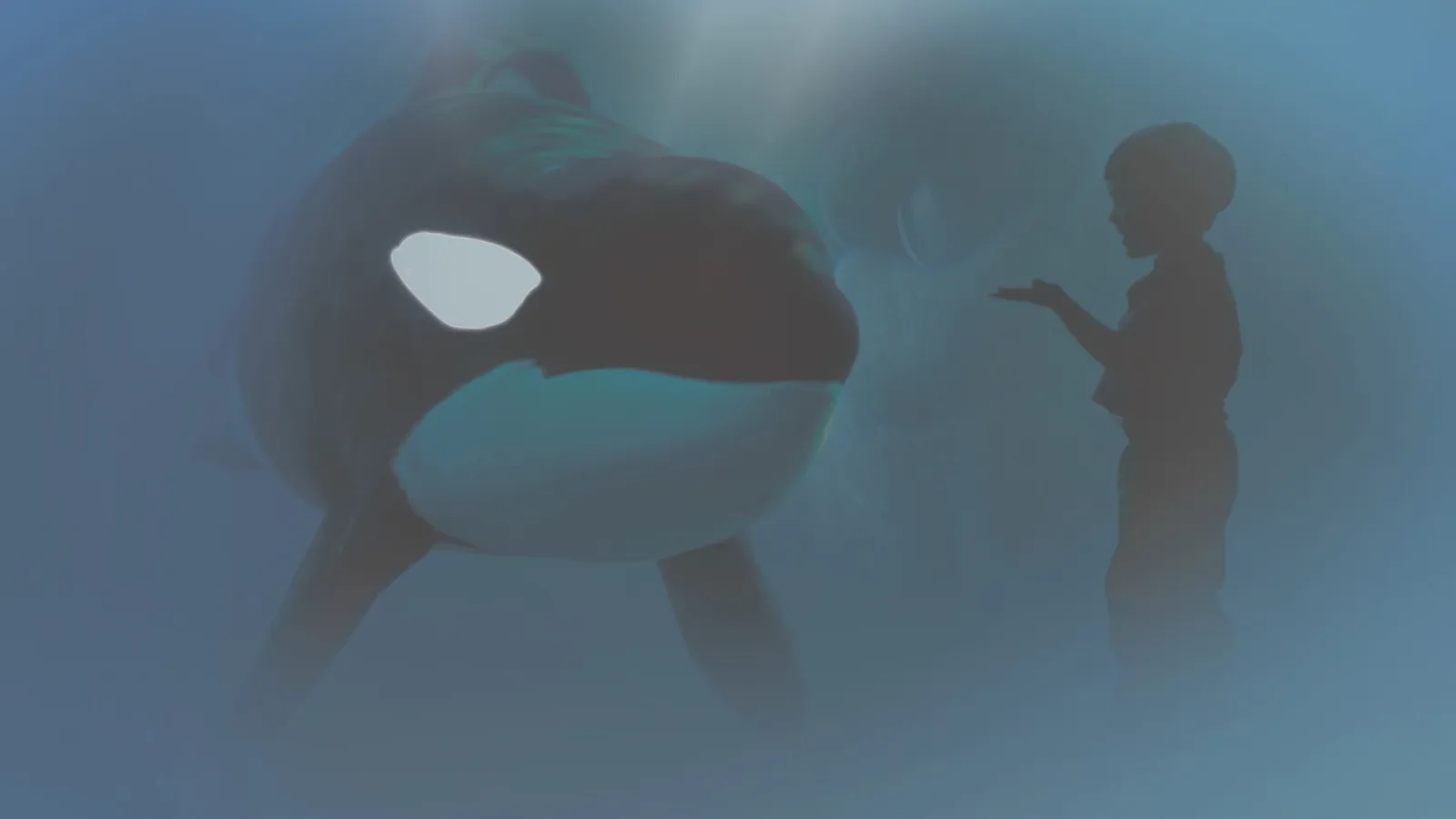
Movie Spotlight: Keiko: The Untold Story of the Star of Free Willy
Theresa Demarest spent years correcting the record on what actually happened to Keiko after Free Willy. This is his story, told by the people who were there.
By Relay · Tuesday, June 23, 2026 · 3 min read
When Free Willy came out in July 1993, millions of children fell in love with an orca named Keiko. They didn’t know the real animal couldn’t dive in his tank. The pool in Mexico City was designed for bottlenose dolphins. When Keiko was simply floating, his tail nearly touched the bottom.
Theresa Demarest first encountered Keiko at the Oregon Coast Aquarium in 1996, while recovering from cancer surgery. She was home watching his transfer from Mexico to Oregon unfold on television, struck by what she describes as his incredible will to survive against so many odds. She would go on to create the Keiko’s Dream Tour, record the song “Keiko’s Dream,” and eventually make Keiko: The Untold Story of the Star of Free Willy, an award-winning documentary that challenges the dominant narrative about what his life after the film actually looked like.
Not Released. Returned.
The most common misunderstanding about Keiko’s story is that he was “released.” He was not. Being freed would have meant taking him to the ocean and leaving him. Instead, Keiko was returned to Icelandic waters, where he was born and captured at age 2, and monitored continuously through a GPS tag on his dorsal fin. His caretakers were present throughout. The distinction is the entire argument of the film.
What the Tank Did
By the time Free Willy was made, Keiko had spent eleven years in a pool designed for bottlenose dolphins, more than 200 miles from the nearest ocean. Dr. Naomi Rose, Senior Scientist for Humane Society International, describes the conditions plainly: “He had gone from the size of a puppy to a Bull Mastiff in a doghouse that was built for a Beagle. He couldn’t dive at all. He was so long and it was so shallow that when he was simply floating his tail nearly touched the bottom.” Papilloma virus was visible across his fins, tail, and dorsal. He had also never learned to speak orca. In Mexico City he spent years alongside dolphins captured in Cuba, learning their sounds instead. He also learned the sounds of water pumps. And ambulances.
What He Actually Did
After returning to Iceland, Keiko gained over 3,000 lbs. He mixed with wild orcas. He exhibited physical signs of attempts to mate. He swam in actual ocean water, not the tap water salinated with table salt he’d been living in for over a decade. He thrived for more than five years and became the second longest-lived male captive orca in history. David Phillips of the Free Willy-Keiko Foundation: “He was swimming tight circles in a small pool with papilloma all over him, and by the time we finished with him, he was out with the big boys, swimming around with wild orcas in the ocean.”
The People Who Were There
The film is built on first-hand accounts from those directly in charge of his care: caretakers Colin Baird and Thorbjorg (Tobba) Valdis Kristjansdottir, Mark Berman of the Free Willy-Keiko Foundation, and Dr. Paul Spong, OrcaLab founder and cetologist who has been at the forefront of orca research since 1967. Tobba spent two years alone with Keiko. “He absolutely had a definite personality,” she says. “I talked and talked and talked to him. He would just kind of dance in the water.” Spong is direct about what the film is for: “There is so much distortion about what happened to Keiko that it’s important for people to understand exactly what really happened to him. And what really happened to him amounts to a great story.”
What to Know Before You Press Play
“All of the credit goes to Keiko,” Demarest says. “Naomi Rose once said: Keiko was tough.” His name means “lucky one.” The question of whether the project succeeded depends entirely on how you define success. What the film asks is that you let him tell it.
Keiko: The Untold Story of the Star of Free Willy
Theresa Demarest · 2015 · 75 min
Streaming now on Relay.