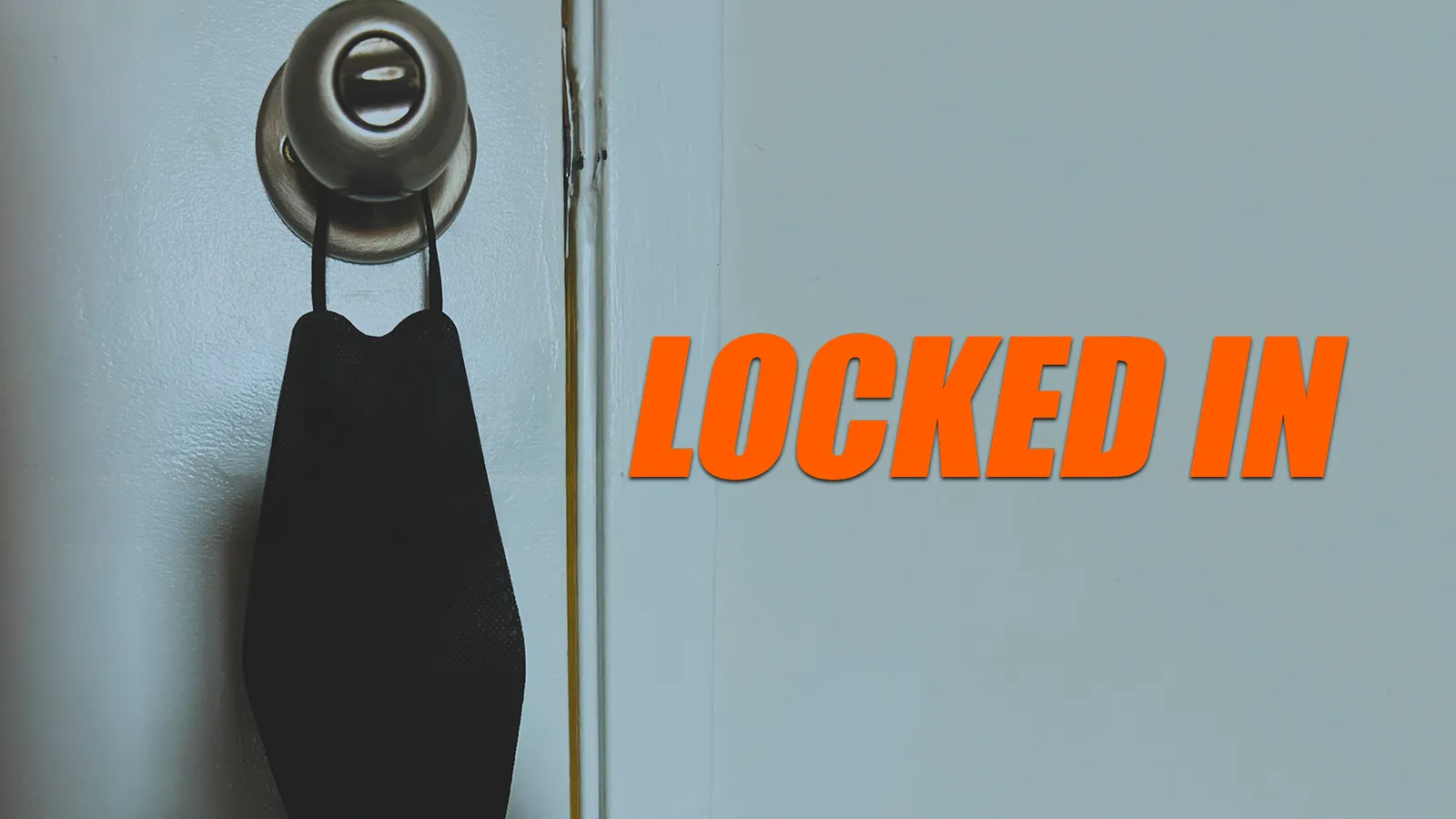
Movie Spotlight: Locked In
Rob Banks wrote the character, played the character, and shot the whole thing in his own pandemic apartment. Locked In is a darkly comic portrait of what happens when getting out of prison turns out to be worse than staying in.
By Relay · Tuesday, May 26, 2026 · 3 min read
Wally Buster gets out of California corrections in early 2020. No job prospects, no support system, an ankle monitor, and a ten-step-wide studio apartment. Then the world locks down around him. The freedom he earned is, in practical terms, worse than a cell.
Rob Banks wrote the character, plays the character, and shot the whole thing in his actual pandemic apartment. He co-wrote the script with Juliana Banks, and Locked In grew out of something he was hearing across Los Angeles during the lockdowns: horror stories from average people, homeless people, people being released from prison. What was this period like for everyone already on the margins before the virus arrived?
Worse Than Prison
The irony at the center of the film is not played gently. “Being released from prison should feel freeing,” Banks says, “but in Wally’s case, the freedom he gains was even worse than prison.” Wally is dumped alone in an empty room. Police take advantage of him. His friends die, partly through his involvement. He is eventually killed by a neighbor. Banks describes that trajectory as “deeply, darkly humorous,” and he’s right. The film earns the joke precisely because it never winks at you.
One Word, Many Walls
The title does serious structural work. Wally was locked in before prison, living inside the drug trade. Then literally inside a cell. Then a studio apartment, an ankle monitor, Danielle’s blackmail scheme. His Buddhism subplot, the one thread that might offer mental escape, keeps getting cut off. Banks found the same walls closing in on him personally. “My experience of the pandemic hit both physically and mentally as well, feeling like a prisoner with no way forward,” he says. “I made this film to explore that feeling.” Every exit closes before Wally reaches it. The film holds that closed feeling for its entire runtime.
Ten Steps This Way
The apartment was Banks’ own. Ten steps end to end. That constraint wasn’t just a budget solution. It gave the actors something physical to push against. “It gave the actors an immediate feeling of desperation because there is nowhere else to go,” Banks says. The comedy and the dread share the same square footage, which is the right way to make a film about confinement. You can’t cut away to something bigger, so the pressure just builds.
Felony Math
Wally wants to be productive. He is willing to work. The options available to a convicted felon are narrow under normal circumstances. The lockdown made them narrower. Every ethical exit closes before he reaches it, compelling him back toward his old way of life. Banks wanted the film’s exaggeration to do real work. “I’d hope by showing this exaggeration,” he says, “audiences would be quicker to understand the issue during normal times, as well.”
Friends Who Die
Wally’s longtime friends show up as both a relief from isolation and a liability. They represent his past and his only social connections. They also carry Danielle’s plan forward. And then they die. Banks draws a direct comparison to the social texture of COVID itself: gatherings were necessary and welcome and also potentially fatal. Locked In takes that contradiction and drives it to the worst possible outcome without ever losing its footing as a comedy.
What to Know Before You Press Play
Banks’ own framing: “What do you do when you have dead bodies piling up and you can’t leave?” That’s the question the film is built around. The comedy comes from the impossibility of that situation. The darkness comes from the fact that the impossibility was real for a lot of people, and was more real than usual in 2020.
Locked In
Rob Banks · 2026 · 53 min
Streaming now on Relay.