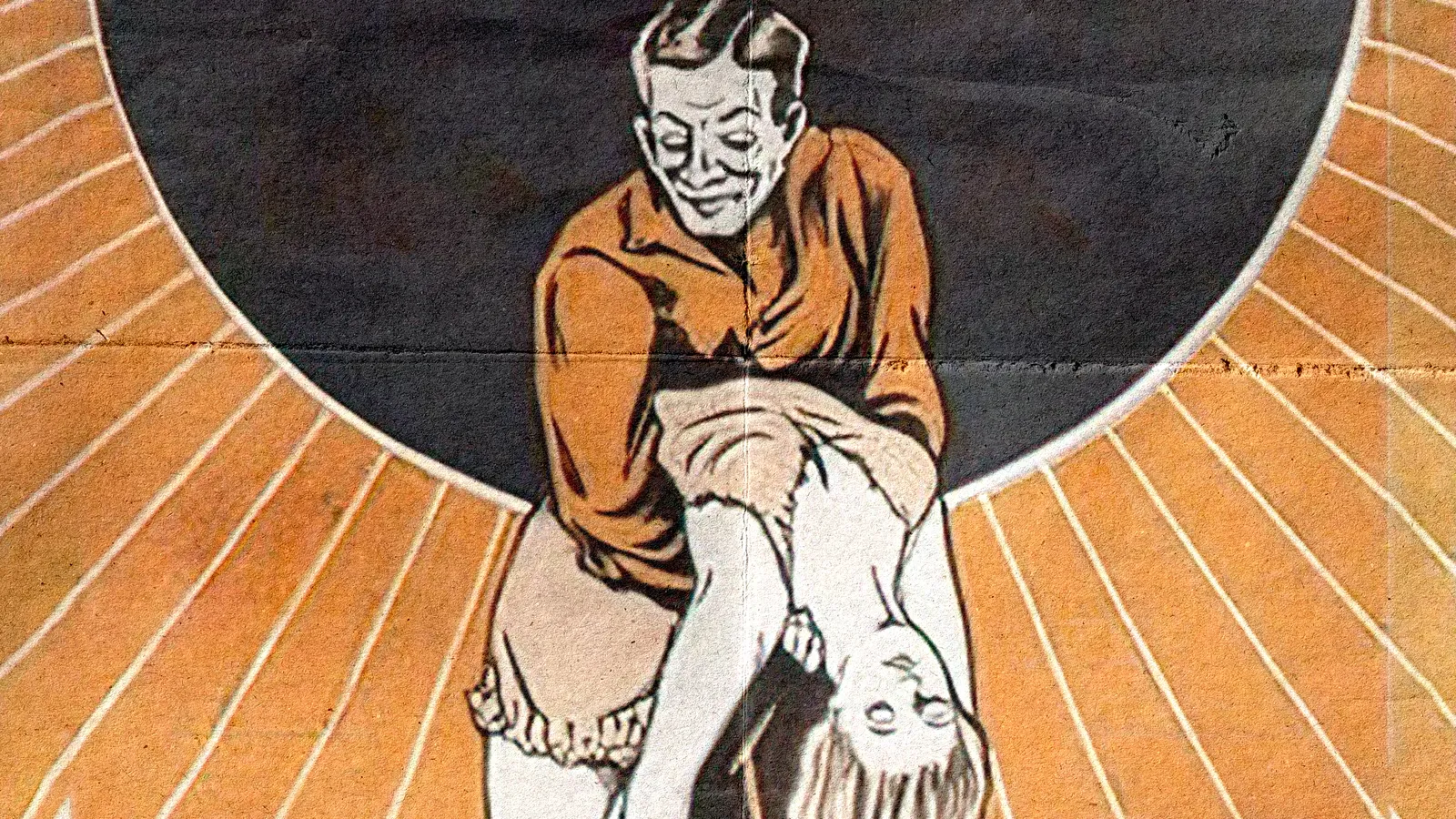
This 1934 horror stopped for lectures on mental illness
Maniac (1934) is a mad scientist horror film that paused for lectures on mental illness, made outside the Hollywood studios.
By Relay, Movie Spotlight · Thursday, October 29, 2026 · 3 min read
Maniac was made in 1934 by Dwain Esper, an independent producer and director of exploitation films, and it is a horror film that keeps stopping to lecture on mental illness. An exploitation film is a low-budget picture sold on a shocking subject, usually outside the major studios. Critics read those lectures as an educational cover for lurid material, made just as Hollywood's censorship was tightening.
The story follows Don Maxwell, a former vaudeville performer gifted at impersonation, who assists Dr. Meirschultz, a scientist trying to bring the dead back to life. Maxwell kills the doctor, takes his place, and slowly goes mad himself. The screenplay is a loose adaptation of Edgar Allan Poe's story "The Black Cat", written by Hildegarde Stadie, Esper's wife, who wrote some of his films. It runs 51 minutes.
What was a roadshow film?
Esper financed his films himself and took them around the country, avoiding the Hollywood studios. A program note from Light Industry, a Brooklyn screening space, says the screenings were adults-only events in small theaters or tents. This is what "roadshowing" means: the film travels from town to town under its own promotion instead of being booked through a studio.
It mattered because of timing. From mid-1934, films shown in the big theater chains, which covered most American movie houses, needed approval from the Production Code Administration, the industry's censorship office, often called the Hays Office. Reviewers note that Maniac was made outside the Hollywood system and was not subject to the Code. In the same program note, Stadie is quoted saying the Hays Office disliked them and could not stop them.
How did a horror film pass as education?
By stopping the story to teach. Gregory J. Smalley, a reviewer for the site 366 Weird Movies, describes intertitles naming mental disorders that interrupt the action, and a prologue by a physician warning of "fear thought". He suggests the educational framing may have been a defence against obscenity prosecution.
Charlie Jane Anders, then a writer for the culture site io9, goes further and says the abnormal psychology lectures were the reason the film was allowed into theaters. Michael Adams of Rotten Tomatoes says it tries to pass itself off as a documentary about mental illness. These are critics' readings, not a record of what censors decided, but they agree on the method: lectures as cover. Kino Lorber, the home video label, later gathered Maniac into its Forbidden Fruit series of exploitation films that claimed an educational angle.
What happened after it was released?
It first played in September 1934. The Million Monkey Theater review says the first release did poorly. Esper retitled it Sex Maniac, and under that name it became a hit on the exploitation circuit.
Its reputation has moved the other way. Anders called it "possibly the worst movie in history". The Psychotronic Review, a publication about cult film, argues that people overstate Esper's incompetence and that he "uses everything in his arsenal".
A restored version came out on DVD in 1999 as a double feature with Esper's Narcotic. Kino Lorber's Blu-ray, released in November 2024, uses a new 4K restoration from an incomplete 35mm camera negative and a print.
Where it sits on Relay
Relay lists 43 horror films made in 1939 or earlier, among them this one, a record of how far a 1934 filmmaker would go to get a lurid picture in front of an audience.
The film suits viewers who are curious how exploitation filmmakers worked around censorship, people who enjoy a so-bad-it's-good oddity, and anyone who wants a 51-minute mad scientist story from the early sound era.
Maniac
Dwain Esper · 1934 · 51 min