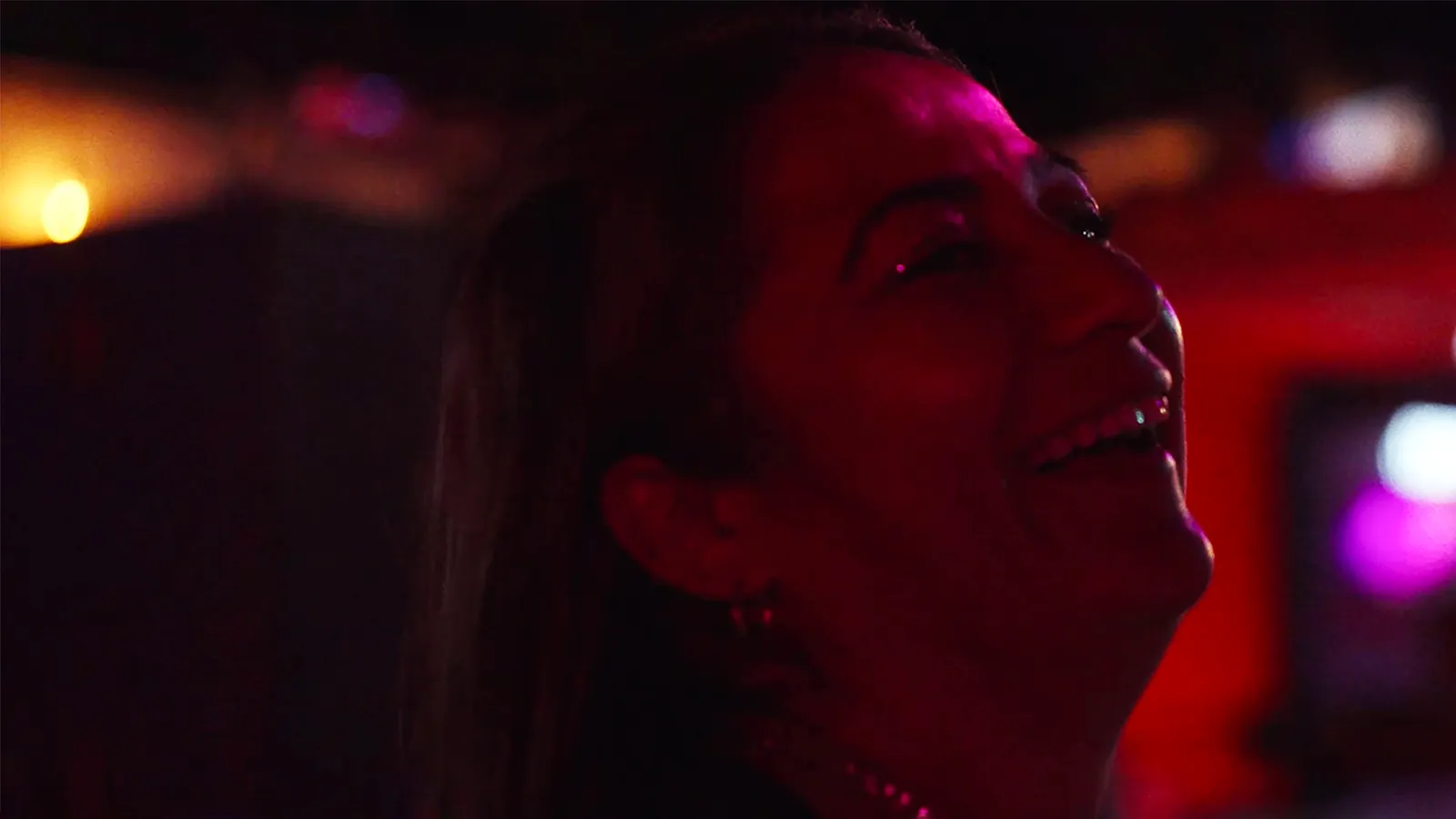
Movie Spotlight: Mexican Dream
Mexican Dream opens at a fertility clinic, in the present tense of wanting a child, long before you learn what its subject already lost. Laura Plancarte's hybrid documentary, co-written with its real-life subject, won Best Documentary at DocsBarcelona 2024.
By Relay · Monday, July 20, 2026 · 4 min read
A woman sits in a fertility clinic, talking through IVF with her partner. She wants a child. That is where Mexican Dream begins, in the present tense of wanting something, long before anyone mentions that she already has three children, or that she lost custody of them years earlier in a relationship she is still not entirely finished escaping.
Director Laura Plancarte built the whole film around that delay. She had just come back to Mexico from a previous project in Montana and felt, in her words, a pull to make something that pushed against how Latin American women usually get shown on screen, submissive, or flattened into someone else’s story about violence and poverty. She went looking for a woman who was neither. She found Malena, a domestic worker rebuilding a life in Mexico City, and knew within a day of meeting her that this was the one. The film asks a fairly simple question with complicated answers: what does it cost to build a life you actually chose, and what do you owe the people you built it around?
A Documentary That Became Something Else
Plancarte and Malena started out making a straightforward observational documentary, cameras rolling, life unfolding. But as Malena’s relationship with her three children, Diego, Fatima, and Jhovani, moved to the center of the story, Plancarte hit an ethical wall. Filming their reunion as raw, unmediated observation felt invasive to kids who hadn’t agreed to any of it. So she made an unusual move: she named Malena a co-writer of her own story. “This way we could protect her children by giving Malena and her children agency,” Plancarte says, “while I gained greater creative freedom as a filmmaker.”
That doesn’t mean scripted dialogue. Plancarte builds a treatment from real events, shapes them into a dramatic structure, then lets her subjects walk back into their own lives and respond as themselves. “I don’t ask people to perform lines,” she says. “I invite them to inhabit the moment naturally.” Editor Andrea Chignoli did double duty as script supervisor, helping hold that hybrid structure together across roughly nine months of development.
The Dream in the Title
You might assume the title comes from some grand thesis about Mexico. It came from one line, said almost in passing, during an interview. Malena told Plancarte she felt like she was living the Mexican Dream: building a career and a home in Mexico City, going back to her hometown only on weekends to see family. No border crossed, no American Dream required. “It is also possible to pursue your ambitions, transform your life and create opportunities without crossing a border,” Plancarte says. The film takes that idea and refuses to let it stay tidy. Building a life at home, it turns out, comes with its own sacrifices.
What the House Was Built For
The housewarming scene is the film’s emotional hinge. Malena, finally standing in a house she built for herself, gives a speech thanking her parents, then her partner Edgar. Then, without anyone planning for it, she thanks three people who aren’t in the room: Diego, Fatima, and Jhovani. Plancarte shot it with two cameras just in case, but didn’t script a word of what Malena said. “What happened belonged entirely to Malena,” she says. “You could feel how much of the house had really been built for them.”
Jhofadi
Malena eventually starts her own business and names it Jhofadi, a mashup of Jhovani, Fatima, and Diego. It's a small detail, easy to miss, and it says almost everything about her without a line of dialogue explaining it. Fatima is the child who takes the longest to let Malena back in, and some of the film’s hardest scenes are just texts: Malena sending photos of Fatima’s bedroom wall, hoping for a reply. Plancarte was careful about including that pain. “The scenes involving Fatima were never about exposing her,” she says. “They were created collaboratively with both Fatima and Malena, who wanted to use the film as a space where they could express feelings that had remained unspoken for years.”
Between Categories
When the project screened at WIP Latam in San Sebastián and later won IMPULSO Morelia, people treated it as fiction. Malena and Plancarte were listed as co-writers, the film used staged scenes and a cast of first-time performers, and none of that reads as documentary on paper. Then, closer to completion, documentary festivals started calling. They'd noticed that despite the construction, everyone on screen was playing themselves, rooted in Malena's actual life. Mexican Dream premiered at Hot Docs and went on to win Best Documentary at DocsBarcelona 2024, without ever really giving up the fiction side of its own toolkit. Plancarte's prior film, Non Western, had already premiered at Visions du Réel and landed on IDFA's Best of Fests list in 2020, so this wasn't her first time working the space between forms.
A Score That Doesn't Explain
Composer Pablo Todd wrote the film's original score with one rule in mind: don't tell the audience what to feel. "His score doesn't explain the emotions," Plancarte says. "It accompanies them with great restraint." The two songs that actually play inside Malena's world, "Momento Mágico" and "Valió la Pena" ("It Was Worth It"), aren't Todd's work at all. They're by Marc Vicente, a longtime friend of Plancarte's. Those songs sit differently in the mix, less like soundtrack and more like something Malena might actually put on herself.
What to Know Before You Press Play
Plancarte doesn't want anyone approaching Malena with a verdict already decided. "I hope audiences meet Malena without judgement," she says. "She is imperfect, contradictory, joyful, stubborn and incredibly determined." Mexican Dream is, in her words, about motherhood, independence, resilience, and the courage to pursue your dreams while living with the consequences of your choices. It's also, she says, "about a woman who refuses to be defined by her past."
 Drama
DramaMexican Dream
Laura Plancarte · 2023 · 89 min
Streaming now on Relay.