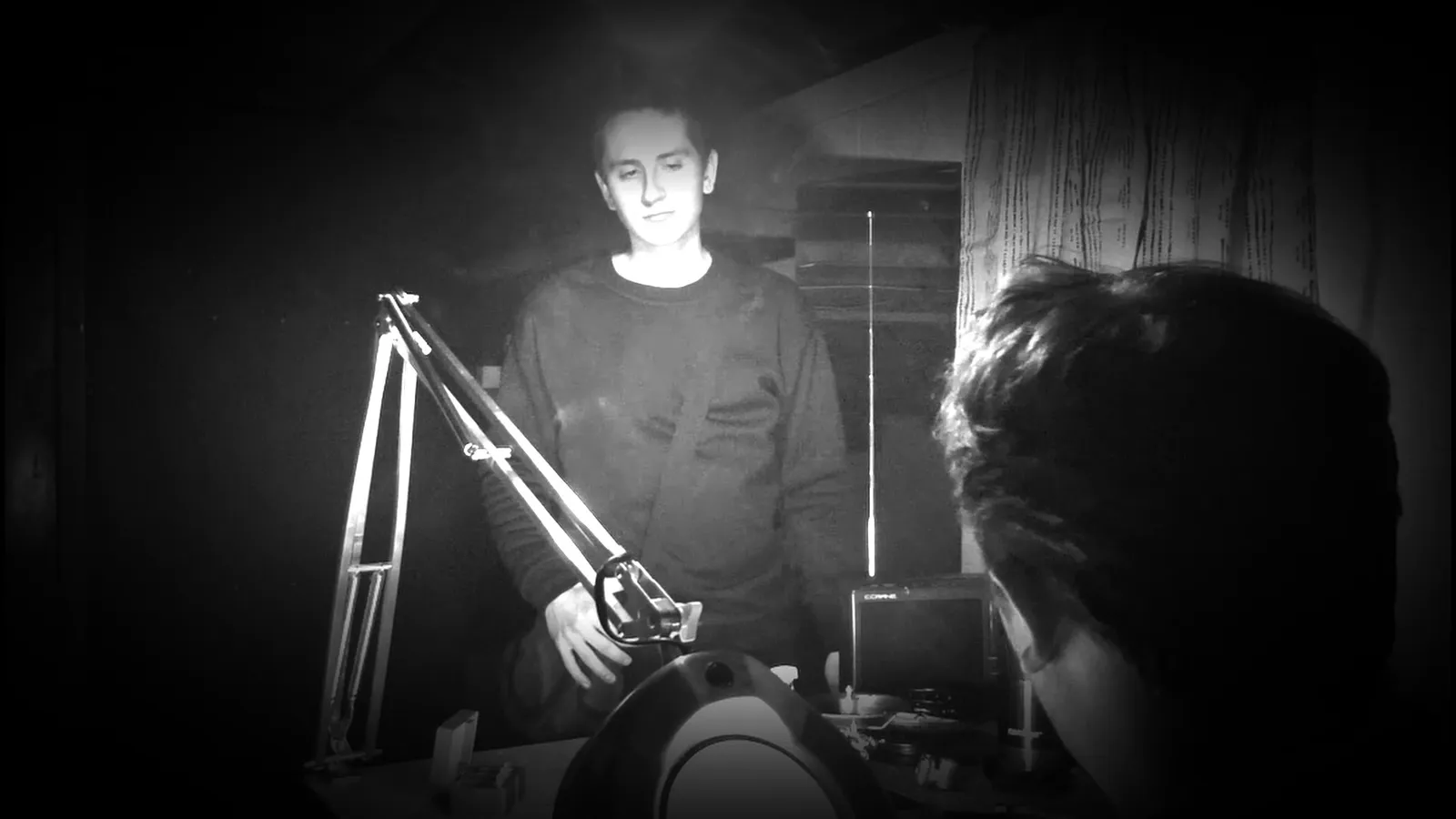
Q&A: Jake Yannarella on Moonlight Foot
Jake Yannarella wrote it, directed it, produced it, composed the score, built the foley, and plays the lead. A conversation about making Moonlight Foot.
By Relay · Thursday, April 30, 2026 · 3 min read
Jake Yannarella wrote it, directed it, produced it, composed the score, built the foley, and plays the lead. Moonlight Foot is sixty minutes long, takes place over one dangerous night, and follows a burglar moving through jobs with precision that can only hold up for so long. Mostly black and white, selective color. He had a deadline. He met it.
The film is structured around what Yannarella calls "mechanical thievery," a burglar who is highly competent and scrappy, every move deliberate. Three characters: The Body, The Mind, The Shadow. Genre-bending by design. He wanted the audience off balance.
The Concept
"It started with the idea of systematized mechanical thievery as the film's spine," Yannarella says. "I was drawn to a burglar who is both highly competent and scrappy, where every action is precise and intentional. From there, the world and structure grew around that grounded, serious tone."
No glamour, no heist-movie slickness. Just a person moving through space with purpose, and the pressure that comes when things stop going cleanly.
One Night, No Reset
The one-night structure was not a production constraint. It was the point.
"It needed to take place over one dangerous night because it compresses everything into a single stretch of pressure with no reset. Every decision has immediate consequences, and the tension escalates in real time, from breaking in to being pursued to escaping. That structure keeps the film in a constant state of risk and urgency."
Black, White, and Selective Color
"Black and white was essential for stripping away distraction and focusing on shadow, texture, and mood, while color is used selectively to mark key moments. Together, they create a controlled and intentional world and help unify different environments so transitions feel seamless."
The color moments land harder for being rare. You notice them the way you notice a sound when everything else goes quiet.
The Climb-Down
The hardest sequence to execute was the climb-down. Yannarella did not fake it.
"It demanded precision and a strict safety plan in a real location. I built a concealed belay system and partnered with a climbing gym manager to run it, so we could execute the stunt practically. We got it in a few passes, and it anchors the film's commitment to real, physical filmmaking."
A person on a building. Not a cutaway.
Score, Foley, and Silence
Yannarella composed the score himself so he could lock sound directly to movement in the edit. He also built the foley from scratch.
"Movement was the guiding philosophy for the Body, so I shaped the score around elegance with a more primal rhythm. Music and sound design were unified and placed with intent, with select moments of silence used to heighten tension."
When one person controls both image and sound, nothing is accidental. The silences in Moonlight Foot are doing work.
Intentional Disorientation
The genre shifts are deliberate.
"I wanted the audience to feel the disorientation of shifting tones while adding depth and rewatchability. Blending thriller, crime, action, and psychological noir keeps the film unpredictable and layered."
Who It Is For
"Moonlight Foot is built for viewers who appreciate atmosphere, immersion, and practical, hands-on filmmaking," Yannarella says. "I hope they leave with a sense of tension that lingers, and an awareness of the precision behind what they just experienced."
If you watch it looking for that, you will find it.
Moonlight Foot
Jake Yannarella · 2026 · 60 min
Streaming now on Relay.