Movie Spotlight: Reparations
A barrister raised in Devon finally goes looking for her birth father and finds a Nigerian dynasty, a courtroom fight worth taking to Parliament, and a family history nobody warned her about.
By Relay · Wednesday, July 8, 2026 · 4 min read
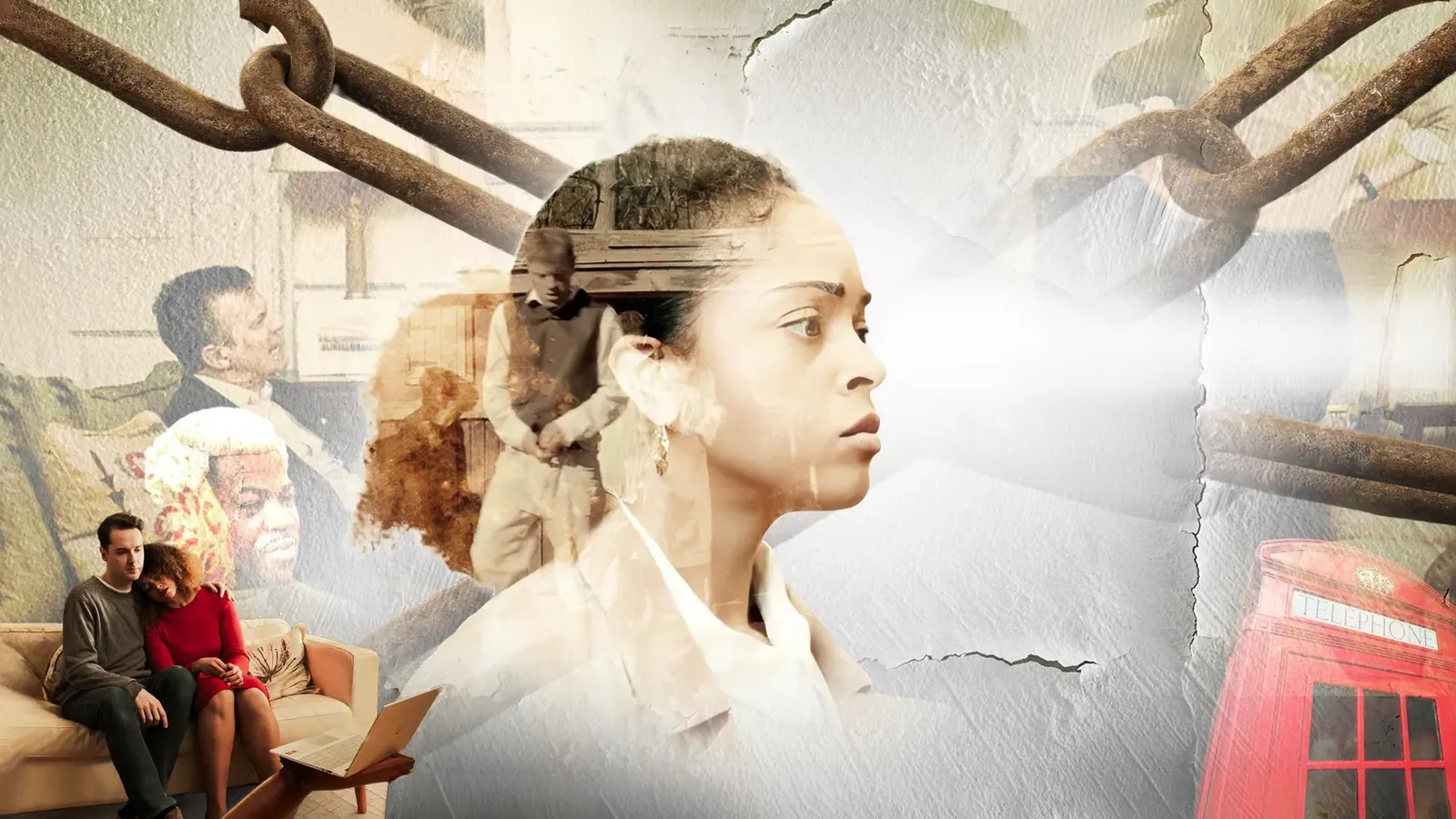
Za Davies was raised by two people who fought their own families to keep her. That should have been enough. Instead she spends her twenties building a career as a barrister and putting off the question underneath everything, who her birth parents were and why she ended up in a telephone box as a baby. When she finally goes looking, the answer waiting for her in Nigeria isn’t just a father. It’s a dynasty, a fortune, and a bloodline tied directly to the ancestor whose enslavement built that fortune in the first place.
Writer, director and producer Chrystal Rose built Reparations around a question she doesn’t answer for the audience, whether the debt Za owes her adoptive parents and the debt Britain owes people like her ancestor are the same argument or two arguments that just happen to be running at the same time. “I saw them as two different elements running in parallel,” Rose said. “Za feels a financial obligation to repay Zoe and Aron, but not because she feels indebted for being adopted, it’s for the stability and love that they gave her. Za’s gratitude towards Ekon, after a period of anger and mistrust, is due to the sense of identity and cultural heritage discovering her bloodline gave her.”
A Story That Started Before the Camera Rolled
For Rose, Reparations didn’t begin with the courtroom. It began with Za being left in a telephone box by her fifteen-year-old mother, Rose. That moment is actually its own film. “I have written several scripts, although to date I have only produced two,” she said. “The first is the prequel to Reparations, a short film titled Too Young For Love, which tells the story leading up to the moment Za is left in the telephone box.” The connection runs deeper than plot. Rose became pregnant at fifteen herself, and that history shaped the character who gives Za away. The historical figures Za references later in the film, and their documented words and actions, are pulled straight from the record.
One Word Doing a Lot of Work
The title carries both a legal claim and a family reckoning, and Rose says the legal fight came first in her head. “I was thinking about the legal struggle and Za’s determination to honour her ancestors by taking the first meaningful steps toward addressing the injustices of the past,” she said. She almost called the film United Kingdom Reparations before landing on something broader. “I felt this broader title acknowledged the wider history of injustices and historical violations beyond the specific focus of my film. Although my drama examines Britain’s role, the title reflects the fact that the conversation about reparations extends far beyond a single nation.”
The Name Za Was Built From Her Parents
Za's adoptive parents, Zoe and Aron, are given real weight before Za ever meets her birth father. Rose explores their side of it further in the novel version, including the court proceedings Zoe went through and a rift with her own family over adopting a Black child. The name itself is a small piece of engineering. “By combining elements of Zoe and Aron’s names, I wanted to reflect their commitment to making her an integral part of their family,” Rose said. “It was a way of expressing their love, acceptance, and shared identity, ensuring that Za would always feel that she truly belonged.”
Turning History Into Dialogue Instead of a Lecture
Characters in Reparations recite real history mid-scene, Clarence King, John Hawkins, the Royal Africa Company, without the film stopping to explain itself. Rose built that in as argument rather than exposition. “To make the historical context feel organic I used the dialogue as a defence strategy, Za wanting to back herself and explain her beliefs to Zoe and Aron who disagree with her,” she said. “The rhythm landed because the focus is on the human cost of the Transatlantic Slave Trade rather than just the facts and figures.” She also leaned on montage to carry some of that weight so it never sits still long enough to feel like homework. The film travels from Arochukwu to the Badagry barracoon to a shipwreck on the Devon coast, and Rose scouted every one of those locations herself before she ever wrote them into the script.
Actors Who Had to Hold Two Things at Once
Jon Betti’s Phil starts the film as Za’s fiance and ends up somewhere much darker, while Micah Tsekiri’s Ekon has to carry warmth and thirty years of guilt in the same performance. Rose says keeping both men from tipping into cartoon territory took real time on set. “We spent a great deal of time analysing the script, both as a group and in one-to-one sessions,” she said. “I worked closely with each actor to develop their character, ensuring that, before filming began, they understood not only their dialogue but also their character’s psychology, physicality, motivations, and relationships with the other characters.” Having cast every role herself, Rose planted a mystery underneath the family drama early and let it sit. Phil belongs to a sect that believes Britain is for the British. He pressures Za to have a baby when she wants a career first. He only lets his father eat the clear sweets. None of it reads as alarming on its own, and that was the point.
Rose isn’t precious about how much of that gets picked apart before people watch. Asked what she’d want a Relay audience to know before pressing play, she called it “a modern-day story deeply anchored in the heavy historical legacy of the Transatlantic Slave Trade,” and added that it builds toward “a high-stakes courtroom battle” where an untouchable, arrogant elite is forced to face what an empire built on that history actually cost. She left the rest for the film to answer.
Reparations
Chrystal Rose · 2025 · 96 min
Streaming now on Relay.