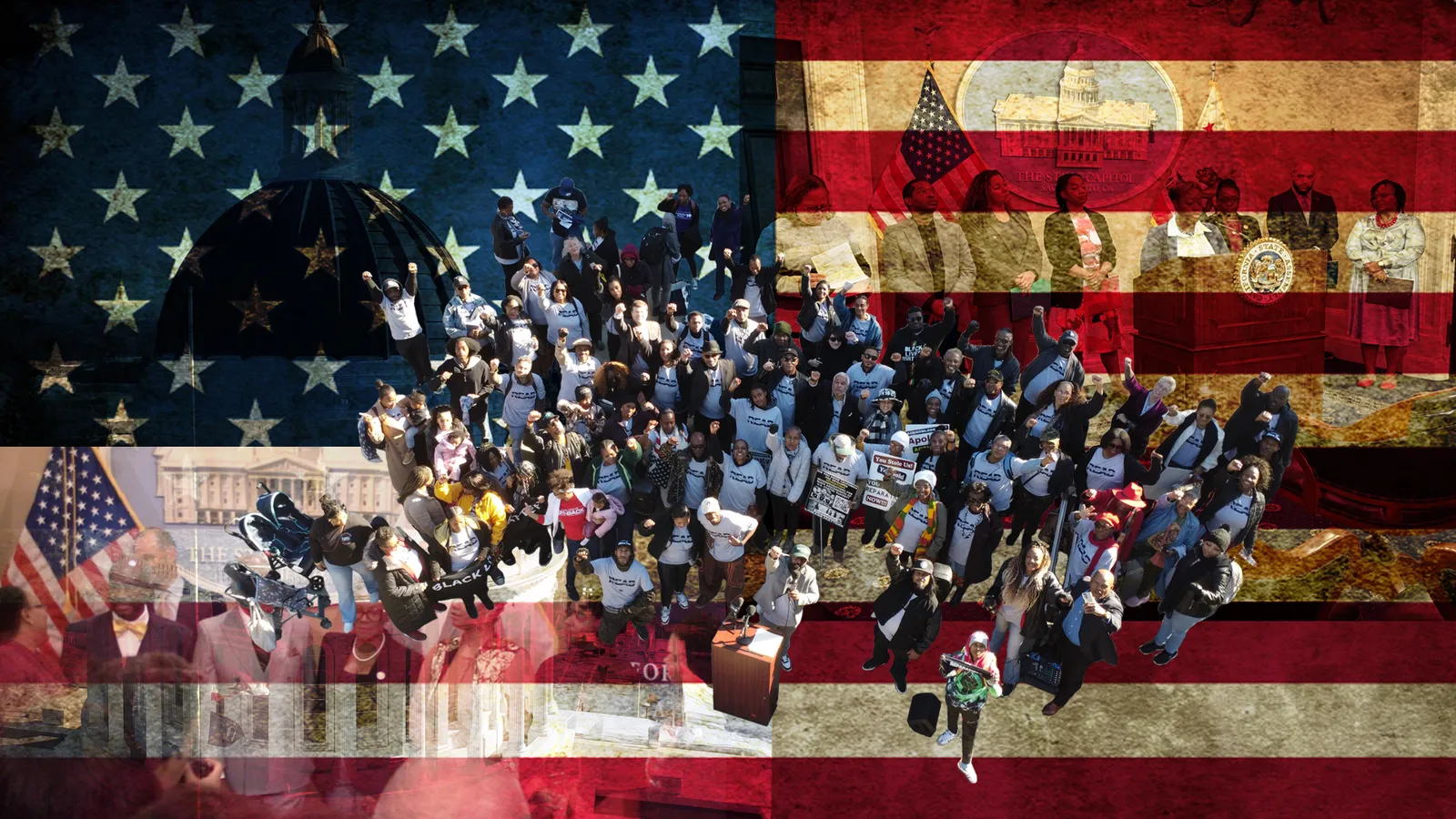
Movie Spotlight: Reparations Now! II: The Betrayal
Director Uumoiya Glass follows the California advocates who watched a reparations bill die on the Assembly floor, and asks what comes after the betrayal.
By Relay · Tuesday, July 7, 2026 · 3 min read
On August 31, 2024, a handful of reparations bills sat on the California Assembly floor, waiting on a vote two years in the making. Then, at the last minute, the vote didn’t happen. Legislators filed out of the chamber. The people who had spent years building the case for compensation stayed behind, trying to understand what they’d just watched.
That night is where Reparations Now! II: The Betrayal begins, and it shapes the question director Uumoiya Glass builds the whole film around: what happens when the people responsible for delivering justice choose delay instead, and call it progress?
A sequel written by legislators
The first film, Reparations Now!, tracked the two-year run of the California Reparations Task Force and the activists, historians and advocates who pushed it forward, from San Diego up to Weed. The sequel picks up where that optimism ran out. “What changed between parts 1 and parts 2 is that legislators including the CLBC blocked community supported Reparations Bills and replaced them with bills that delayed Reparations implementation and created further study,” Glass says. Governor Gavin Newsom vetoed the one community-backed bill that did reach his desk.
Why California carries the weight
Glass frames California as more than a backdrop. It has the fourth largest GDP in the world and the largest of any U.S. state, and he argues that gave its legislature outsized leverage to set precedent. “If the California legislators stuck with core recommendations of building and funding the California Freedmen Affairs Agency and creating a reparations funding mechanism, it would have been a great start for other states, municipalities and eventually the federal government to follow,” he says. “So goes California, so goes the Nation.”
A debt with a paper trail
The film traces the idea of reparations back further than most viewers might expect, to Special Field Order No. 15, the 1865 order promising land to formerly enslaved families that was later reversed under Andrew Johnson. Glass points to other groups, Jewish Holocaust survivors, Japanese American families held in internment camps, and some Native American nations, who have received compensation for historical harm. “American chattel slavery has been documented and it’s unfortunate that we have to make documentaries like this in 2026 to keep the conversation and exposure in the forefront of American history,” he says. He calls the progress slow but real, pointing to reparations commissions that have opened across the country in recent years.
Told from inside the room
Most of the people on camera were at the Capitol on August 31, and many are part of the descendant community the bills were written for. Glass wanted the film shot from that vantage point rather than an outside one. He singles out the moment the assembly floor hearing wound down. “While the legislators were happy just to end the session, the decisions that were made on 8.31.24 weren’t the same for their constituents,” he says. “And this type of neglect is the same neglect Black Americans have faced since the beginning of this country.”
What the film argues, and what it leaves open
Glass is candid about seeing blame on both sides of the political aisle. He describes a Democratic Party he feels lacks the will to deliver for a loyal voting bloc, and a Republican Party he sees as broadly unwilling to support reparations policy. That reading is his own, not a claim the film sets out to prove point by point. Where he lands with more certainty is on the gap between an apology and a check. “Symbolic recognition does have its value,” Glass says. “However, only compensation and other tangible efforts will repair and somewhat restore the harms that have been done to the enslaved Americans and their descendants.”
What to know before you press play
Glass keeps his ask simple. “Have an open mind and learn the reasons why lineage based Reparations must become a reality,” he says. The film runs on testimony more than argument, built from people who watched a vote fail in real time and kept working anyway.
Reparations Now! II: The Betrayal
Uumoiya Glass · 2026 · 98 min
Streaming now on Relay.