The Masked Wrestler Who Was Also a Spy: Super Argo and the Faceless Giants
In 1968, Italian and Spanish producers tried to make James Bond, a Lucha Libre wrestling hero, and Batman all at once. A masked telekinetic stuntman in a red bulletproof suit never removes his mask. The robots beep.
By Relay · Friday, May 1, 2026 · 4 min read
In 1968, Italian and Spanish producers looked at the James Bond franchise, the Mexican Lucha Libre wrestling-hero films, and American superhero TV shows like Batman, and thought: what if we did all three at once? The result was Super Argo and the Faceless Giants. A masked professional wrestler who moonlights as a secret agent with telekinetic powers goes up against a mad scientist who has kidnapped the world's greatest athletes and turned them into slow-moving robot zombies.
The logic does not hold up. The film is great anyway.
Who is Super Argo?
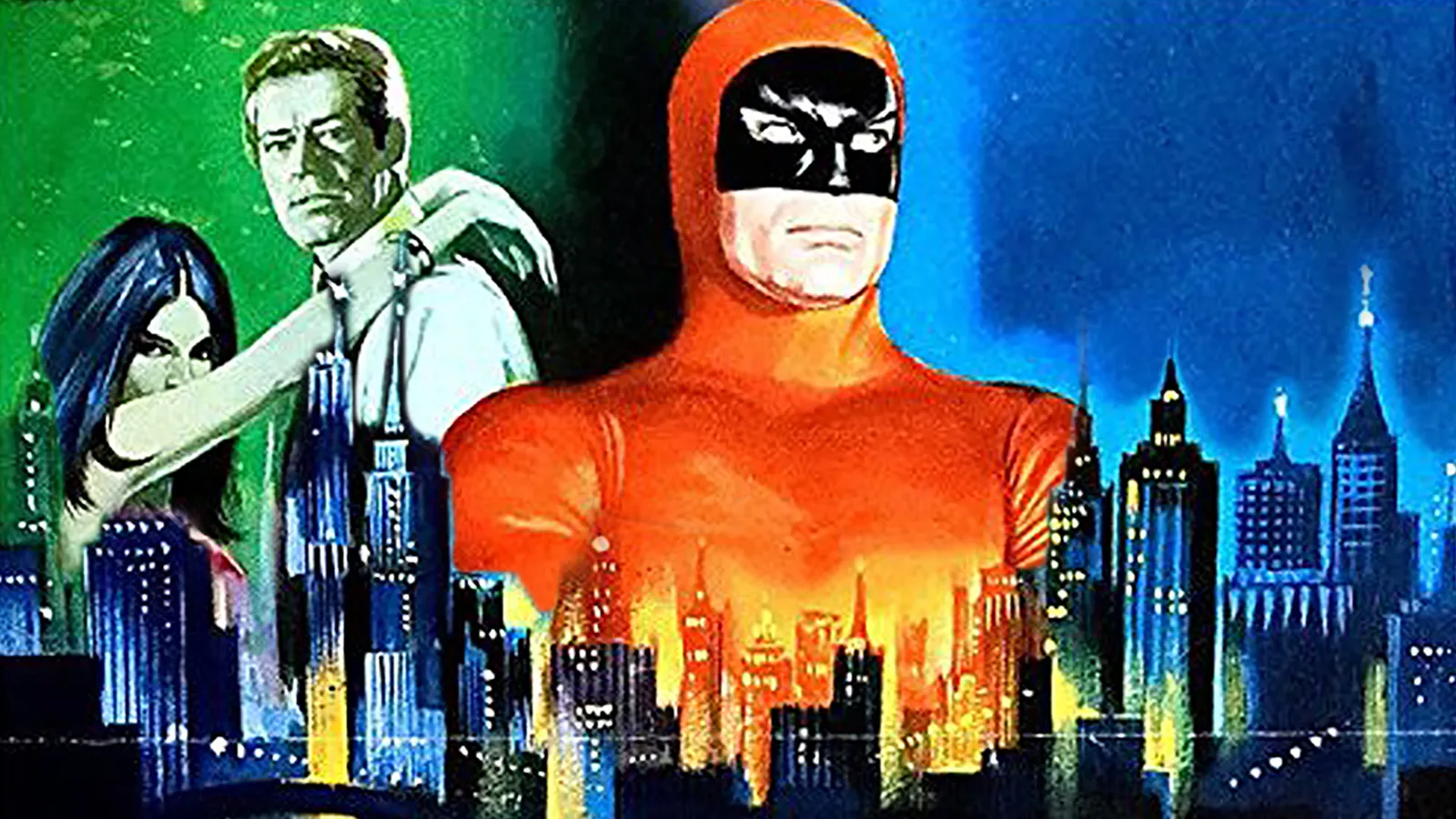
The character's backstory starts in tragedy. Superargo is a masked professional wrestler who accidentally kills his opponent in the ring. Disgraced, he's recruited by government intelligence and given missions that use his unusual combination of superhuman abilities: telekinesis, levitation, the capacity to hold his breath for seven minutes, accelerated blood coagulation so his wounds seal fast, and a red bulletproof costume he never, under any circumstances, removes.
Not the mask. Not ever.
He was played by Giovanni Cianfriglia, billed as "Ken Wood." Before landing the role, Cianfriglia had spent years as Steve Reeves's primary stunt double in Italian peplum films, doing the dangerous work that kept Reeves looking invincible on screen. When the sword-and-sandal boom dried up, he pivoted into eurospy B-movies and became Superargo twice.
The 1966 original
Super Argo and the Faceless Giants is actually the sequel. The first film, Superargo Versus Diabolicus (1966), was directed by Nick Nostro and is the better of the two. Nostro was serious about his absurd premise. He shaped Cianfriglia's performance deliberately "like Zorro," emphasizing style and charm, and the result has genuine pace and decent production values. The villain Diabolicus wants to turn uranium into gold to destabilize the global economy, which makes a certain kind of deranged sense.
The score, composed by Franco Pisano, is one of the unsung treasures of 1960s Italian cinema. Jazzy, propulsive, completely committed. Cult film music enthusiasts have called it one of the coolest superhero themes ever written.
The sequel's logic problem
The 1968 sequel, directed by Paolo Bianchini, poses a question the film never thinks to answer: if your plan is world domination, and you have access to the world's greatest athletes, including the fastest and strongest humans alive, why do you turn them into shuffling robotic zombies?
Professor Wendland Wond (played by American actor Guy Madison in a rare villain turn) does exactly that. His "Faceless Giants" move slowly, make an annoying electronic beeping sound, and carry medieval weapons. Superargo, blessed with telekinesis, opts to break a vase with his mind rather than simply kick it. Bianchini's direction is slower and less confident than Nostro's, and the film knows it's working against itself.
This is precisely what makes it compelling. The gaps in logic are so large and so cheerfully ignored that the film achieves a kind of accidental surrealism. You start wondering whether Professor Wond's plan is a metaphor for something. Then a robot bings at you and the thought evaporates.
The hybrid that shouldn't exist
Italian and Spanish genre cinema in the 1960s operated on pure opportunism. Bond was enormous. Santo was enormous in Latin America. Batman debuted on American TV in 1966. Producers wanted all three audiences. Superargo is the result: a wrestler-hero in a secret agent framework with a superhero costume, made in two countries, starring a stuntman in a mask, scored by a jazz composer.
By any logic of categorization, it should be a mess. But the films have a commitment to their own premise that buys a lot of goodwill. Superargo never winks at the camera. He takes the bings seriously. The mask stays on through every domestic scene, every conversation, every car ride in his E-Type Jaguar. The commitment to the bit is total.
The stuntman's mask
There's something quietly interesting about Cianfriglia's career arc. He spent his early years making other people look good, physically standing in for Steve Reeves in situations too dangerous for the star. Then he became the star, but with his face hidden. You never see him. The final credits of the first film show him making expressions at the camera through the mask, which reads either as contractual obligation or as a strange kind of joke.
Where it stands now
The films fell into obscurity after their initial run, then got rediscovered via cable television, VHS rental, and eventually streaming. The 1968 sequel got the RiffTrax treatment in 2016, with MST3K alumni Mike Nelson, Kevin Murphy, and Bill Corbett providing commentary, which introduced a new generation to the beeping robots and their medieval weapons.
Both films are now on Relay. The 1966 original is the one to start with. Better pacing, better score, more coherent villain, and a version of the premise that still has some snap to it. The sequel is for when you want to go deeper into the chaos and see what happens when a franchise runs out of ideas but keeps the mask.
Super Argo and the Faceless Giants
Paolo Bianchini · 1968 · 87 min
Streaming now on Relay.