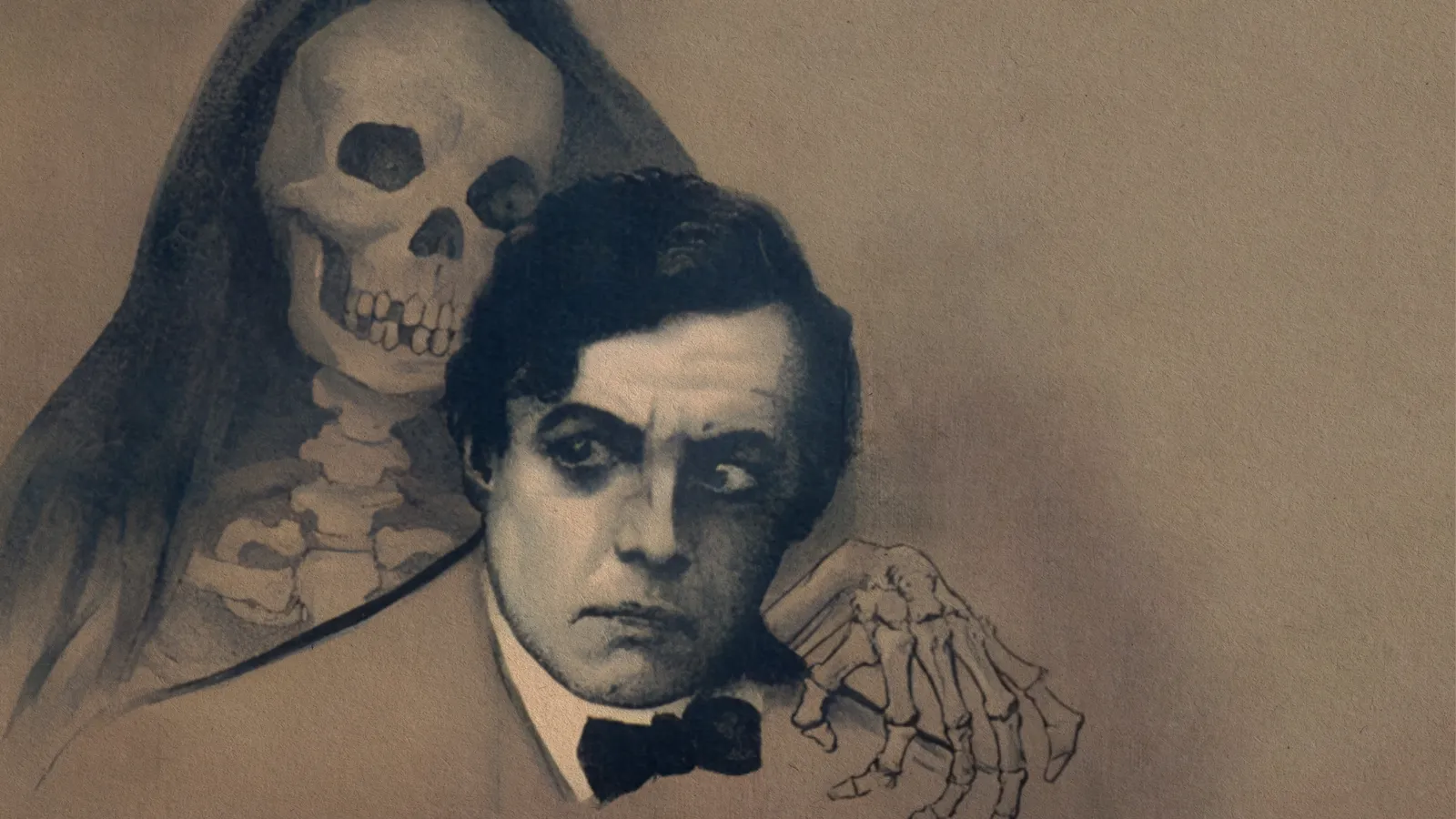
A critic calls this 1914 Poe adaptation America's first great horror
The Avenging Conscience (1914) is D.W. Griffith's silent take on Poe, which one critic calls the first great American horror film.
By Relay, Movie Spotlight · Saturday, October 31, 2026 · 3 min read
The Avenging Conscience was made in 1914 by D.W. Griffith, an American director regarded as a pioneer of film technique, and it is a silent adaptation of Edgar Allan Poe, the American author of macabre tales, that the critic Dennis Schwartz, in his review, calls "the first great American horror film," adding that its value is more historical than scary today. The label is one critic's opinion and a contested one. Another reviewer says the film has "some claim" to being the first serious American horror movie, and the Moria review site finds little that reads as horror today, closer to a morality play, in keeping with its subtitle, Thou Shalt Not Kill.
The story starts quietly. A young man is raised by his uncle, a bachelor who loves Poe and wants his nephew to have a literary career. The uncle opposes the nephew's romance with a girl he calls "Annabel Lee," and a 1914 trade review put the next step plainly: "he plans murder." Guilt, a detective and the uncle's ghost follow. Henry B. Walthall, who also acted in Griffith's The Birth of a Nation, plays the nephew.
Which Poe works did Griffith use?
The American Film Institute's catalog credits two: the short story "The Tell-Tale Heart," about a murderer undone by his own guilt, and the poem "Annabel Lee," about lost love. The sweetheart takes her nickname from the poem.
Reviewers hear more. Notes for a 1956 Toronto Film Society screening add "The Pit and the Pendulum," while others hear "The Black Cat." Seymour Stern, a Griffith historian, called the result a "Poe mosaic." Griffith had also made a short biographical film, Edgar Allan Poe, in 1909.
How does a silent film show a heartbeat?
In "The Tell-Tale Heart" the killer imagines his victim's heart still beating. A silent film cannot play the sound, so reviewers describe Griffith cutting between a tapping pencil, a tapping foot and a swinging clock pendulum, which the nephew hears as "like the beating of the dead man's heart."
The ghost drew praise too. Variety admired the special effects, especially the uncle appearing from the fireplace, which a camera trick made transparent when he stood close to the nephew. The trade paper Motion Picture News called the play "beautifully conceived and splendidly executed." The film opened in New York on 2 August 1914 at the Mark Strand Theatre.
Where does it fall in Griffith's career?
In October 1913 Griffith left the Biograph company, taking his players and some technical staff, and joined Reliance-Majestic and its distributor Mutual. He made four films for them in 1914, and this was one of them. His next release was The Birth of a Nation, a popular success that has been widely criticized since it was first shown.
Stern, quoted in those 1956 notes, called The Avenging Conscience a forerunner, by almost ten years, of the German psychological film, and Griffith's outstanding artistic achievement before The Birth of a Nation. Schwartz adds that Griffith's innovations influenced filmmakers worldwide, especially the German Expressionists. Those are critics' judgments, but they explain why a film that mixes sentimental comedy with nightmare keeps being revisited.
How did it come back?
Kino International's 2008 Griffith Masterworks 2 DVD set billed it as previously unavailable, mastered in high definition from a print in the collection of Raymond Rohauer, a film collector. The Museum of Modern Art holds prints, and the Silent Era database lists the film as public domain in the United States.
Relay streams 392 films tagged silent in the US, and 25 horror, monster or gothic titles made by 1930. This is the second oldest of those 25, after the 1912 Dr. Jekyll and Mr. Hyde.
The film suits viewers curious where American horror began, readers of Poe who want to see how a director turned his stories into images, and anyone who wants to watch Griffith experiment with editing and special effects just before his best-known work.
The Avenging Conscience
D.W. Griffith · 1914 · 84 min