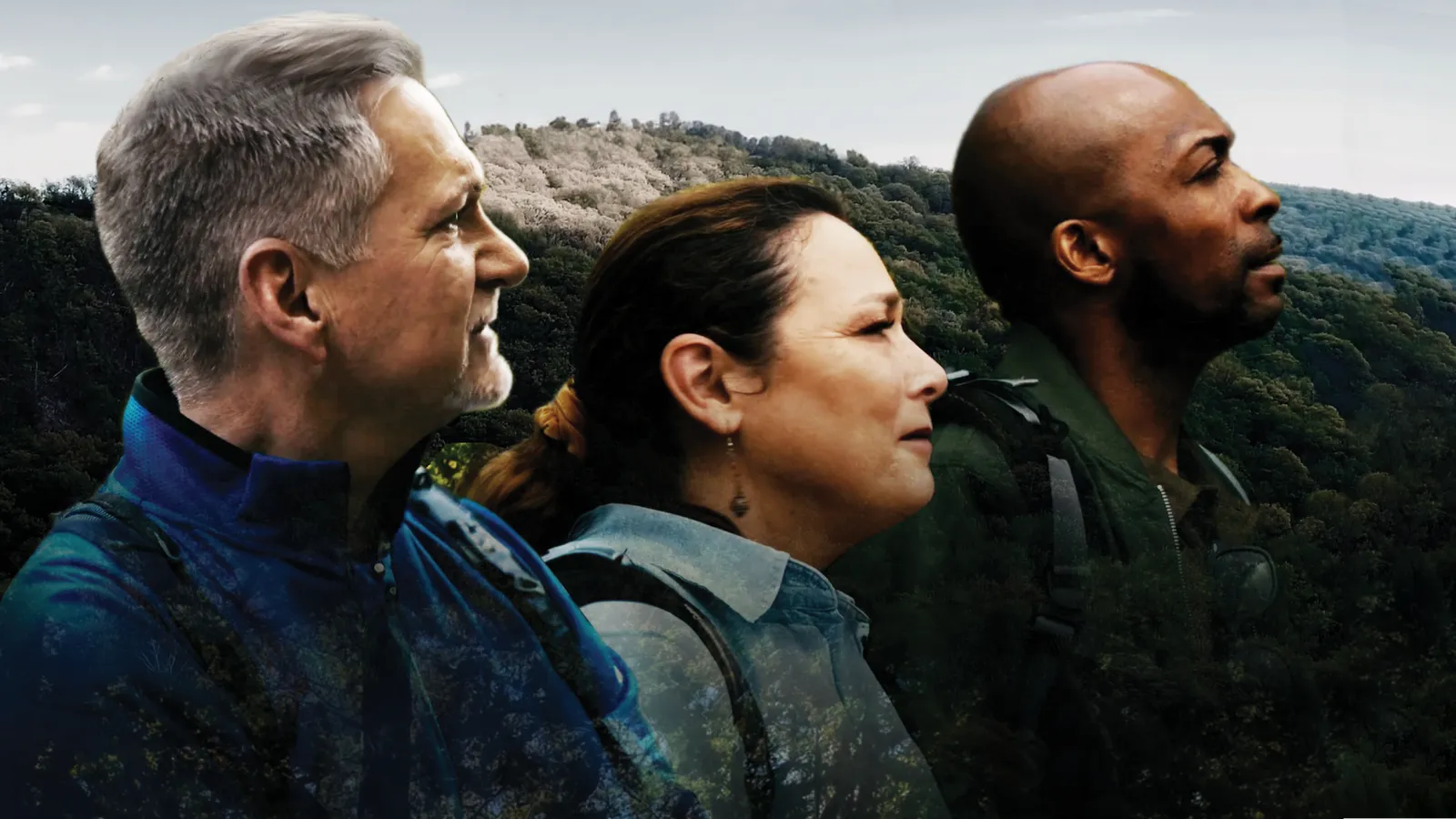
Movie Spotlight: The Final Walk
Three former classmates reunite to honor a dead friend on a trail they all know. Each one has a different reason for being there. Only one of them knows what the walk is really for.
By Relay · Tuesday, June 23, 2026 · 3 min read
For Claire, the walk was everything. Her one chance at what she felt was redemption. Zach was there to air grievances he had never voiced. Richard didn’t fully know what he was walking into. Three former high school friends, one dead mutual friend, one trail, one afternoon that was always going to change everything.
The Final Walk began as an idea by Beatrice Boepple, who plays Claire and co-wrote the script with Wendell Laurent (Zach) and Glenn McBride Jr. (Richard). All three actors were also three of the four people who built the film, writing alongside each other for a year before director Tom Ryan came aboard. What Boepple originally imagined as a My Dinner with Andre-style conversation in the woods gradually became a psychological thriller.
My Dinner with Andre, in the Woods
The concept Boepple brought to the table was rooted in conversation: three friends walking and talking through a pivotal day. The drama required somewhere to go. Over a year of rewrites and read-throughs, the psychological thriller structure emerged, giving the story the escalation it needed. What resulted is a film that begins in grief and memorial and then refuses to stay there.
Three Notes
The filmmakers needed a mechanism to move the characters from positive memories into darker territory. Their solution was three personalized notes from their deceased friend, delivered along the trail. Each note advances the story while tightening the emotional pressure. The audience discovers what the notes contain at the same time the characters do. That synchrony keeps the pacing of revelation locked to the pacing of shock.
Divergent Memories
The film’s central question: what happens when the story you’ve built your adult life around collides with someone else’s version of the same events? The three characters shared a history but assigned completely different meaning to it. In high school they were living through those moments without understanding their weight. As adults they’ve constructed identities around what they’ve been telling themselves ever since. The trail forces them to test those stories against each other. “The film asks what happens when the narratives we’ve carried for years collide with someone else’s truth,” Boepple says, “and how that reckoning can change our understanding of both the past and ourselves.”
Writing and Acting as One
Because the three leads were also the three co-writers, each actor largely wrote their own dialogue. The distinction between character voice and actor voice collapsed. “Rather than interpreting words written by someone else,” Boepple says, “we were speaking words that grew directly out of our understanding of these characters.” Rehearsals fed back into the writing. The writing fed back into the performances. The process became a loop, and the emotional honesty came through that loop.
The Trail as Pressure Chamber
The physical demands of the hike became part of the film’s emotional logic. Steep terrain, exertion, breath becoming difficult. As the body tires, defenses get harder to maintain. “The effort of hiking, with one’s heart racing and breath challenged, naturally brings a person closer to a raw emotional state,” Laurent says. The cast felt it as actors and it’s visible on screen. The trail didn’t just provide a location. It provided a mechanism for the performances.
What to Know Before You Press Play
Laurent frames it through the Twilight Zone. “Audiences should know they should not become complacent in what type of film they believe they are watching,” he says. Like a good episode of Night Gallery, the film will probably deliver several surprises. It starts as a memorial. It becomes something else entirely. And the shift, when it arrives, reframes everything that came before.
The Final Walk
Tom Ryan · 2024 · 29 min
Streaming now on Relay.