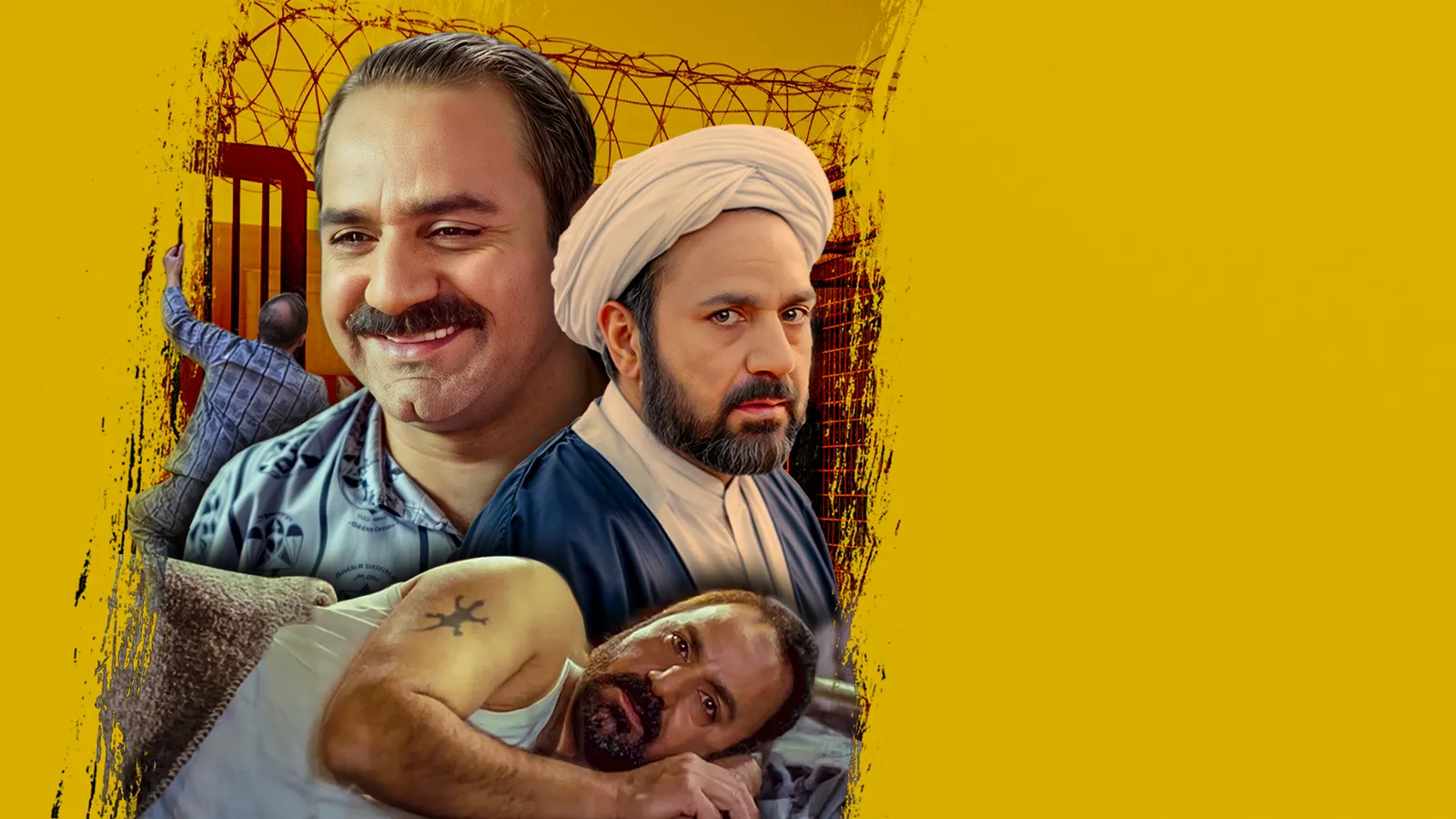
Iran's hit comedy about a fake cleric was pulled within a month
The Lizard (2004) is an Iranian comedy about a thief posing as a cleric. It broke box office records, then was withdrawn within a month.
By Relay, Movie Spotlight · Wednesday, October 28, 2026 · 3 min read
The Lizard was made in Iran in 2004 by Kamal Tabrizi, a Tehran-born director, and it is a comedy about a thief who escapes prison dressed as a cleric. It became a box office hit, then left cinemas within a month after senior clerics objected. Cinema Iranica, a scholarly film reference, calls it the first post-revolutionary comedy to address the dress code of Shia clerics, which means the first made since the revolution that created the Islamic Republic.
The title is the hero's nickname. Reza, played by Parviz Parastui, an Iranian actor who has won the Fajr festival's best actor prize four times, is a thief called Marmoulak, "the lizard", for his skill at scaling walls. He is serving a life sentence when a prison scuffle sends him to hospital. There he takes a cleric's turban and robes and walks out.
His plan is to reach the border and leave the country. Instead, people in a village take him for their mosque's new cleric. He improvises sermons that draw crowds, and in one he talks about Pulp Fiction and "brother Tarantino". The crowds believe him, and the joke is how far a borrowed costume carries him.
What happened when it opened?
The Lizard premiered on 4 February 2004 at the Fajr Film Festival, Iran's largest annual film festival, and won the festival's audience prize for best film. Censors then held the release back by a month to make minor cuts. It reached cinemas on 21 April 2004.
Audiences filled them. According to the news agency UPI, the film broke Iran's box office records and took more than $1 million in four weeks, with an estimated 1 million people seeing it in about 28 Tehran cinemas. Iran's state news agency IRNA reported $650,000 in ticket sales in the first 18 days.
Why was it pulled?
Hard-line clerics objected. Ayatollah Ahmad Jannati, a senior cleric and the secretary of the Guardian Council, the body that vets candidates and legislation in Iran, called it "a dreadful film" without having seen it, according to a newspaper quoted by UPI. Friday prayer sermons in Hamedan and Shiraz condemned it.
Other clerics disagreed. Mousa Mousavi, the representative in western Iran of Ali Khamenei, Iran's Supreme Leader, said there was "nothing in this film against the clergy". Tabrizi said the film urges the clergy to "accept criticism" to keep their bond with ordinary people. The producer, Manouchehr Mohammadi, denied that it mocks them.
In May 2004 the filmmakers withdrew it under pressure from the judiciary and the Culture Ministry, though it had a contract to run until July. Mohammadi said the authorities had not banned it except in a few towns but had advised them to stop screening it, which UPI called a "quasi" ban.
How did it survive?
On pirated copies and DVDs. Minoo Moallem, a women's studies professor at San Francisco State University, writes that it became one of the most popular Iranian films this way, with about 1 million copies sold in Iran and abroad. Cinema Iranica says the film stayed banned until 2020, and Iranian press reports from March 2020 say it was licensed for online release after 17 years.
The timing explains some of the heat. Cinema Iranica places the film in a period of tension between President Mohammad Khatami's reformist government and conservative factions. The film itself opens with the line "You can't force people into heaven, dear brother."
Where it sits on Relay
Relay lists 162 films tagged Iranian or Persian cinema, among them this one, a comedy that sold out theaters in its home country and is remembered for the way it was removed from them.
The film suits viewers who like satire built on a single disguise, anyone curious how comedy gets past censors, and people who want an Iranian film that audiences once queued for.
The Lizard
Kamal Tabrizi · 2004 · 111 min