A 1928 film lost to fire turned up in a mental hospital
The Passion of Joan of Arc (1928): its original cut burned, then a copy surfaced in 1981 in a janitor's closet at a hospital outside Oslo.
By Relay, Movie Spotlight · Sunday, October 25, 2026 · 3 min read
The Passion of Joan of Arc was made in 1928 by Carl Theodor Dreyer, a Danish director, and it is a silent film whose original cut was destroyed in a fire, then found again in 1981 in a janitor's closet at a mental hospital outside Oslo. It is also one of the films critics rank among the greatest ever made: it placed in the top ten of the 2012 Sight & Sound critics' poll, the best-known ranking of its kind.
The story is Joan of Arc's heresy trial in 1431. Joan, the French peasant girl who led armies against the English, is questioned by judges who want her to deny her visions, and the film follows that one ordeal to its end. Relay streams more than 390 silent films, and this is the one that shows how much a camera can do with a human face.
Why did the original cut vanish?
The film premiered in Copenhagen in April 1928, and the Archbishop of Paris and government censors ordered cuts before it opened in Paris that October. On 6 December 1928 a fire at the UFA studio laboratory in Berlin destroyed the original camera negative. The Danish Film Institute places the fire at a Paris laboratory instead, so sources differ on where, not on what was lost.
Dreyer rebuilt a second version from outtakes, and that one was believed destroyed in a 1929 fire. In 1951 a negative of the second version turned up in the vaults of Gaumont, the French studio, and Joseph-Marie Lo Duca, a French film historian, reworked it. For decades that altered version was the one people saw.
How did a mental hospital end up with it?
In 1981 an employee at Dikemark Hospital, a mental hospital in Asker outside Oslo, found three film canisters in a janitor's closet. They sat at the Norwegian Film Institute for about three years before anyone opened them. Inside was a print of Dreyer's original, uncensored cut.
Nobody knows how it got there. The film was never released in Norway, so the print had no obvious reason to be in an Oslo suburb at all. The Danish Film Institute says the film had been believed lost for more than 50 years.
Why is a silent trial film so intense?
Dreyer dropped the screenplay his producers offered and built the script from the original records of Joan's trial. Pierre Champion, a historian who had published an edition of those transcripts in 1921, advised on the history.
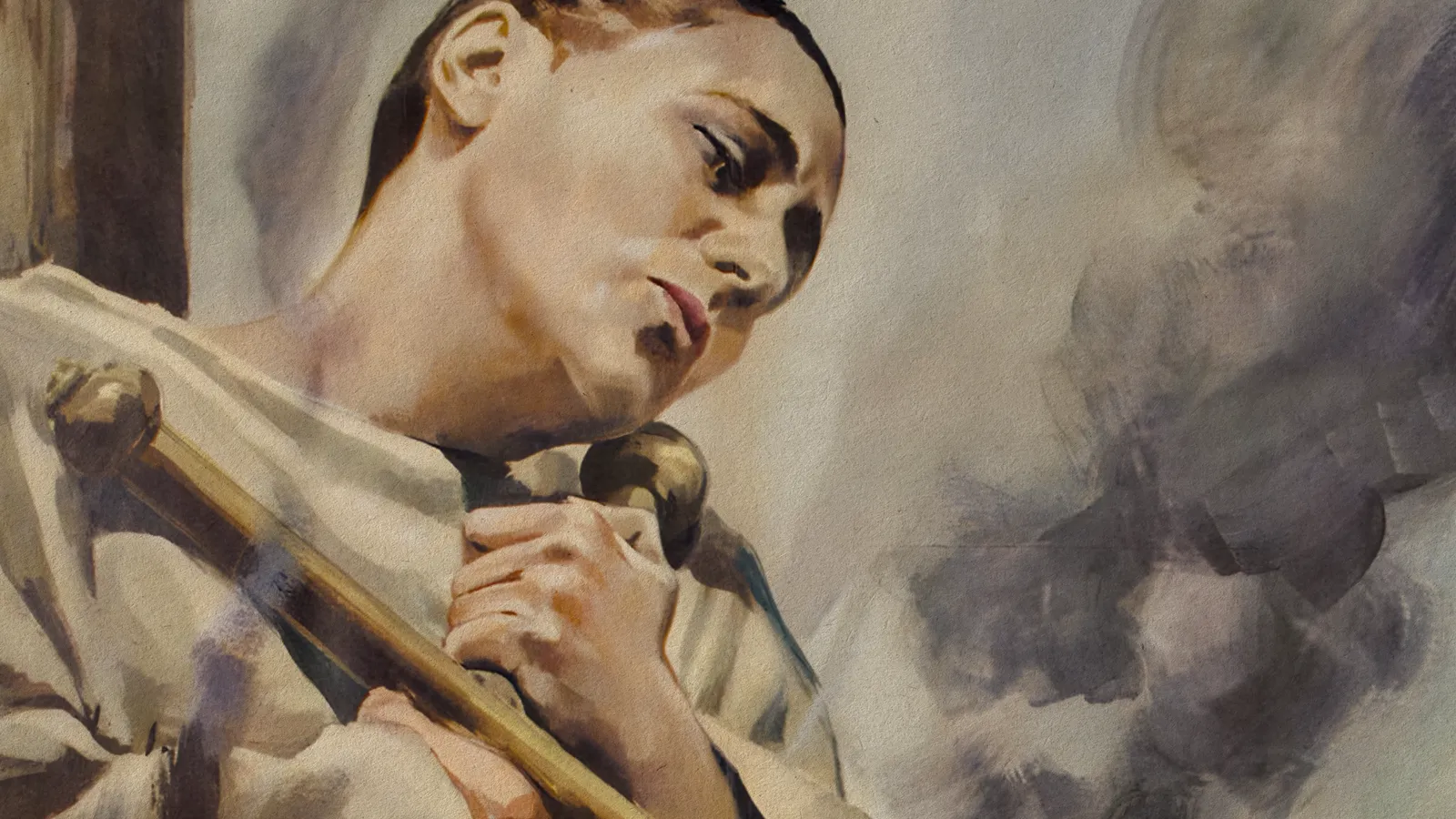
He then shot most of the trial in close-ups of faces, with the actors, Falconetti among them, working without make-up. Renée Falconetti was a French stage star who played the 19-year-old Joan at 35, and it is regarded as her only major film role. Joan's face fills the screen for long stretches, which is why the film is remembered less for its plot than for her. The cast sits in front of a huge medieval castle set of plastered concrete that the production built for the film. TCM describes it as a virtual city in miniature, with walls strong enough to hold lights and camera crews. Shooting ran from May to November 1927.
The film had a budget of seven million francs and cost about nine million, one of the most expensive French productions of its day. Critics have noted that Jean-Luc Godard, the French New Wave director, returned to it in his own work from Vivre sa vie (1962) onward.
It suits viewers curious about silent cinema, true stories behind famous films, and faces that carry a whole story without a word of dialogue.
The Passion of Joan of Arc
Carl Theodor Dreyer · 1928 · 79 min