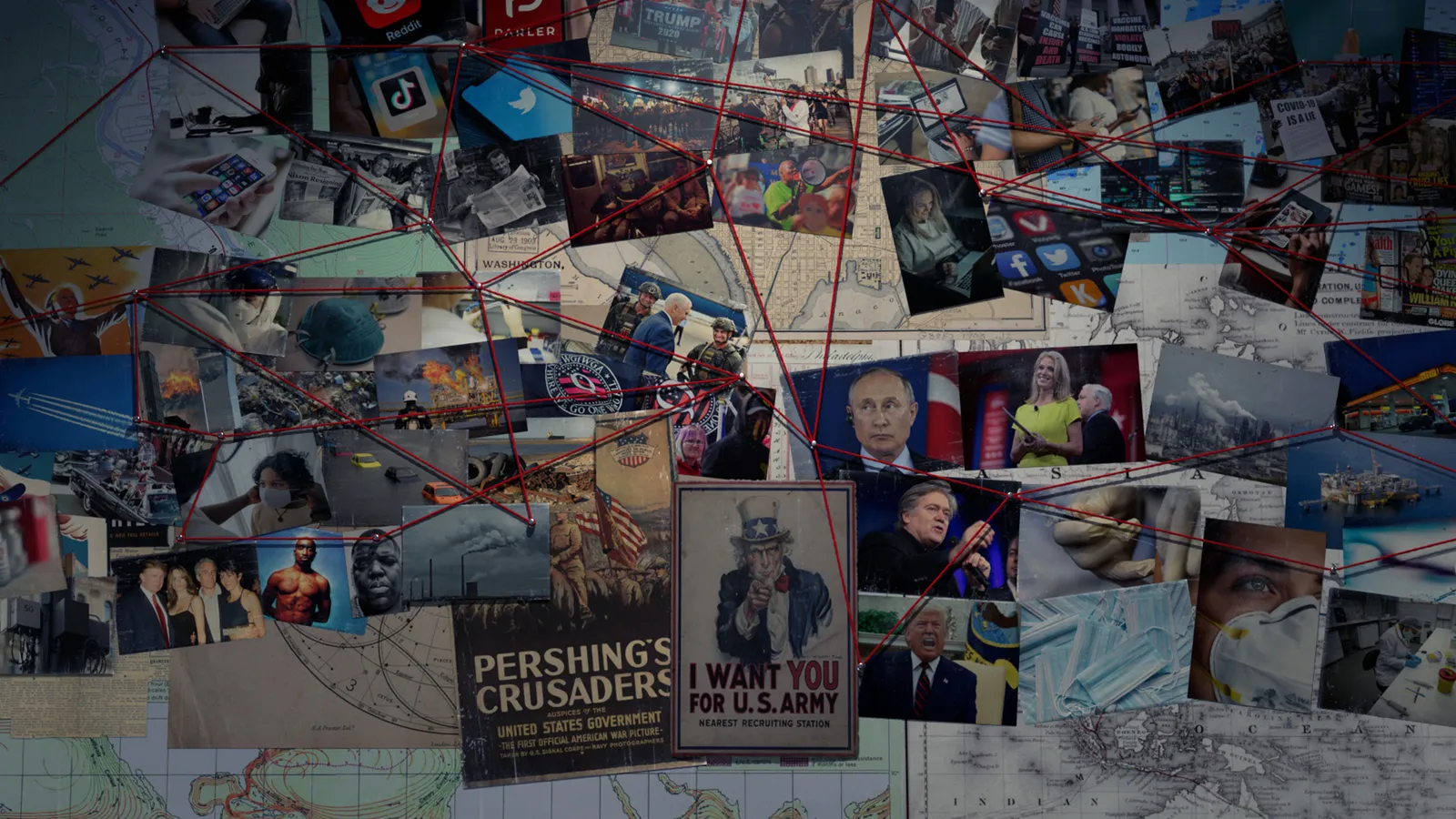
The Phenomenon of Misinformation
Seaton Lin started reading McLuhan in 2012. A decade later, during COVID, he finally had the chance to make the documentary he had been building toward.
By Relay · Wednesday, June 24, 2026 · 2 min read
Seaton Lin started reading Marshall McLuhan in 2012. Then Andrew Keen, Jaron Lanier, Sherry Turkle, Nicholas Carr, Douglas Rushkoff. He watched a cultural shift take hold by 2015 that clarified itself in the 2016 election. When COVID hit, the idea he had been developing for almost a decade suddenly felt urgent in a way it hadn’t before. Oliver Chan at Stage3 MediaWorks gave him the opportunity to make it.
Lin directed The Phenomenon of Misinformation, a documentary that examines the rise of false, inaccurate, and misleading information as a social force, not just a political one. The film asks why it spreads, why people believe it, and what it does to identity and community.
A Cult Pushed by Algorithms
The title came after the interviews were done. Lin and Chan kept returning to one word. “It felt right at the time,” Lin says, “because misinformation and disinformation had taken on an entirely new social condition. It felt like it was developing into a cult that was being pushed by the social media algorithms.” The word “phenomenon” was meant to name something that had grown beyond any single claim or movement and become its own kind of gravity.
The Experts
Lin didn’t arrive at the film with a clear taxonomy of false versus inaccurate versus misleading information. He found that vocabulary through the interviews themselves. Amy Yee, Ira Hyman, Timothy Caulfield, and Ilana Strauss walk through the distinctions with precision. Lin’s approach was to set the stage and let them speak. “My goal was to present the material in the most engaging way possible without diluting their message and not to confuse or enrage the audience by assigning fault or blame.”
Why People Are Drawn In
One of the film’s central questions is about identity. Lin observed that social media allowed people to sort themselves into in-groups and out-groups based on ideology rather than interest. As technology eroded traditional forms of self-expression, conspiracy theories became one of the remaining ways people could define who they were. “As technology eroded traditional forms of self-expression,” Lin says, “conspiracy theories became one of the last ways people could define their identities.”
The Media Diet
Making the film changed how Lin thinks about information consumption. “I believe our media diet is just as important as our physical diet,” he says, “because the mind and body are intrinsically connected, and how we feel about ourselves and our place in society shapes the way we see the world.” It’s one of the film’s sharpest formulations: that what we take in shapes us the same way food does, with the same capacity for nourishment or harm.
What to Know Before You Press Play
Lin asks viewers to approach the film with an open mind. The goal was never to assign blame or declare a side. “The film is ultimately a reminder that we are all navigating these challenges together,” he says. The documentary came out of a genuine effort to understand a shift that Lin had been watching since 2012, through a lens he built from a decade of reading and thinking. It’s a film about a real and ongoing problem, made by someone who wanted to understand it before it was his job to explain it.
The Phenomenon of Misinformation
Seaton Lin · 2021 · 39 min
Streaming now on Relay.