Q&A: Ryder Larson on The Stephanie Problem
A high school junior walked into a mall and came out with the idea for a feature film. A year later, he wrote, directed, composed, and starred in it.
By Relay · Friday, May 1, 2026 · 5 min read
Ryder Larson was a high school junior when he walked into a mall on a rainy November afternoon and couldn't stop thinking: this is cinematic. He went home that night and started planning a feature film.
A year later, The Stephanie Problem premiered to the same classmates and teachers who hadn't believed he could pull it off.
We talked to Ryder about color symbolism, an unexpected location swap mid-production, and what it actually costs to play a nihilist every day for a year.
Where the idea came from
What sparked the concept?
I remember my family and I were walking into the mall on a very rainy day in November 2024. I was a junior in high school at that point, and I had only taken on short films and school projects. When we walked into the store, I observed all of the flashing colors, varying textures, tones, aromas, and scents. I can recall knowing that it was extremely cinematic, and found myself drawn to creating a similar feeling. That's when I got the idea for The Stephanie Problem.
When I returned home that night I had already started to plan my film, and within one week I started to script the movie. I knew it would be a challenge and would certainly take a tremendous amount of time, but I had a vision and I was committed to making this movie seem professional.
A lot of my classmates, teachers, and many of my peers did not believe in my skills at the beginning of the process, though those same people attended its grand premiere a year later.
The dream world
The film centers on "The Lobby." Where did that come from?
Since I was a little kid, I have always had a profound connection to dreams and memories. Dreams are like a whole other dimension inside of our head. I guess that's where the idea of "The Lobby" comes from. People in your dreams don't exist, so exploring the idea of the character that resides within the dream is very interesting to unpack.
That summer I filmed the movie, I was so immersed within the process I remember feeling like I was actually in the movie itself. Every time I had a dream during that period, I would include little elements like tone, lighting, and color that made The Lobby feel more like a dreamscape.
Color and character
Oscar wears gray. Stephanie wears color. How intentional is that?
One hundred percent intentional.
Oscar is a very depressed, nihilistic character who believes there is no meaning in existence. He practically only wears gray hoodies and keeps his hood on. The gray represents the monotone, very dark feelings he's experiencing. On the other hand, Stephanie is usually decked out in very colorful, bright clothing and wears flashy accessories. She quite literally never changes herself, because she is herself.
After the climax of the movie, when Oscar has sort of a long monologue about re-discovering his love for life, he wears a bright green shirt and smiles. Stephanie's hopeful essence rubs off on him.
The title
What does "The Stephanie Problem" actually mean?
It's certainly a term Oscar would coin. Stephanie's problem is being too carefree and too happy about everything, according to him, and also because she randomly dances to non-existent music. She doesn't make sense, and therefore it makes her a "problem" when really she's just being herself. It's a play on the truth, just exaggerating Stephanie into something she's not.
...also because she's the reason they ended up finding the dream world in the first place.
Making The Lobby feel real
You've never seen Inception. How did you approach the dream sequences?
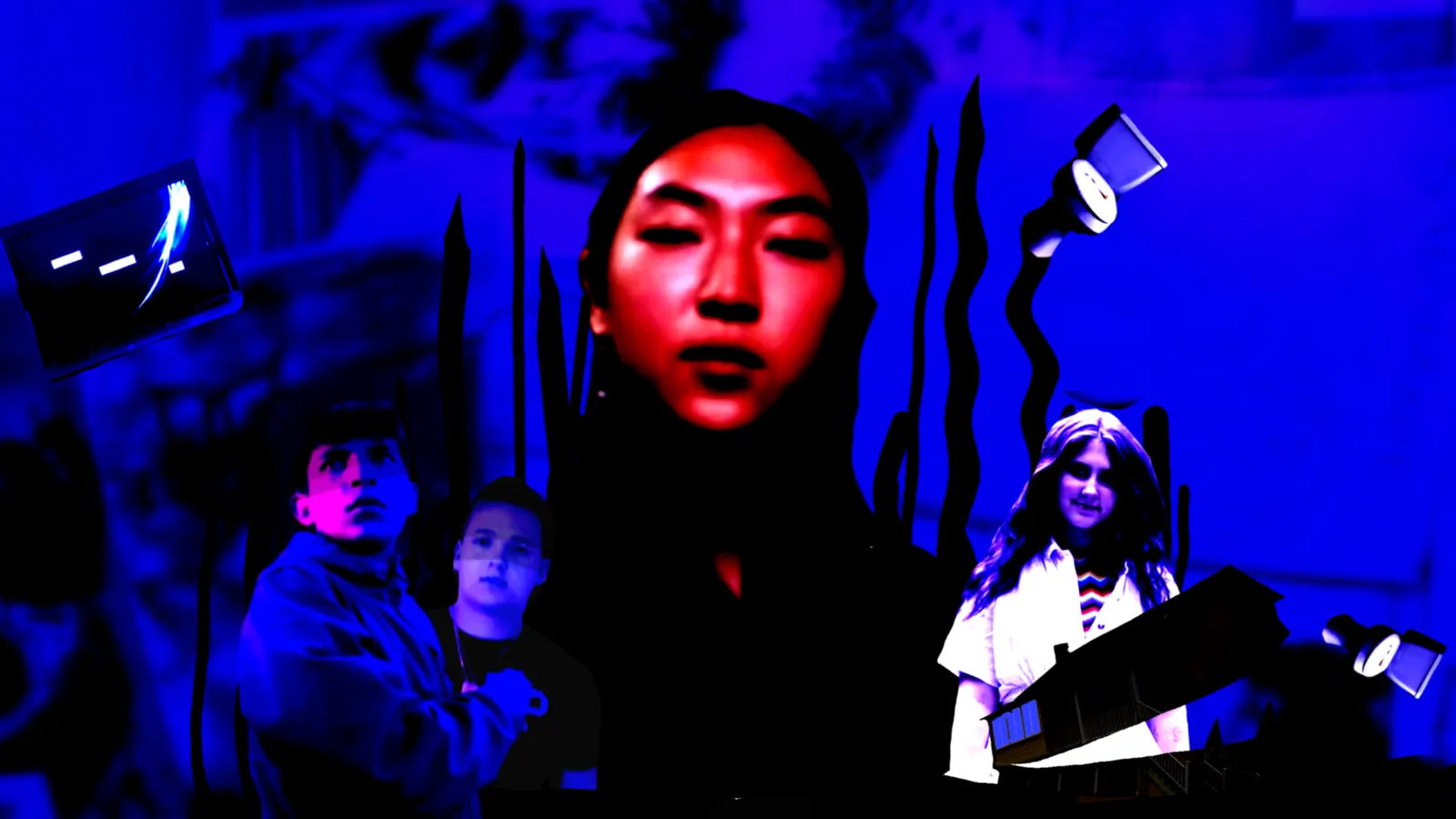
Believe it or not, I've actually never watched Inception, so I had just been going off of dreams I personally have had. My biggest priority was making the two realms feel completely separated from one another. I made the real world very basic and kind of sterile, like the inside of a psych ward where everything is all white. Then, for contrast, The Lobby would be colorful with several lights and knick-knacks.
The original location for The Lobby was set to be the mall where I got the idea, but halfway through filming there, access got restricted. I chose not to give up and gave Hippo Hardware a call. Within a week we were back on track. The workers treated us very nicely and allowed us to use their entire building as the set. I loved it.
It made it easier to include high-budget-feeling elements too. The map of the city Oscar lives in, the hand costume he sported in the sixth grade, the childhood toys he had as a baby. Lighting and angles play a massive part in making a film look high budget. Depth of field creates depth.
Playing Oscar
You wrote it, directed it, composed it, and starred as the lead. What was that like?
The hardest part is trying to immerse myself in the character. I'm not nihilistic nor depressed, though I felt myself kind of falling into that emotional mindset while filming because I would film every day. It took quite a toll on my mental health and my physical appearance. I grew out a stubble for the climax and would spend literal hours setting up and closing down, which would extend late into the night.
I wouldn't change it for the world, because I knew this is what I was getting myself into. I have always prided myself in my acting skills, and it was nice to put them to the test. Molly Majors did an amazing job as well.
The score
Three months on the soundtrack. What were you going for?
Music is a very large part of immersing the viewer into the film. I created about six leitmotifs, harmonies that only play when a scene is related to a certain character or object, and used instruments that were very experimental to create eclectic sounds.
If you listen to the soundtrack, you'll notice some songs are just buzzing, whilst other songs are genuine musical scores with beats and melodies. I did this on purpose. I can't fully explain it, you would have to listen to the score to understand. It's very dreamy.
Before you press play
What do you want a viewer to know going in?
Regardless of how old you are, if you think you have a passion for something and your gut tells you to go for something big, just go for it. I was dead set on my project for a year and I was amazed by the final product.
Not only that, but don't forget to thank your parents. I couldn't have done all of this if it weren't for my mom, who drove me to all my locations, bought me my props and camera, and read every draft of the script I wrote. I couldn't have done it without her.
The Stephanie Problem
Ryder Larson · 2026 · 100 min
Streaming now on Relay.