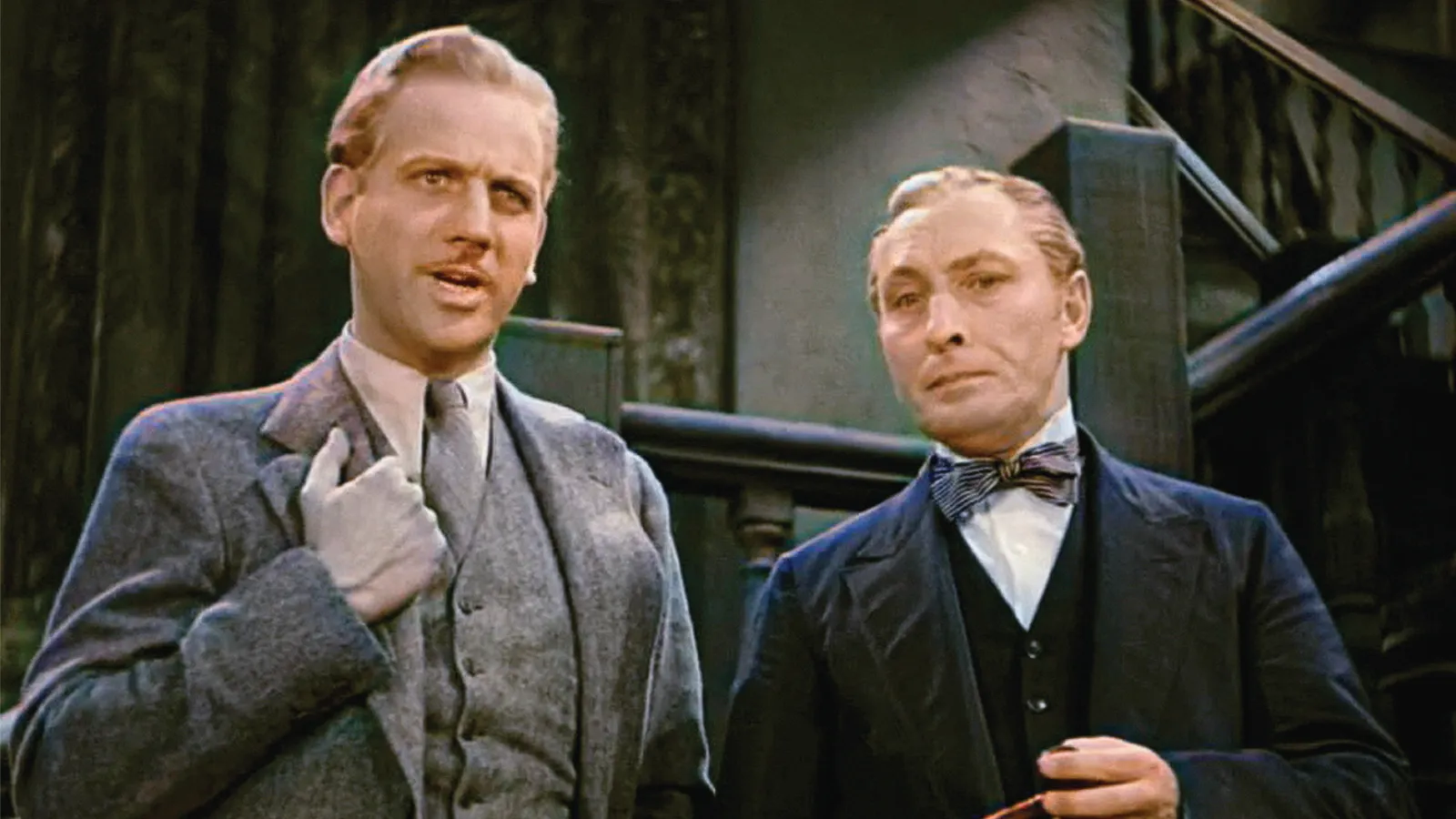
This 1933 horror reused the Frankenstein set
The Vampire Bat (1933) was a Poverty Row quickie shot on Frankenstein's leftover village set, with a vampire plot and no vampire.
By Relay, Movie Spotlight · Saturday, October 10, 2026 · 2 min read
The Vampire Bat was made in 1933 by Majestic Pictures, a Poverty Row studio, and it is a vampire film with no vampire, shot among sets Universal had left standing. It used the village from Frankenstein (1931) and an interior from The Old Dark House (1932).
Majestic made it as a quickie to exploit the publicity around Warner Bros.' Doctor X (1932) and Mystery of the Wax Museum, both starring Lionel Atwill and Fay Wray. Producer Phil Goldstone brought in Atwill and Wray from Doctor X.
The villagers of Kleinschloss blame vampires for deaths in which the victims are drained of blood. Melvyn Douglas plays the skeptical police inspector, and Atwill plays the town's doctor. It runs 63 minutes.
Where is the vampire?
There is none. The culprit is the doctor, who controls a servant. The vampire is a red herring, and the film plays as a whodunit first and a horror picture second.
TCM writes that the story shifts from murder mystery to horror to science fiction, blending vampirism, hypnotism and artificial life, and calls the film entertaining despite its borrowings.
Why does it look like Frankenstein?
Because it borrowed the set. TCM notes that the film's morgue was modeled on the wine cellar of Castle Frankenstein, and that Atwill, Douglas, Dwight Frye and Lionel Belmore were all Universal veterans.
Frye, who had played Renfield in Dracula and Fritz in Frankenstein, plays the suspected town fool, Herman.
Why was it rushed out?
The Vampire Bat was released in January 1933. Mystery of the Wax Museum reached theaters on 18 February 1933, about four weeks later. The AFI Catalog calls Warner's film the last made with the two-color Technicolor process.
Majestic's film was in black and white, with one exception: a hand-colored sequence credited to Gustav Brock.
What happened to the color sequence?
TCM says that for years the film circulated in washed-out dupe prints. In 2017 the UCLA Film & Television Archive made new preservation prints and a digital master, funded by The Packard Humanities Institute and made from a 35mm fine grain master and a 35mm nitrate print.
The restoration recreates the Brock sequence, which UCLA describes as unacknowledged and unseen since the film's first run.
It is for anyone who wants an early horror film in under an hour, made by a small studio with someone else's village.
The Vampire Bat
Frank R. Strayer · 1931 · 62 min