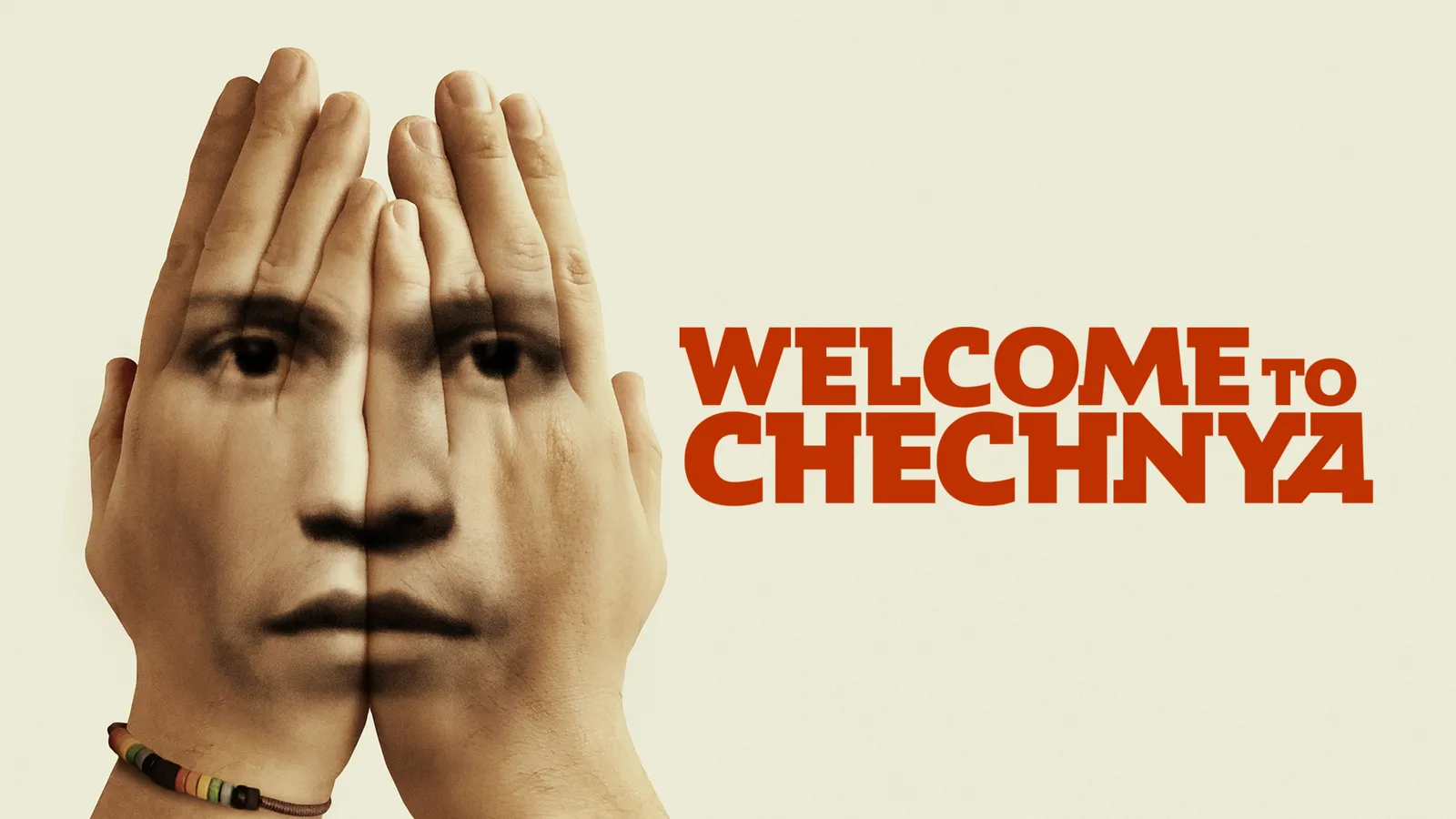
A documentary gave its subjects new faces so they could be seen safely
Welcome to Chechnya (2020) gave 23 people fleeing an anti-LGBTQ purge new faces, the first documentary on the Oscar effects shortlist.
By Relay, Movie Spotlight · Sunday, November 8, 2026 · 3 min read
Welcome to Chechnya was made in 2020 by David France, an American journalist and Oscar-nominated director, and it is the first documentary ever shortlisted for the Academy Awards in the visual effects category. The effect at the centre of it was not a spectacle. It was a way of protecting the people on screen, whose faces were replaced with those of volunteers.
The film follows activists in Russia who help LGBTQ people escape Chechnya, a Russian republic, where a campaign of detention and torture began in late February 2017. Human Rights Watch reported that the round-ups apparently affected over 100 people. A spokesperson for Chechen leader Ramzan Kadyrov called the April 2017 reporting "absolute lies and disinformation." The film is about the people who got others out, and about those who were rescued.
How do you film people who cannot be seen?
France has said he filmed for about 18 months. Much of the footage was shot on hidden cameras and cell phones. It follows activists such as David Isteev, crisis response coordinator of the Russian LGBT Network, and Olga Baranova, senior director of the Moscow Community Centre for LGBT+ Initiatives, which shelters refugees in safe houses while they wait for legal status to be settled, and helps refugees apply for asylum. Both activists appear in the film.
France came to the film as an investigative reporter, and his first film, How to Survive a Plague, earned him an Oscar nomination. Showing the people the activists helped was the problem here. France has said the team wanted viewers engaged in protecting the people on screen, so the disguise was made visible rather than hidden.
What is a face double?
The film replaced the faces of 23 people with faces borrowed from volunteers, many of them LGBTQ activists in New York. The volunteers were filmed in a Brooklyn studio in front of nine cameras, over about a week, performing a range of expressions and speech. Visual effects supervisor Ryan Laney then spent about a year altering the footage with machine learning. The result keeps the original person's movement and expressions, but with a different face on top.
Laney said the models were encrypted so the process cannot be reversed, meaning the real faces cannot be recovered from the finished film. The team also tested disguise styles with subjects at a Dartmouth neuropsychology lab. In the first 20 or so shots they added a soft halo around the replaced faces, so viewers would understand that what they were seeing was not real.
How was it received?
The film premiered at the Sundance Film Festival in January 2020, where Tyler H. Walk won the U.S. Documentary Special Jury Award for Editing, and HBO released it on 30 June 2020. The Academy's announcement on 9 February 2021 placed it on the 15-film Documentary Feature shortlist for the 93rd Academy Awards, and on the 10-film Visual Effects shortlist, a first for a documentary. It was not nominated in either category. A documentary about people in hiding entered a visual effects race because its effect was a form of protection, not a spectacle.
It also won a Peabody Award in 2020 and the International Documentary Association's Courage Under Fire Award that year, an honour shared with Isteev and Baranova.
Who is it for?
It is on Relay in the United States. It is hard to watch in places and holds a Violence advisory. It runs 107 minutes.
Welcome to Chechnya
David France · 2020 · 107 min