Arthouse movies: 8 films from surrealism to modern festivals
Arthouse films are named after the theaters that showed them. Eight, from a 1929 surrealist dream to recent festival winners.
By Relay, Watch Guide · Monday, October 12, 2026 · 4 min read
An arthouse movie is a film made as a work of art rather than for mass-market appeal. It is usually independent, often foreign, and named after the art house theaters that showed it. In the United States those theaters grew after the Second World War by playing the foreign-language and independent films the studio chains would not.
There is no single arthouse style, so the label has always been about how a film was made and shown.
This list covers eight: a surrealist dream, a Soviet city symphony, a French Poe adaptation and three modern festival films. What they share is a filmmaker who did it their own way.
What makes an arthouse movie?
- The idea comes before the audience. Nobody tested these on a preview crowd first.
- Form is part of the point. Some drop the plot, some drop the actors, some never leave one room.
- It found its people slowly. Festivals, revival houses, film societies and critics carried most of these.
Which arthouse movies are on the list?
Un Chien Andalou (1929)
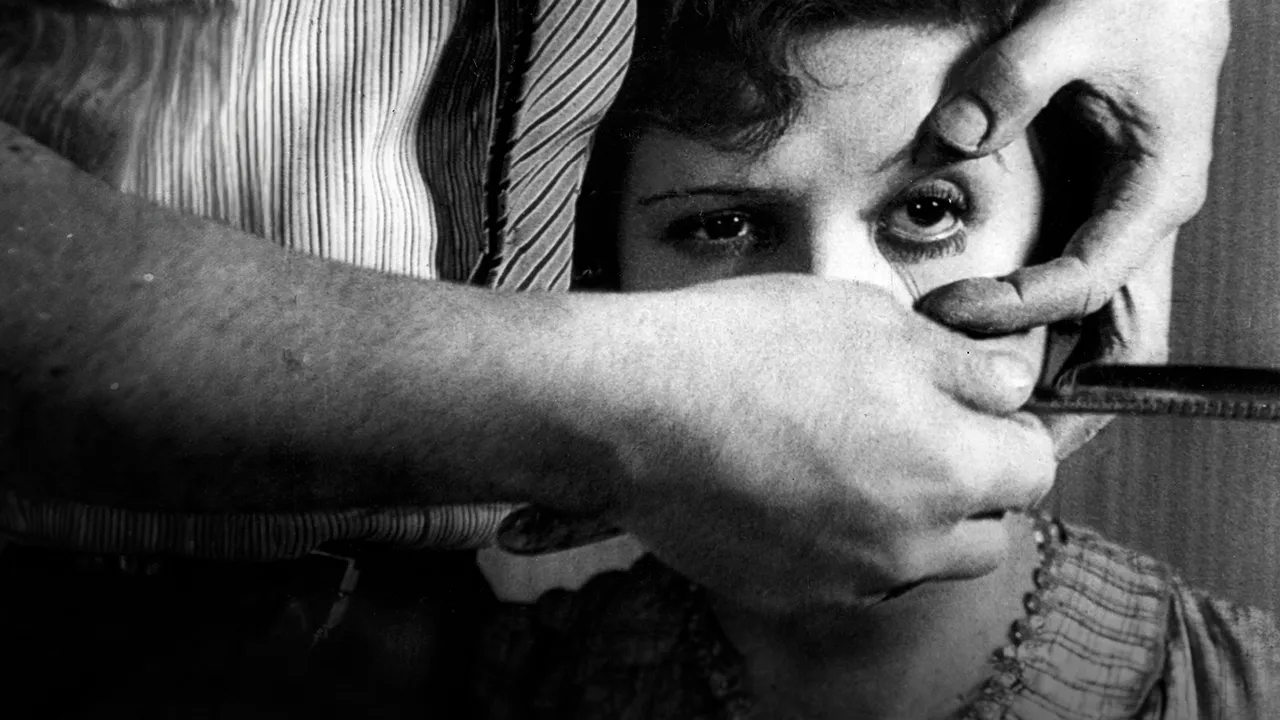
Luis Bunuel dreamed of a cloud slicing the moon like a razor through an eye. Salvador Dali dreamed of a hand crawling with ants. They wrote a script on one rule: throw out any image that could be explained. Bunuel's mother paid for it.
The eye in the famous shot belonged to a dead calf, lit and bleached to pass for human skin. At the first screening in Paris, Bunuel reportedly kept stones in his pockets in case the audience turned on him. The Surrealists embraced it instead.
 Horror
Un Chien Andalou
Luis Buñuel · 1929 · 21 min
Man with a Movie Camera (1929)
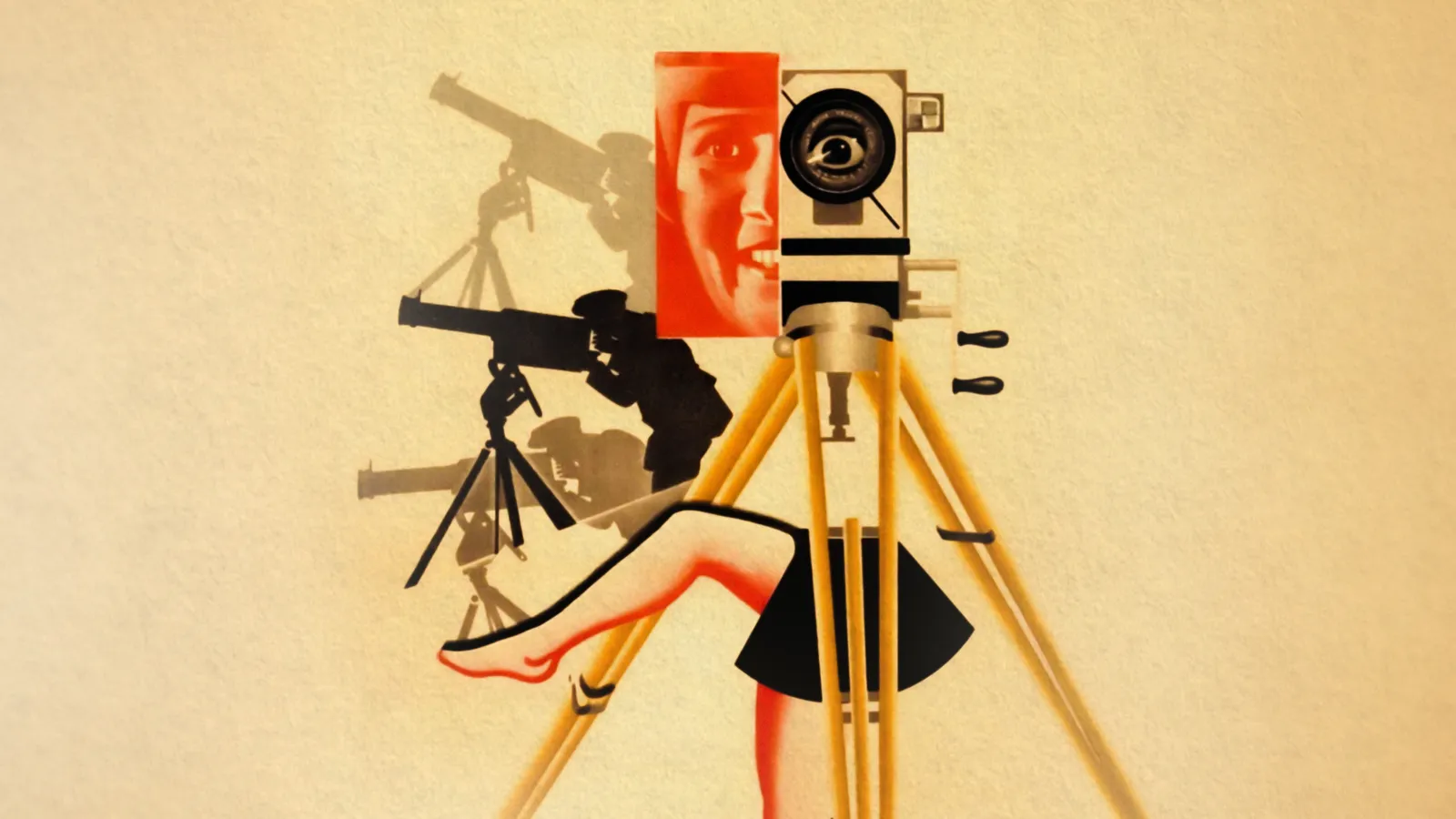
Dziga Vertov's film has no actors, no story and no title cards. It is a day of city life in Moscow, Kiev and Odessa, shot by his brother Mikhail Kaufman, who appears as the cameraman, and edited by his wife Yelizaveta Svilova, who is shown cutting it.
Vertov threw every trick he had at it: superimposition, slow and fast motion, split screens, montage at speed. In 2014 a Sight and Sound poll of 340 critics and filmmakers named it the greatest documentary ever made.
Man with a Movie Camera
Dziga Vertov · 1929 · 67 min
The Docks of New York (1928)
Josef von Sternberg's waterfront drama takes place over one night: a ship's stoker pulls a woman out of the harbor, marries her the same night and has to decide by morning whether he meant it. Harold Rosson shot it in fog and smoke.
It was previewed the same week as Al Jolson's talkie The Singing Fool and, in Criterion's words, was "completely passed over." Critic John Baxter later called it the most popular of Sternberg's silent films today.
The Docks of New York
Josef von Sternberg · 1928 · 75 min
The Fall of the House of Usher (1928)
Jean Epstein's Poe adaptation folds in a second story, The Oval Portrait: Roderick Usher paints his wife Madeline, and the portrait seems to drain the life out of her. Luis Buñuel worked on the script and assisted Epstein, but he was unhappy with the project and left before it was finished. The next year he made Un Chien Andalou.
Epstein built the atmosphere from dream-like slow motion, double exposures and creeping camera moves. Marguerite Gance, wife of the director Abel Gance, plays Madeline, and Abel Gance has a cameo. In 1979 Epstein's sister Marie added a score for French television.
The Fall of the House of Usher
Jean Epstein · 1928 · 62 min
Fireworks Wednesday (2006)
Before A Separation, Asghar Farhadi made this: one day in a Tehran apartment on the eve of Chaharshanbe Suri, the fire festival before the Persian new year. Taraneh Alidoosti plays Rouhi, a young cleaner about to be married, who walks into a home where the wife suspects her husband of an affair.
It won the Gold Hugo for best film at the Chicago International Film Festival. Variety's Deborah Young wrote that few Iranian films had tried to realistically depict both the urban middle and lower classes.
Fireworks Wednesday
Asghar Farhadi · 2006 · 102 min
Monsieur Lazhar (2012)
The source was a play with one character. Director Philippe Falardeau turned it into a classroom: an Algerian refugee steps in as substitute teacher for Montreal children whose teacher has taken her own life. The playwright suggested casting Fellag, a comedian, and Falardeau found him through his YouTube videos.
It won the Audience Award at Locarno, six Genie Awards including best picture, and a nomination for the Academy Award for Best Foreign Language Film.
Monsieur Lazhar
Philippe Falardeau · 2012 · 95 min
The Brand New Testament (2016)
In Jaco Van Dormael's comedy, God is a bad-tempered man in a Brussels apartment who runs the world from an old computer. His daughter Ea hacks it, texts everyone on Earth their date of death, and goes out to recruit six new apostles.
One of them, played by Catherine Deneuve, leaves her husband for a gorilla. It was Belgium's Oscar entry and made the shortlist of nine foreign language films.
The Brand New Testament
Jaco Van Dormael · 2016 · 115 min
Gett: The Trial of Viviane Amsalem (2015)
Almost the whole film happens in one room. Viviane wants a divorce, and in Israel only a rabbinical court can grant one, and only with her husband's consent. He keeps saying no. Siblings Ronit and Shlomi Elkabetz wrote and directed it, and Ronit plays Viviane.
It closes their trilogy about her marriage and was nominated for the Golden Globe for best foreign language film. Ronit Elkabetz died of cancer in 2016, at 51.
Gett: The Trial of Viviane Amsalem
Ronit Elkabetz · 2015 · 116 min
Where to go next
- For the era that gave arthouse cinema its first experiments, see Silent Films: 8 to Start With.
- For films that found their audience late, see Cult Classic Movies That Found Their Audience Years Late.