Mad scientist movies: the character existed before the word "scientist"
Frankenstein's creator came before the word "scientist". Nine films from Relay show what the type became.
By Relay, Watch Guide · Friday, October 30, 2026 · 6 min read
A mad scientist film is a movie about a scientist whose experiments go past any ethical limit and leave behind a monster, a revived body or a string of murders. The type is usually traced to Victor Frankenstein, the title character of Mary Shelley's 1818 novel. Britannica's student encyclopedia calls him the prototypical mad scientist, and Discover magazine calls him the first true mad scientist in fiction. The word "scientist" did not exist yet. William Whewell, an English scientist and philosopher, proposed it on 24 June 1833, 15 years after the book appeared.
Film gave the type a face. Edison's 1910 short Frankenstein, shot in three days, is regarded as the first film version of the novel, and its only known nitrate print came from a Wisconsin collector who had acquired it, as part of a larger trove, without knowing what it was. In Metropolis, Fritz Lang's silent film, the inventor Rotwang is, in the words of a science historian quoted by Discover, very much a mad scientist, and he has Einstein's hair. Universal's Frankenstein (1931) cast Boris Karloff, an actor known for monsters and mad scientists, as the Monster. The same historian says its Dr. Frankenstein is relatively clean-cut, and that the wilder scientist is Dr. Pretorius in the 1935 sequel.
The figure has outlasted horror. The Science Fiction Encyclopedia lists Dr. Strangelove (1963) and Back to the Future (1985) among cinematic mad scientists, and Young Frankenstein (1974) as a parody. In the US, Relay carries 69 films tagged mad scientist, evil scientist or mad doctor. The films below are in release order, and each puts one experiment at the centre of the plot.
What makes a mad scientist film
- An experiment crosses a line. A cure, a youth formula or a grudge becomes a reason to use people.
- The lab is the set. Shocks, serums and machines do the work that a monster costume does elsewhere.
- The result escapes. A creature, a revived man or a disguised killer leaves the lab and the plot begins.
- The scientist may not be mad. Gail Griffin, an English literature professor, says Victor Frankenstein is not a mad scientist, or a bad one, only a man who loses his moral bearings.
9 mad scientist movies to watch
The Devil Bat (1940)
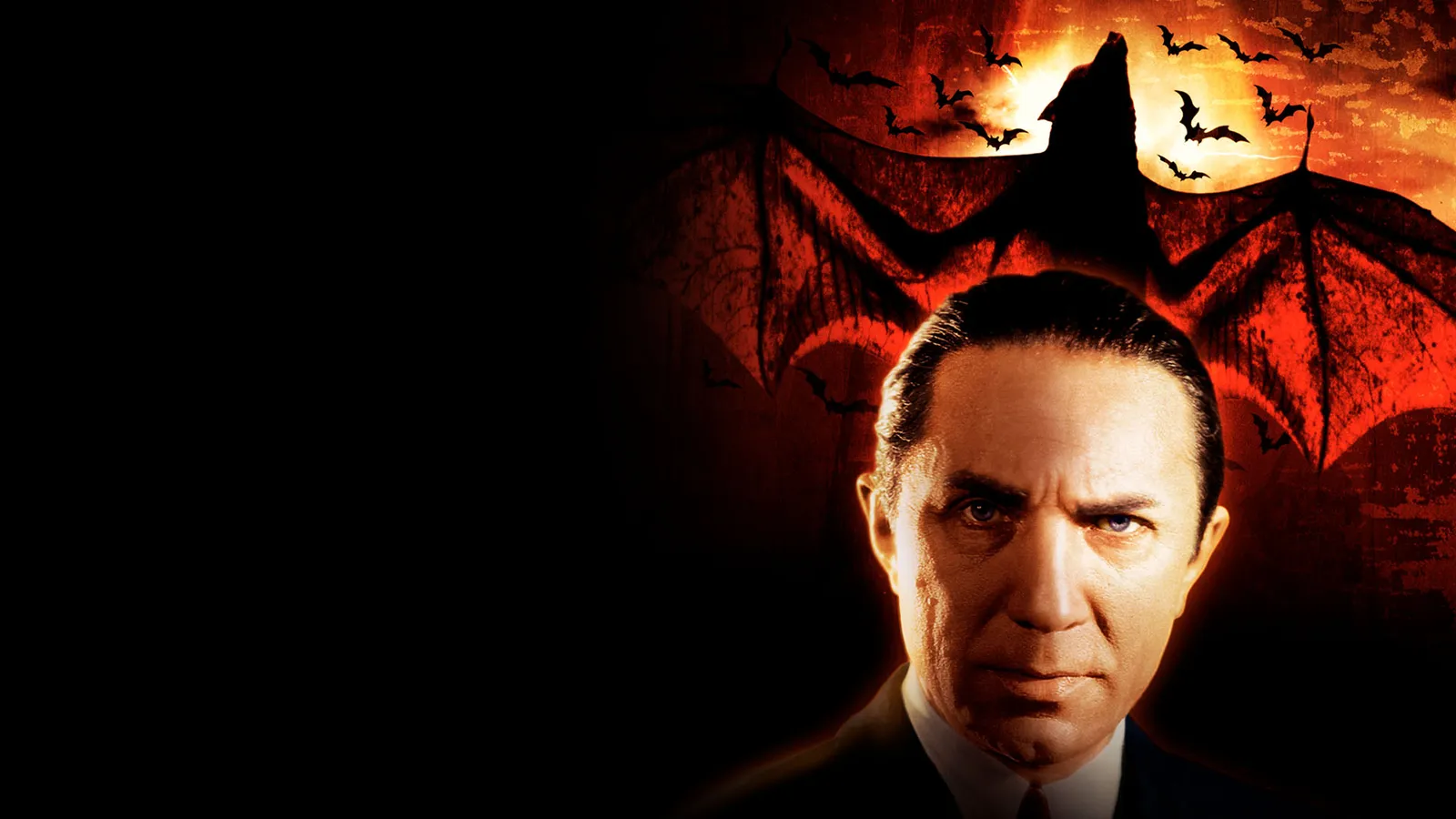
Bela Lugosi, the horror actor whose career had slid into cheap pictures, plays Dr. Paul Carruthers, a small town doctor and chemist. The cosmetics company that got rich on his formulas offers him a $5,000 bonus, and he answers by electrically enlarging bats and training them to attack anyone wearing an aftershave he created. He hands the lotion to the families of his enemies as a sample, then sends the bats out at night.
The ending turns his trick on him. A reporter, Johnny Layton, douses Carruthers with the scent and the doctor is killed by his own bat. The studio, Producers Releasing Corporation, remade the story as The Flying Serpent (1946) and followed it with a sequel, Devil Bat's Daughter (1946), without Lugosi.
The Devil Bat
Jean Yarbrough · 1940 · 68 min
The Ape (1940)
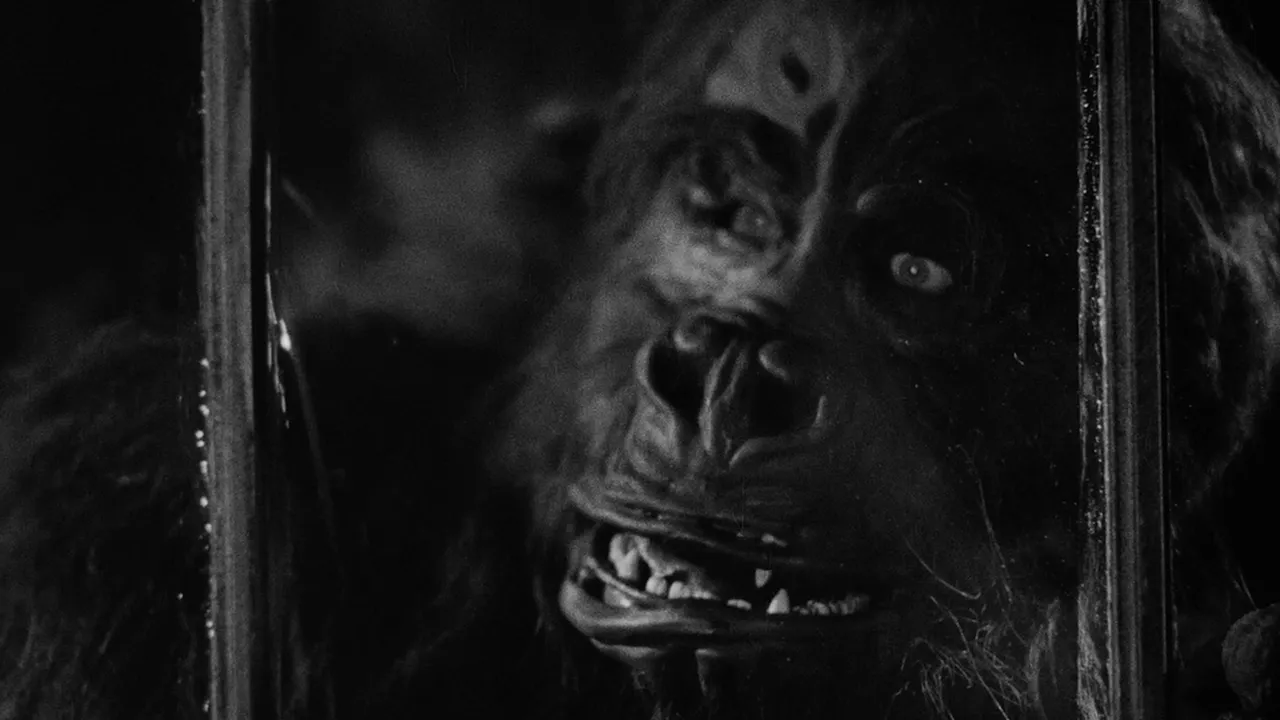
Boris Karloff plays Dr. Bernard Adrian, who is trying to cure a paralyzed young woman with human spinal fluid. When his supply runs out, he disguises himself in the skin of a circus ape and kills people to get more. It was the last film of Karloff's contract with Monogram, the low budget studio that released it.
It was adapted from a 1927 play that had already been filmed once as The House of Mystery. Critics have called it possibly the most ludicrous of Karloff's B pictures, and still enjoyable.
 Horror
The Ape
William Nigh · 1940 · 62 min
The Face of Marble (1946)
Professor Charles Randolph, a brain surgeon, uses an electric shock to try to revive a drowned man in his isolated lab. John Carradine, whom Monogram's pressbook promoted as a horror star with a serious side, plays him. In the first experiment the revived man's face turns marble-like before he dies again.
Randolph then kills and revives his wife's Great Dane, Brutus, who comes back dead-alive and dangerous. Critics have called the film a goofy but entertaining mad scientist cult picture.
The Face of Marble
William Beaudine · 1946 · 71 min
Mesa of Lost Women (1953)
Dr. Aranya runs experiments on a Mexican mesa that mix spiders and people, producing immortal spider women, a giant spider and dwarves who are failed experiments on men. The film was assembled from two shoots. Herbert Tevos first made it as an unreleased project called Tarantula, and when it found no distributor it was sold to Howco Productions, which had Ron Ormond shoot extra material.
Tevos never directed another film. Critic Glenn Erickson compared its incompetence to the work of Ed Wood, and Hoyt Curtin's score from it was reused in Wood's Jail Bait (1954).
Mesa of Lost Women
Ron Ormond · 1953 · 70 min
Indestructible Man (1956)
Dr. Bradshaw is working on a cancer cure in a basement lab with high voltage shocks. He revives an executed robber, Charles "Butcher" Benton, with chemicals and electricity, and Benton comes back nearly impervious to harm. He kills both scientists, then hunts the partners who betrayed him.
Lon Chaney Jr. plays Benton without dialogue, through gesture and extreme close ups. One review notes it was his first top billing since 1948. It was shot on location in Los Angeles, including the Bradbury Building. It was later riffed on Mystery Science Theater 3000, the television show that talks over bad films, and clips of it appear in the 2003 essay film Los Angeles Plays Itself.
Indestructible Man
Jack Pollexfen · 1956 · 71 min
The Gamma People (1956)
In the Eastern Bloc state of Gudavia, Dr. Boronski uses a gamma ray machine to try to turn children into geniuses. The failures become mindless enforcers. A British film, it was shot in the summer of 1955, with exteriors in Imst, Austria, and interiors at MGM British Studios in Elstree, England.
John Gilling, who directed and co-wrote it, is best remembered for two 1966 Hammer horror films, The Plague of the Zombies and The Reptile. Variety found it minor league entertainment.
The Gamma People
John Gilling · 1956 · 78 min
The Manster (1959)
An American reporter, Larry Stanford, interviews Dr. Robert Suzuki in Tokyo. The doctor drugs his drink and injects him with a serum. Larry turns surly and violent, then grows an eye and a second head on his shoulder, and kills.
It was shot in Japan, in English, with a mostly Japanese crew and a mix of American, Japanese-American and Japanese actors. TCM says it may very well be the first Japanese-American co-production. In the US it played on a double bill with Eyes Without a Face, Georges Franju's horror film about a surgeon.
The Manster
George P. Breakston · 1959 · 72 min
The Head (1959)
In this low budget West German film, originally Die Nackte und der Satan, Dr. Abel's serum keeps a dog's head alive. After Abel dies, Dr. Ood keeps Abel's head alive on a machine, then plans to put the head of a hunchbacked nurse, Irene, onto the body of a stripper, Lilly.
Victor Trivas wrote and directed it. He was nominated for an Academy Award for the story of The Stranger (1946), Orson Welles's thriller. The set designer, Hermann Warm, had worked on The Cabinet of Dr. Caligari, the silent horror classic, and gave it an expressionist look.
The Head
Victor Trivas · 1959 · 95 min
The Incredible 2-Headed Transplant (1971)
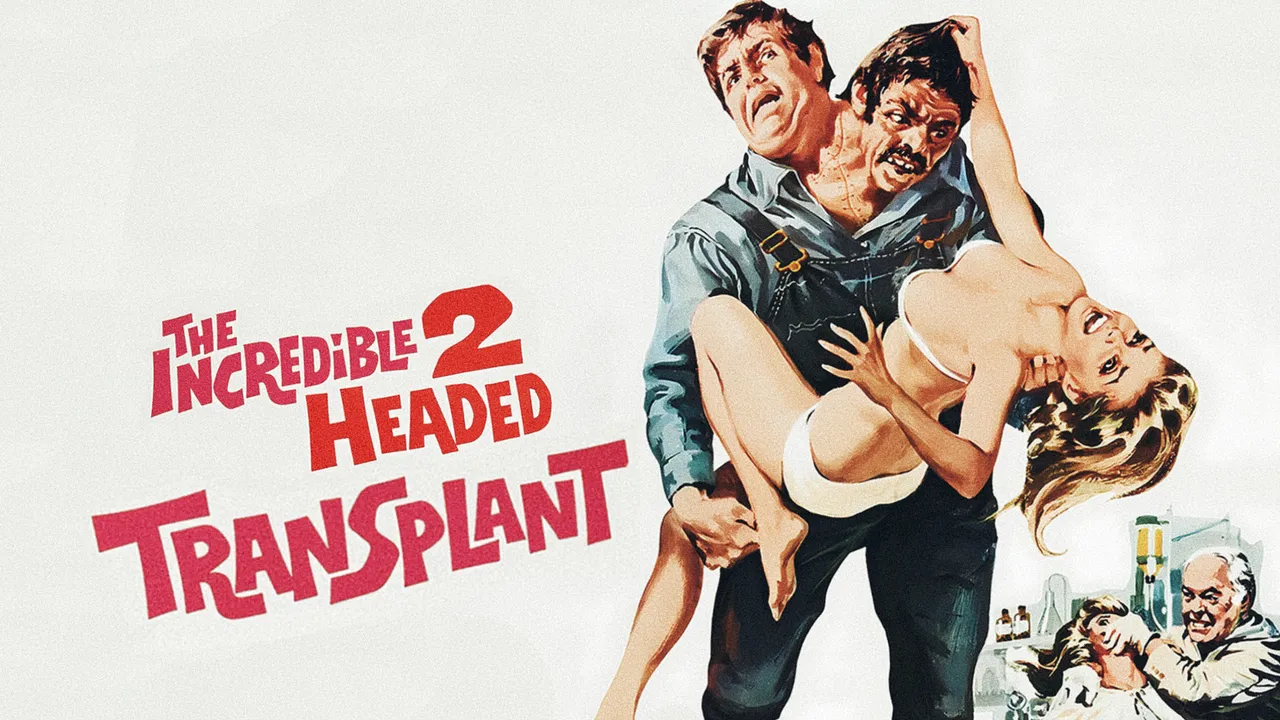
Dr. Roger Girard, a wealthy surgeon, experiments with head transplants. Before the main experiment he and his assistant tried grafting second heads onto animals in a home lab. When a killer, Manuel Cass, is shot, Girard grafts his head onto Danny, the giant, childlike son of his murdered caretaker, and the creature escapes and kills.
It was made independently, and American International Pictures bought it for release. It opened in Los Angeles on April 14, 1971. It lives on through riffing: a RiffTrax track, a joke commentary played over the film by Mike Nelson, Kevin Murphy and Bill Corbett, is on its Kino Lorber Blu-ray.
 Horror
The Incredible 2-Headed Transplant
Anthony M. Lanza · 1971 · 88 min
Where to go next
Every film above is on Relay. For what the laboratory leaves behind and for the films that grew out of cheap studios, try these.