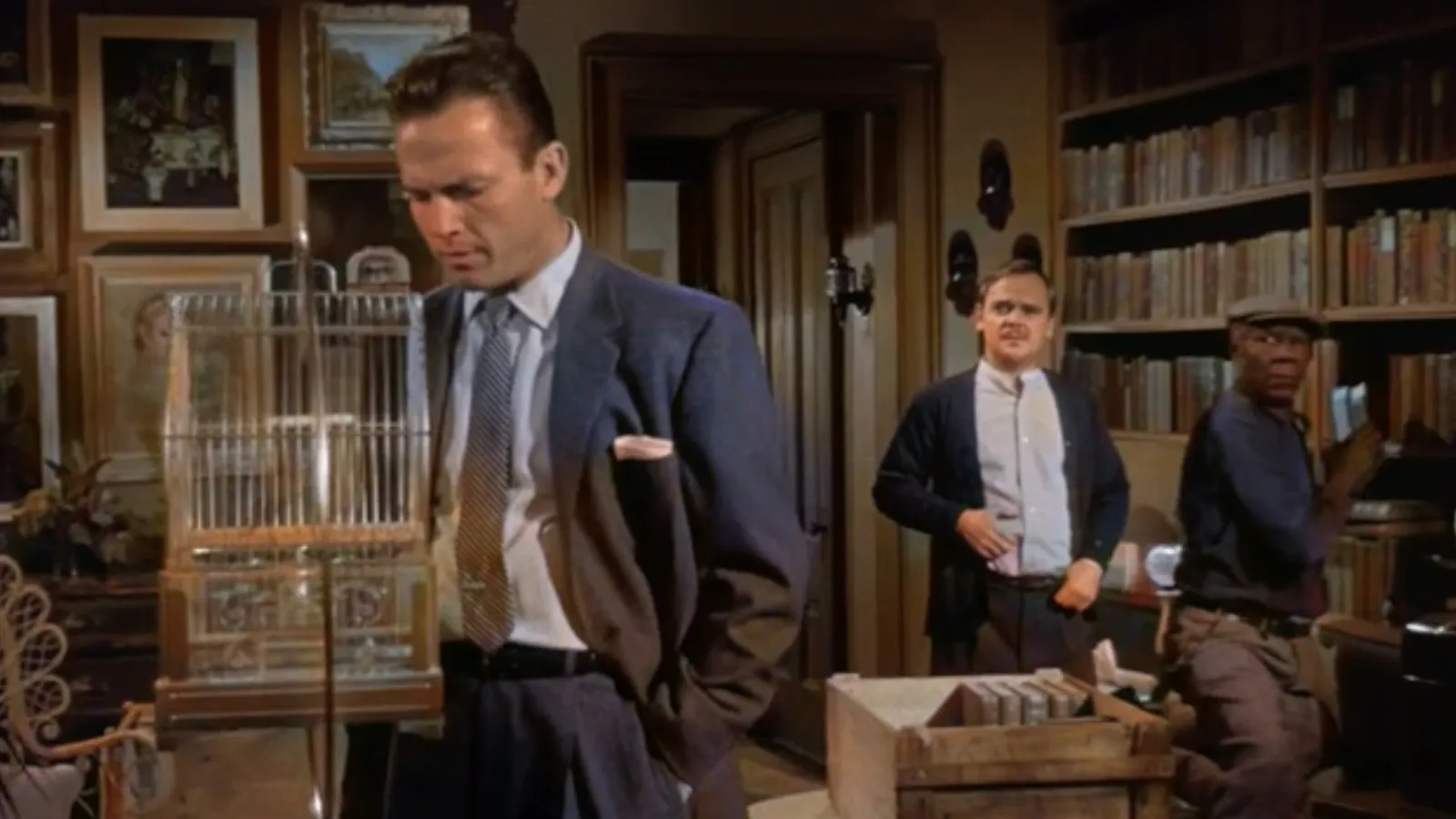
This 1955 detective film swapped drugs for nuclear material
Kiss Me Deadly (1955) turned a pulp novel about drug smugglers into a Cold War story about a box of radioactive material.
By Relay, Movie Spotlight · Monday, November 16, 2026 · 3 min read
Kiss Me Deadly was made in 1955 by Robert Aldrich, a Hollywood director who also produced it, and it is the private eye film that traded a crime story for a nuclear one. It is based on a 1952 novel by Mickey Spillane, whose detective Mike Hammer was then probably the most famous in American fiction. In the book, everyone is chasing a stash of drugs. In the film, they are chasing a box of radioactive material.
That one change made a routine detective story into something stranger. Kiss Me Deadly belongs to "film noir", the dark, shadowy American crime films of the war and post-war years. In 1999 the Library of Congress added it to the National Film Registry, its list of American films kept for preservation as culturally, historically or aesthetically significant.
The story starts with a hitchhiker. Hammer, played by Ralph Meeker, stops for a mysterious young woman on the road, and she pulls him into a hunt for something the people around him only call the "great whatsit". Nobody will say what it is, and the more Hammer pushes, the more people end up dead. He is no clean hero: Aldrich himself called him cynical and fascistic.
How did a drug plot become a nuclear one?
The script was written by A.I. Bezzerides, a screenwriter who kept Spillane's title and threw out most of the story. He said he wrote it fast because he had contempt for the book. In September 1954, Hollywood's censors had told the production that the novel's drug trade made the story unacceptable. In the script, the narcotics became atomic material, and the Mafia villains gave way to an unnamed group. The setting moved from New York to Los Angeles.
Bezzerides said the atomic bomb and McCarthyism were in the air at the time, so they went into the script without his planning it. Aldrich said the film made a political point through that private eye: that the ends did not justify the means in the McCarthy era, the years of the American hunt for Communists. That is what still sets the film apart. The thriller of its day ends with a box nobody should open.
How was it made?
It was shot in 21 days, between 29 November and 23 December 1954, and about 75% of it was filmed on real Los Angeles locations, from the boarding houses of Bunker Hill to a beach house in Malibu. The budget was small: $410,000 according to a book on Aldrich by the historians Alain Silver and James Ursini, $425,000 according to TCM. The film also gave Cloris Leachman her first screen role, as the hitchhiker in the opening scene.
Why did France love it when America did not?
In America the film failed. Most reviewers saw a standard detective thriller with sadistic violence, and in 1956 a Senate inquiry into juvenile delinquency, led by Senator Estes Kefauver, singled it out among violent films. In France it found champions. François Truffaut, then a critic at the film magazine Cahiers du Cinéma, wrote that its inventiveness is such that we do not know what to look at. Aldrich said the French critics found things in it he had never intended.
Its reputation grew from there. Later films from Repo Man in 1984 to Pulp Fiction in 1994 have been traced back to its glowing case, and Silver said it was Aldrich's own favourite of his films.
Which ending is the real one?
For years, the film played with a cut ending. 82 seconds showing Hammer and his secretary Velda escaping the burning beach house into the surf were removed, so the film seemed to end with both of them dead. The full ending came back in 1997, rebuilt from Aldrich's personal print by the editor Glenn Erickson, Alain Silver and the archivist John Kirk.
Who is it for?
It suits viewers who like detective stories, Cold War history and films that hold back what they are really about until the last minute. It runs 106 minutes and streams on Relay, alongside 37 other film noirs made between 1940 and 1960. For more of the genre, see the film noir guide.
 Crime
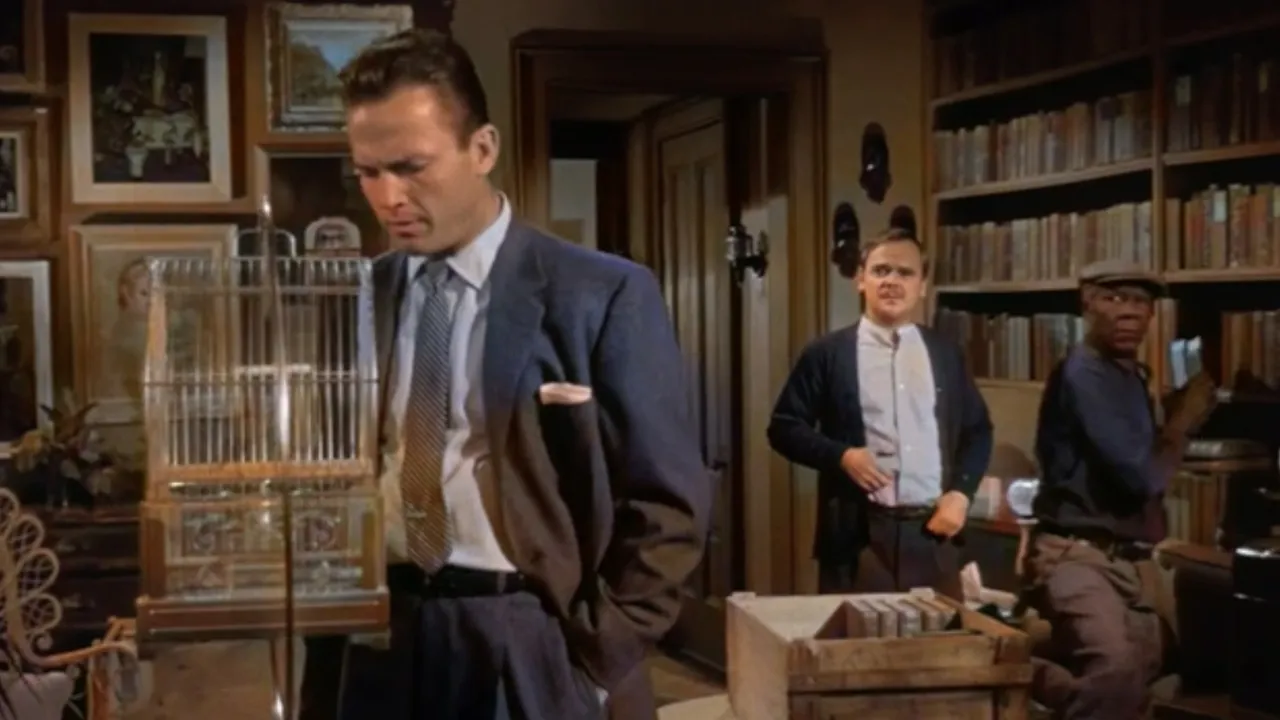
Kiss Me Deadly
Robert Aldrich · 1955 · 106 min