Banned movies: from Klan propaganda to teens fighting book bans
A racist 1915 film the NAACP fought, a comedy Iran pulled, cards schools banned: films and the fights to stop them.
By Relay, Watch Guide · Thursday, November 19, 2026 · 6 min read
A banned movie is a film that a government, a court or a censor board has stopped people from seeing. Relay has 8 films with a ban or a controversy at their centre, made between 1915 and 2025: racist Klan propaganda the NAACP fought to ban, a comedy Iran pulled from cinemas, trading cards schools banned and three teenagers fighting book bans in South Carolina. Some of these films were banned. Others tell the story of something that was.
In the United States that power once had the Supreme Court behind it. In February 1915 the court ruled unanimously, in a case the Mutual Film Corporation brought against Ohio's censors, that showing films was "a business, pure and simple", not speech protected like the press. States and cities could license films, cut them or refuse them.
That rule stood for 37 years. In 1952 the court struck down New York's ban on The Miracle, a 1948 short by the Italian director Roberto Rossellini that the state had called "sacrilegious": "motion pictures are a significant medium for the communication of ideas." Narrow obscenity laws survived, and many states and cities kept censoring films until the mid-1960s. But a film was now speech, and every fight since has been fought on that ground.
What makes a film banned
- Someone with power acts. A censor board, a court, a ministry or a school board stops the work, which is different from a bad review.
- A fear about the audience. Censors nearly always say they are protecting someone: children, believers, public order.
- A campaign comes first. A pressure group protests, and the official ban follows.
8 banned and controversial movies, and what happened to them
The Birth of a Nation (1915)
D. W. Griffith's Civil War film is racist propaganda. It presents the Ku Klux Klan as heroes and Black characters as sexual predators and thugs, and white actors in blackface play its major Black roles. The NAACP, the civil rights organisation, protested it from its first showings in February 1915, and the National Board of Censorship passed it only with cuts to scenes of interracial violence. Kansas and Ohio banned it statewide, and between 1915 and 1931 West Virginia, Detroit and Philadelphia were among the places that banned or cut it.
The harm went beyond the screen. On Thanksgiving night 1915, about ten days before the Atlanta premiere, William J. Simmons burned a cross on Stone Mountain and refounded the Klan. He ran an ad for the revived Klan next to the premiere's ad, Klansmen paraded on opening night, and the group showed the film to new recruits. In 1941 Griffith said it should be withheld from public exhibition in its present form. It is on Relay as a record of racist propaganda and of the campaign to stop it.
The Birth of a Nation
D.W. Griffith · 1915 · 188 min
The Jazz Singer (1927)
The Jazz Singer premiered in New York on 6 October 1927, one day after the death of Sam Warner, the Warner Bros. co-founder who had pushed the studio into sound. It is mostly silent, with synchronized songs and a few scenes of spoken dialogue, but its success moved Hollywood to sound. Al Jolson's ad-libbed "You ain't heard nothin' yet" came to stand for the talkies.
Its controversy is not a ban. In the closing number Jolson performs in blackface: a white performer in dark makeup, a stage tradition built on mocking Black Americans. Modern critics call the scene degrading and say it undermines what the film achieved.
The Jazz Singer
Alan Crosland · 1927 · 89 min
The Guidance Patrol (2012)
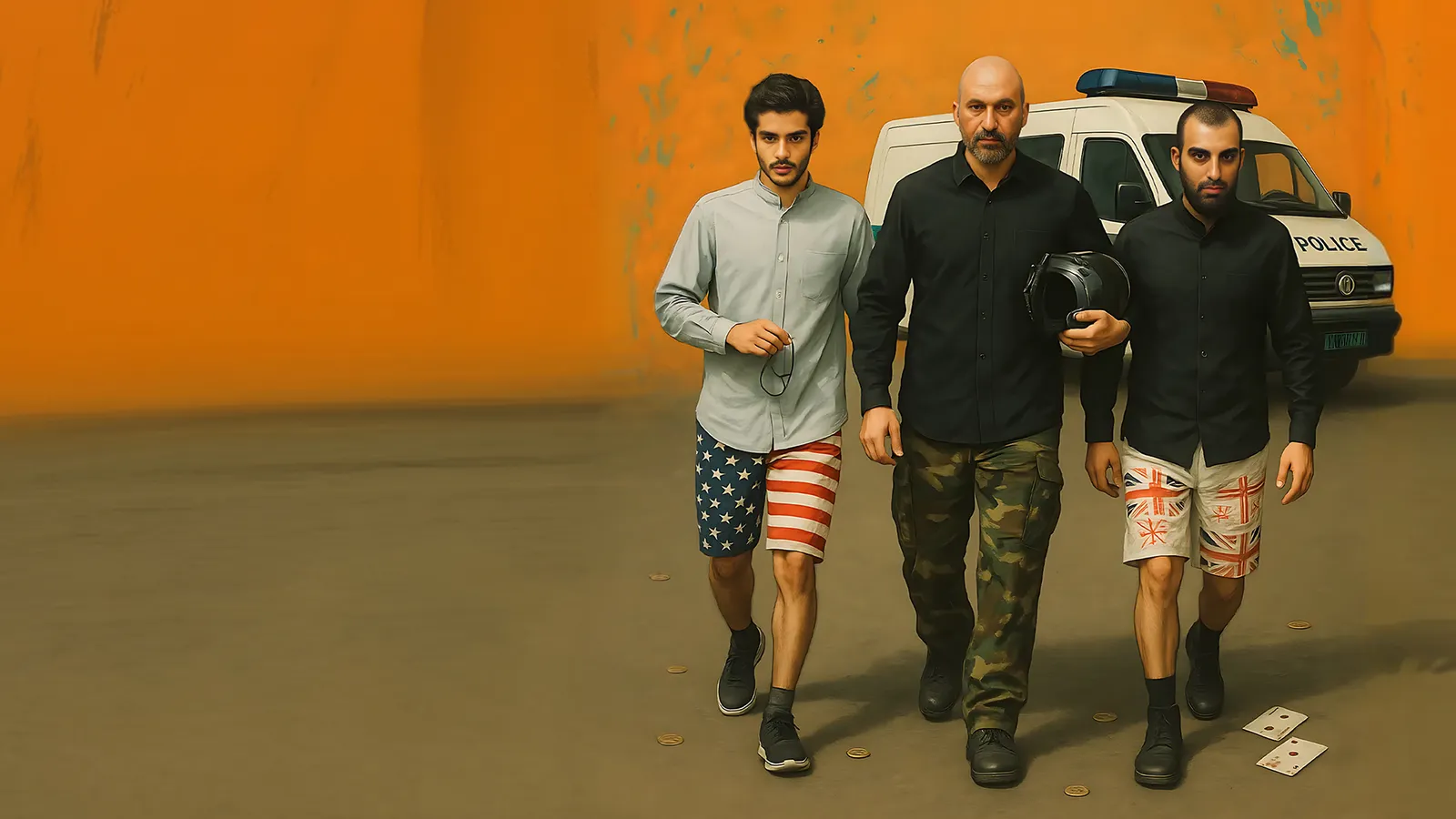
Gasht-e Ershad, the Persian title, is the name of Iran's morality police, the patrols that stop people for breaking the dress code. Saeed Soheili's comedy follows three low-income friends who pose as the patrol to make money. Iran's Ministry of Culture approved it, and it opened in Tehran on 15 March 2012, at the Persian New Year.
Then the hardliners came. Ahmad Khatami, a Friday prayer leader, called it "obscene" and "immoral", and the group Ansar-e Hezbollah protested outside the ministry with a 48-hour deadline to stop the screenings. The film was pulled from cinemas, and when the DVD came out that September a court annulled its permit 5 days later. Soheili answered with a sequel. The ministry refused the title Gasht-e Ershad 2, so it came out in 2017 as Gasht 2, and was reported as the best-selling film in Iranian cinema history.
The Guidance Patrol
Saeed Soheili · 2012 · 96 min
Fifi Howls from Happiness (2014)
Bahman Mohassess was a painter and sculptor called the "Persian Picasso", and a gay man in a hostile country. After the 1979 revolution many of his public works in Iran were destroyed or removed, and the nudity in his art was censored. One sculpture, The Flutist, was given paper underpants, and was later destroyed anyway. Mohassess destroyed most of his remaining work in Iran himself and settled for good in Rome, in a hotel room.
The Iranian filmmaker Mitra Farahani found him there. In her film two exiled Iranian brothers, the collectors Rokni and Ramin Haerizadeh, commission a new work, and he drives a hard bargain. He calls the loss of his work a victory for the ignorance of the times. He died in Rome on 28 July 2010, aged 79, about three years before the film premiered at the Berlin film festival.
Fifi Howls from Happiness
Mitra Farahani · 2014 · 102 min
30 Years of Garbage (2017)
In June 1985 the trading card company Topps released Garbage Pail Kids, gross-out cards that parodied the Cabbage Patch Kids dolls. Art Spiegelman, the cartoonist then finishing his comic Maus, was the art director and came up with names like Acne Amy. Many schools banned the cards because they distracted students.
The doll's owner sued Topps for $30 million in 1986. A federal judge ordered production stopped, and Topps settled in February 1987 by redesigning the characters. Joe Simko and Jeff Zapata, both Garbage Pail Kids artists, tell the whole story.
30 Years of Garbage
Joe Simko · 2017 · 114 min
Ball Four Turns 40 (2022)
Ball Four is a book: the baseball player Jim Bouton's diary of the 1969 season published in 1970. Bowie Kuhn, the commissioner of baseball, called it "detrimental to baseball" and tried to make Bouton sign a statement that it was fiction. Bouton refused. The Houston Astros forbade their broadcasters from mentioning the book.
The New York Yankees did not invite Bouton to their Old-Timers' Day until 1998, after his son Michael's letter ran in The New York Times on Father's Day. Jon Leonoudakis's one-hour film records an anniversary evening at the Burbank Central Library with Bouton, his former teammates Tommy Davis and Greg Goossen, and the filmmaker Ron Shelton.
Ball Four Turns 40
Jon Leonoudakis · 2022 · 60 min
The Great Banned-Books Bake Sale (2023)
In September 2021 the Central York School District in Pennsylvania made The Arabic Quilt unavailable, according to its author, Aya Khalil. The picture book follows Kanzi, an immigrant girl at an American school. Students protested, and the ban was reversed a couple of weeks later. Khalil then wrote a sequel.
In The Great Banned-Books Bake Sale, published in 2023, Kanzi's class holds a bake sale to buy banned diverse books for the library. Its idea, children buying back what adults removed, mirrors Central York, where students made the district back down.
The Great Banned-Books Bake Sale
Andy T. Jones · 2023 · 19 min
Banned Together (2025)
In October 2022 two residents of Beaufort County, South Carolina, threatened to bring pornography charges against the school board unless it pulled 97 books from school libraries. All 97 were removed right away. Three local teenagers, Elizabeth Foster, Isabella Troy Brazoban and Millie Bennett, from a student group called DAYLO, took the fight to school board meetings, the statehouse and Congress.
Kate Way and Tom Wiggin's documentary follows them, with Congressman Jamie Raskin and the novelist Jodi Picoult. PEN America, the writers' organisation, counted 6,870 instances of book bans in public schools in the 2024 to 2025 school year, and 22,810 since July 2021.
Banned Together
Kate Way · 2025 · 92 min