Classic musicals: born with sound films, nearly dead by 1931
Hollywood made more than 100 musicals in 1930 and 14 the next year. Nine films from the boom, the crash and what came after.
By Relay, Watch Guide · Monday, November 23, 2026 · 7 min read
A musical is a film in which the characters sing, and often dance, and the songs carry the story forward. The genre did not exist before films could talk. The Jazz Singer (1927) kept most of its dialogue on title cards and saved its recorded sound for Al Jolson's songs, and its success pushed every other studio into sound. What the studios wanted from sound, at first, was less talk than music.
The Broadway Melody (1929), MGM's first musical, was sold as the first "All-Talking, All-Singing, All-Dancing" feature and won the top Academy Award at the ceremony of April 3, 1930. Hollywood rushed to copy it, often by filming Broadway revues with their stage stars. It released more than 100 musicals in 1930. Then audiences had had enough. By the count of John Kenrick, a historian of musical theatre and film, the studios released only 14 in 1931, and he writes that theatre managers put up signs promising that their latest feature was not a musical.
The genre came back in waves. In 1933 Warner Bros. revived it with backstage musicals such as 42nd Street, staged by Busby Berkeley, whose overhead shots of dancers could never work on a real stage. Starting in 1944 with Meet Me in St. Louis, a unit at MGM led by the producer Arthur Freed made the genre's best remembered films, among them An American in Paris and Singin' in the Rain. That last one, which the American Film Institute named the greatest movie musical in 2006 after polling more than 500 film artists, critics and historians, is set in 1927 as Hollywood switches to sound, and it is built from songs Freed and the composer Nacio Herb Brown wrote for MGM musicals from 1929 on, some first heard in The Broadway Melody. The genre's most loved film is about its own birth. The 9 films below, from 1929 to 1958, all stream on Relay, and together they trace that whole arc.
What makes a classic musical
- Songs that do the talking. A character sings what they cannot say, and the story moves while they do.
- A show inside the film. Backstage plots, radio broadcasts and talent contests give the numbers a reason to happen.
- Stars from the stage. Hollywood kept importing Broadway and radio names, from Follies comedians to opera singers.
- Dance the camera could only do on film. Overhead shots, revolving rooms and close-ups a theatre seat could never give.
9 classic musicals to watch
Glorifying the American Girl (1929)
Florenz Ziegfeld was the Broadway producer of the Ziegfeld Follies, the stage revues famous for lavish sets and lines of showgirls. This is his Follies on film, released by Paramount on December 7, 1929, in the first rush of sound. Mary Eaton plays Gloria, who sings the latest hits at a department store's sheet music counter and dreams of joining the Follies.
The last third is essentially a filmed Follies show, shot in early Technicolor, with the comedian Eddie Cantor, the singer Rudy Vallee and the torch singer Helen Morgan. It flopped, a failure blamed on poor sound recording and stars of modest fame. For decades it survived only in black-and-white television prints that ran 87 minutes, until the UCLA Film and Television Archive restored it to 96 minutes with its colour sequences back.
Glorifying the American Girl
Millard Webb · 1929 · 96 min
Whoopee! (1930)
Samuel Goldwyn and Ziegfeld produced this version of Ziegfeld's 1928 Broadway hit, with Eddie Cantor in the lead and the whole film shot in two-color Technicolor. Walter Donaldson wrote "My Baby Just Cares for Me" for Cantor here, and it became one of his signature songs. The film made Cantor a film star.
It also brought Busby Berkeley, the dance director, to Hollywood. The Harvard Film Archive notes that his now famous overhead shot, the camera looking straight down on dancers arranged like a pattern, appears only moments in. The chorus line of Goldwyn Girls includes Betty Grable, Paulette Goddard and Ann Sothern, all uncredited.
Whoopee!
Thornton Freeland · 1930 · 92 min
The Big Broadcast of 1938 (1938)
Paramount's Big Broadcast films were revues built around radio stars, and this was the fourth. The plot is a race between two ocean liners from New York to Cherbourg, with time out for radio-style acts. The comedian W. C. Fields plays twin brothers, in his last film under his Paramount contract.
It was also Bob Hope's first feature film. He and Shirley Ross introduce "Thanks for the Memory", by Ralph Rainger and Leo Robin, which won the Academy Award for Best Original Song for 1938 and became Hope's theme song for the rest of his career. The American Film Institute later ranked it number 63 among the greatest American movie songs.
 Comedy
The Big Broadcast of 1938
Mitchell Leisen · 1938 · 91 min
Pot o' Gold (1941)
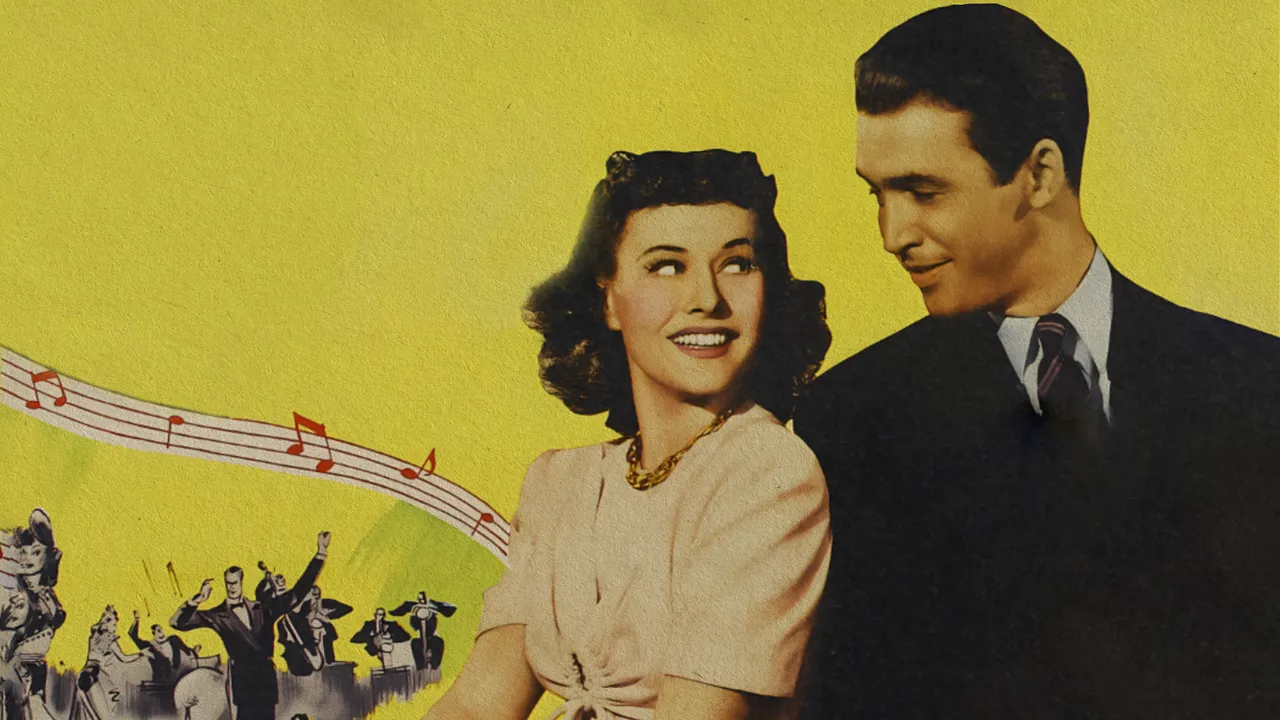
By 1941 radio fed the musical its plots. This one comes from an NBC show on which the bandleader Horace Heidt phoned numbers at random, and whoever answered won $1,000, described as radio's first big-money giveaway program. Heidt plays himself, alongside James Stewart and Paulette Goddard, whose singing was dubbed by Vera Van.
According to the film historian Hal Erickson, Stewart cited it in every later interview as the worst picture he ever made. The trade press at the time was kinder: Film Daily called it good entertainment for any and all audiences.
 Comedy
Pot o' Gold
George Marshall · 1941 · 81 min
The Inspector General (1949)
Danny Kaye, the comedian, plays a medicine show assistant whom a corrupt village mistakes for the feared inspector general. The story is loosely based on Nikolai Gogol's 1836 play The Government Inspector. Henry Koster directed it for Warner Bros. in Technicolor.
Most of the songs were written by Sylvia Fine, Kaye's wife, including "Happy Times", which was the film's working title. The Library of Congress says most of her music was written with Kaye's talents in mind, and that her film career hit its stride with this film. Johnny Green won a Golden Globe for the score.
The Inspector General
Henry Koster · 1949 · 102 min
Royal Wedding (1951)
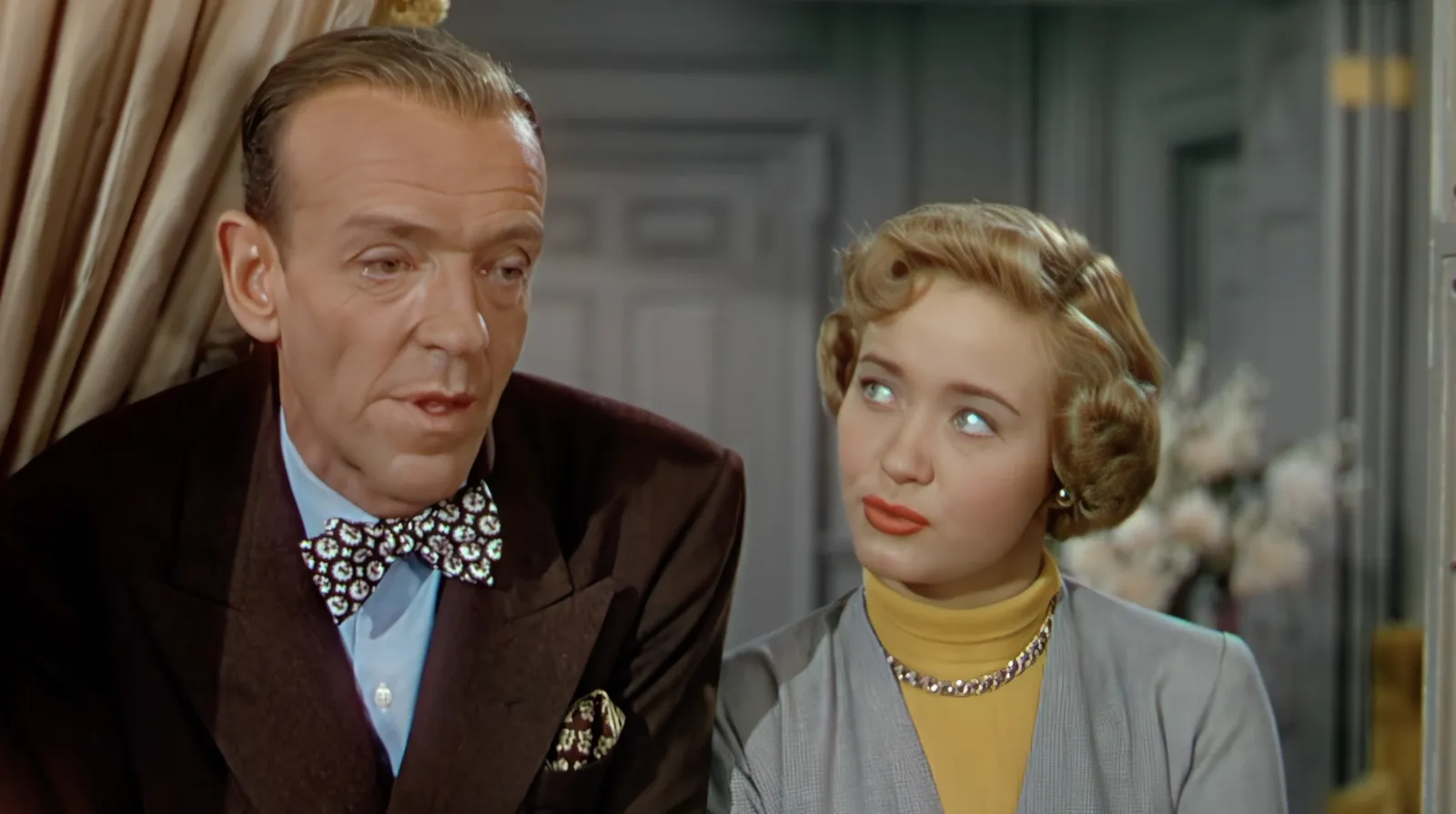
This is a Freed Unit musical, and the writer Alan Jay Lerner drew it from Fred Astaire's own life. Astaire had danced on stage with his sister Adele until she retired to marry a British aristocrat, Lord Charles Cavendish. Here a brother and sister act plays London during a royal wedding, and the sister falls for a lord. June Allyson was cast first, then Judy Garland, and when Garland missed work Freed gave the role to Jane Powell. Stanley Donen directed.
The film is remembered for "You're All the World to Me", in which Astaire dances up the walls and across the ceiling. The room was built inside a revolving set, and the camera turned with it, so the dance reads as gravity giving way. Lionel Richie later restaged it in the video for "Dancing on the Ceiling".
Royal Wedding
Stanley Donen · 1951 · 93 min
Mr. Imperium (1951)
Broadway kept sending Hollywood its stars. Ezio Pinza was a former Metropolitan Opera bass who had become a Broadway star in South Pacific, and this was the first of two musicals MGM tried with him. He plays a prince on holiday in Italy who falls for a nightclub singer, Lana Turner, whose singing voice was dubbed by Trudy Erwin. Greer Garson had been cast first.
It cost about $1.5 million and, by MGM's records, lost about $1.4 million. Time wrote that only the Technicolor looks good. A young Debbie Reynolds appears in the cast as Gwen.
Mr. Imperium
Don Hartman · 1951 · 87 min
Rock, Rock, Rock! (1956)
By the mid 1950s the music had changed, and the musical changed with it. Alan Freed, the disc jockey who popularized the term rock and roll, plays himself, Chuck Berry sings "You Can't Catch Me", and Frankie Lymon and the Teenagers make their film debut. The plot is about a girl who needs money for a strapless prom gown. It was shot in about two weeks in the Bronx, starting August 13, 1956.
The girl is Tuesday Weld, then a 13-year-old child model, in her first big-screen role. Connie Francis, then 17, had auditioned for the part, lost it to Weld, and dubbed all her singing instead. The producers, Milton Subotsky and Max Rosenberg, went on to run the British horror studio Amicus.
Rock, Rock, Rock!
Will Price · 1957 · 85 min
Damn Yankees (1958)
Most 1950s musicals came straight from the stage, and this one came with its cast. It adapts the 1955 Broadway show, based on Douglass Wallop's 1954 novel, about a fan of the losing Washington Senators who makes a pact with the Devil and becomes a 22-year-old baseball star. Apart from Tab Hunter as the young star, the Broadway principals repeat their roles, including Gwen Verdon as Lola and Ray Walston as the Devil.
Bob Fosse, who choreographed the stage show, appears uncredited as the mambo dancer opposite Verdon in "Who's Got the Pain". The two had first worked together on the 1955 show, and NPR notes this is the only time they dance together on the big screen.
Damn Yankees
George Abbott · 1958 · 110 min