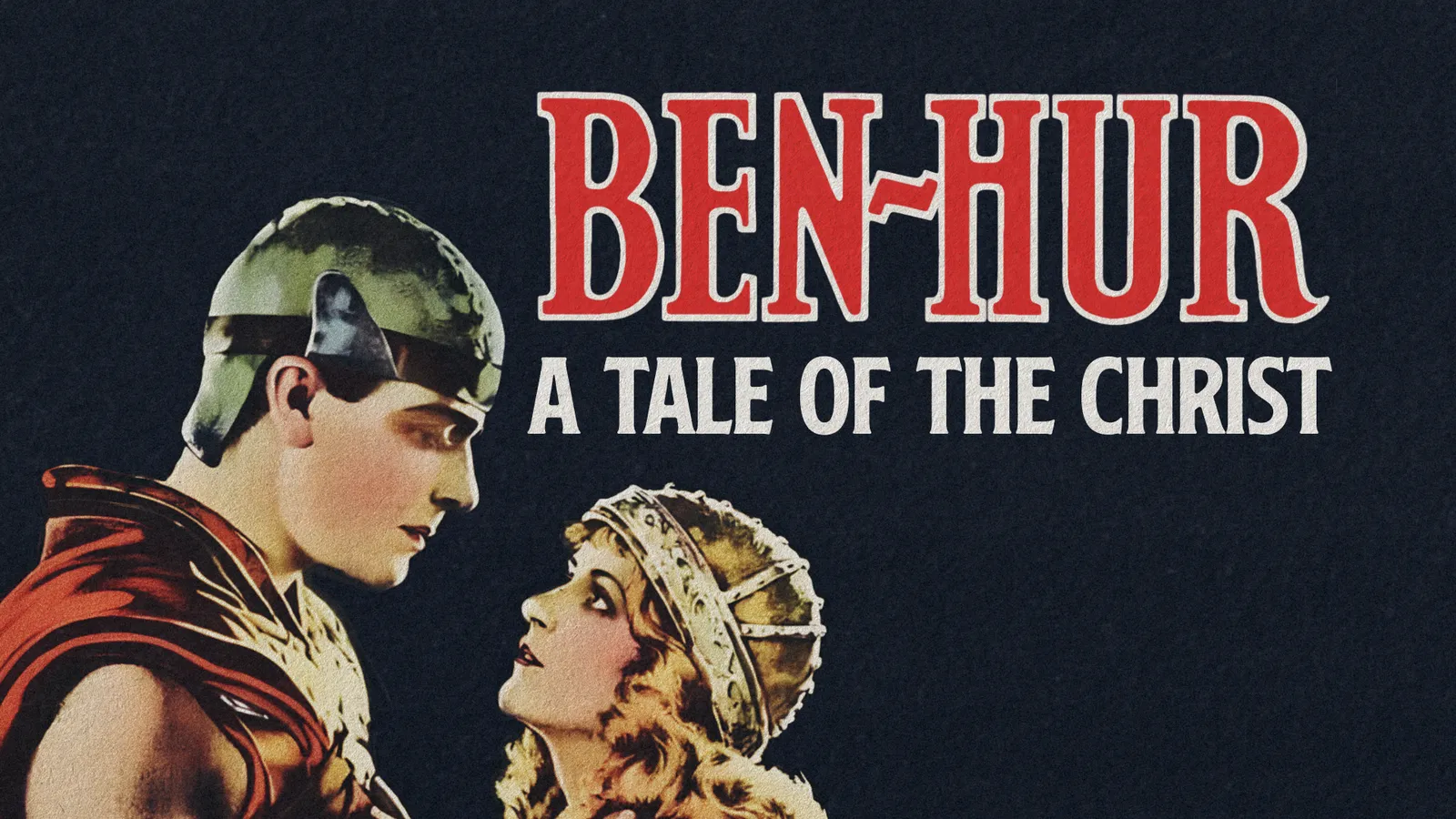
The silent Ben-Hur cost more than any film before it
Ben-Hur: A Tale of the Christ (1925) cost about $3.9 million, more than any film before it, after a shoot that began in Italy.
By Relay, Movie Spotlight · Wednesday, November 18, 2026 · 3 min read
Ben-Hur: A Tale of the Christ was made in 1925 by Metro-Goldwyn-Mayer, a Hollywood studio formed only the year before, and it cost about $3.9 million, more than any film made up to then. The AFI Catalog, the American Film Institute's record of every US feature, puts the final bill at $3,967,000. TCM's Roger Fristoe writes that the film laid the foundation for MGM's reputation as the producer of elite entertainment, the polished, expensive kind of picture the studio became known for.
The story comes from Lew Wallace's 1880 novel. Judah Ben-Hur is betrayed by Messala, his childhood friend turned Roman conqueror, and loses his family and his freedom to slavery. He survives, comes back for revenge, and his story runs alongside the life of Jesus, from the Nativity on. The version on Relay runs 141 minutes, and it builds to a chariot race between the two former friends.
How did it get so expensive?
The trouble started in Italy. In 1923 the Goldwyn Company sent its cast and crew to Italy, with Charles Brabin directing and George Walsh as Ben-Hur. The shoot ran into delays, labor strikes and clashes between fascist and socialist workers on set. The sea battle was filmed off Livorno, where the ships caught fire and extras jumped overboard. Fred Niblo, the director sent out to rescue it, reportedly complained that those ships cost him $40,000 apiece.
Then the company behind the film disappeared into a merger. In 1924 Goldwyn merged with Metro Pictures and Louis B. Mayer Pictures to form MGM, and the new studio inherited the problem. It replaced Brabin with Niblo and Walsh with Ramon Novarro. June Mathis, the writer who had pushed for shooting in Italy, was taken off the film, though she kept a screen credit for the adaptation. Much of the Italian footage was judged unusable and thrown out, and MGM brought the shoot home to California.
How was the chariot race filmed?
MGM rebuilt the Circus Maximus, ancient Rome's racing stadium, on a lot at what is now Venice and La Cienega boulevards in Culver City. The race was covered by 42 cameras, some buried in the ground, some hidden inside statues. Novarro and Francis X. Bushman, who played Messala, drove their own chariots while camera cars filmed them up close.
One of the assistant directors on the production was William Wyler, who later directed MGM's 1959 remake. Variety's 1925 review had said there would be no further reason for another screen Ben-Hur.
Did it pay off?
Audiences came, but the money did not add up at first. Royalties and distribution costs ate the takings. The AFI Catalog records a $698,000 loss on the first release, and TCM says MGM ended up $850,000 short. TCM writes that the film's success still backed the view of Irving Thalberg, who ran production at MGM, that producers, not directors, should hold the financial and artistic control.
The film is not all black and white. Several sequences, among them the Nativity, were shot in two-strip Technicolor, an early color process, and a 1987 restoration by the film historians Kevin Brownlow and David Gill brought them back.
Who is it for?
It suits anyone who knows the 1959 Ben-Hur and has never seen the version its director worked on as an assistant, and anyone curious how a Hollywood studio first spent money on this scale. It is one of more than 400 films on Relay made in 1927 or earlier, before sound took over.
 Action/Adventure
Ben-Hur: A Tale of the Christ
Fred Niblo · 1925 · 141 min
For more from the era, see Silent films and Classic movies.